
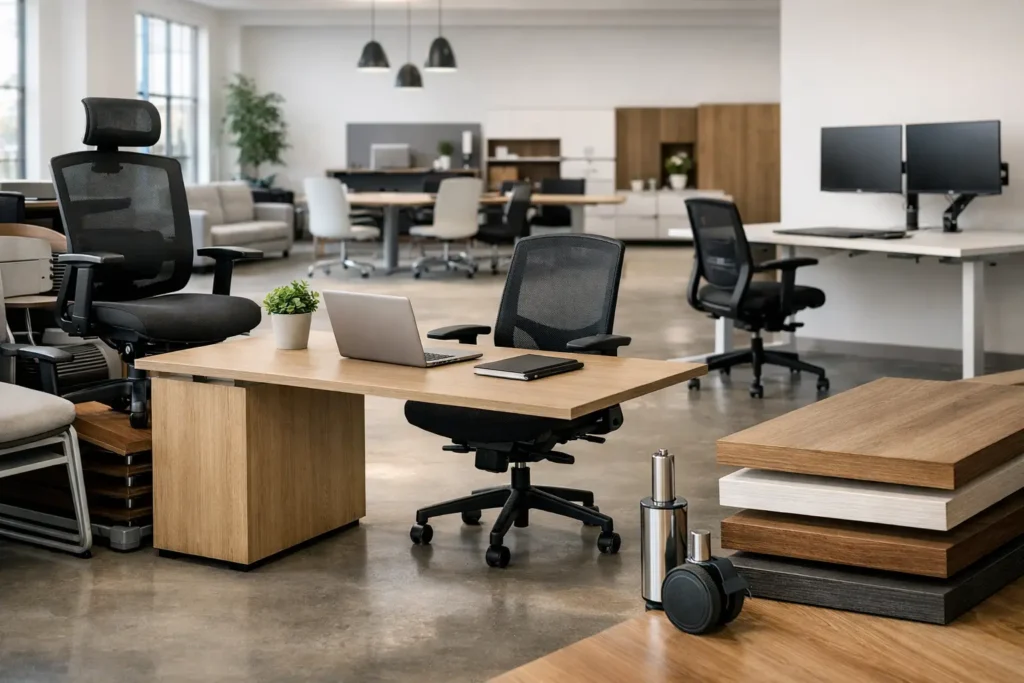
When a project team is trying to furnish an office at scale, the biggest risk is rarely picking the wrong chair in isolation. It is ending up with mismatched categories, uneven quality, delayed deliveries, and a budget that drifts because every item is sourced from a different place. That is where office furniture wholesale becomes a practical advantage, not just a pricing model.
For interior designers, procurement managers, fit-out contractors, and business owners, wholesale supply works best when it supports the full reality of a commercial project. You are not buying one desk or a handful of visitor chairs. You are shaping a workplace that needs to look consistent, perform daily, and arrive on schedule. The supplier matters as much as the furniture itself.
What office furniture wholesale really means for commercial projects
In a B2B setting, wholesale is not simply about buying in bulk for a lower unit cost. It is about securing access to a broader, more coordinated furniture range with commercial-grade quality and project support behind it. That usually includes categories such as task seating, workstations, meeting tables, storage, lounge seating, training furniture, reception pieces, and breakout solutions.
The stronger wholesale partners do more than quote products. They help buyers specify across a full space so the end result feels intentional rather than pieced together. This matters in offices where brand image, employee experience, and long-term durability all sit under the same budget line.
That is also why the cheapest route often becomes the most expensive one. A low price on paper can quickly lose its appeal when dimensions do not align, finishes vary from one shipment to the next, or replacements are difficult to secure during installation.
Why office furniture wholesale is often the smarter buying model
Commercial buyers usually have three pressures at once: visual consistency, operational performance, and cost control. Wholesale supply supports all three when it is handled by an experienced commercial vendor.
The first advantage is cohesion. Office environments rarely stop at desks and ergonomic chairs. They include reception zones, collaboration areas, executive rooms, pantry seating, visitor lounges, and sometimes outdoor or multifunctional spaces. Working with a wholesale source that carries style-aligned collections makes it easier to create a workplace that looks professionally resolved from front entrance to meeting room.
The second advantage is budget discipline. Wholesale pricing can improve cost efficiency, but the more valuable benefit is predictability. A supplier that understands project-based procurement can guide buyers toward practical material choices, alternate models, and matching categories that keep the scheme intact without forcing redesigns late in the process.
The third advantage is reliability. Commercial projects move on fixed timelines. Delays in furniture supply affect defect checks, handover schedules, and opening dates. A wholesale supplier with import, manufacturing, and fulfillment capability is usually better equipped to support volume orders and phased deliveries than a retail-led source.
What to look for in an office furniture wholesale partner
Not every wholesaler is built for commercial fit-outs. Some are product traders. Others are project partners. The difference shows up quickly once specifications, quantity planning, and installation deadlines come into play.
A dependable supplier should offer range depth across key categories. If your office scheme includes workstations, task seating, lounge furniture, meeting tables, bar-height collaboration zones, and visitor seating, you should not have to rebuild the visual language from scratch each time you move to a new area. A curated collection saves time and reduces design friction.
Quality consistency matters just as much. In commercial spaces, furniture takes daily wear from staff, guests, clients, and cleaning cycles. Buyers should ask about material suitability, structural durability, and how finishes perform under sustained use. Good-looking furniture that fails after a short period is not value.
Customization is another key factor. Standard products are useful, but many projects need adjustments in dimensions, upholstery, finishes, or configuration. The right wholesale partner can accommodate those changes without turning the process into a procurement headache.
Then there is support. Strong project suppliers help with selection, quantity planning, lead times, and coordination across categories. They understand that a client approval delay in one area can affect the rest of the order. That kind of experience protects the project.
Balancing design, function, and price
The best commercial interiors do not happen because one priority wins. They work because design, function, and price are managed together.
Design matters because offices are part of the brand experience. Clients notice reception seating. Employees respond to comfort and atmosphere. A thoughtful furniture scheme can make a workplace feel contemporary, credible, and well run.
Function matters because offices are working environments, not showroom sets. Task chairs need ergonomic support. Meeting tables need the right dimensions for circulation and usage. Lounge seating should look inviting without becoming impractical to maintain. Every category has a performance requirement behind the visual brief.
Price matters because almost every project has cost limits. But price should be evaluated across the life of the furniture, not just the purchase order. If a slightly better chair lasts longer, maintains its finish, and reduces replacement frequency, it may be the more cost-effective option. Wholesale buying gives teams more room to make those decisions sensibly.
This is where a design-conscious commercial supplier adds value. Instead of forcing buyers to choose between premium aesthetics and practical budgets, they can present options that feel elevated while staying commercially realistic.
Common mistakes buyers make with office furniture wholesale
One common mistake is treating categories separately. A team may source workstations from one vendor, lounge furniture from another, and ancillary pieces wherever the price appears lowest. Sometimes that works. Often it leads to visual inconsistency, coordination issues, and unnecessary administrative effort.
Another mistake is underestimating lead time. Commercial furniture is not always available for immediate dispatch, especially when customization or larger quantities are involved. Early coordination gives buyers more control over finish choices, alternates, and installation planning.
Some buyers also focus too narrowly on initial unit price. That can result in weaker specifications, limited after-sales support, or supply gaps when additional quantities are needed later. In active offices, continuity matters. Expansion, replacement, and phased projects are much easier when the original supplier has range depth and product continuity.
A final mistake is skipping physical evaluation. On screen, many products look similar. In person, comfort, proportions, finish quality, and construction details become much clearer. For project teams specifying at scale, showroom review can prevent costly surprises.
A better way to specify for offices at scale
A more effective approach starts with planning the furniture package as a connected system rather than a shopping list. Think about the office by zones: reception, workstations, executive rooms, meeting spaces, touchdown areas, pantry, collaboration corners, and waiting areas. Then assess how the furniture language should carry across those spaces.
From there, shortlist by performance as much as appearance. Which seating needs to support all-day use? Which surfaces need higher durability? Where should easy-clean materials take priority? Where does customization create the biggest payoff in fit and visual impact?
This process tends to be faster and more accurate when handled with a commercial wholesaler that already organizes collections around styles and use cases. It reduces over-specifying in low-impact areas and under-specifying in high-use zones.
For businesses furnishing offices across multiple locations, the value becomes even clearer. A wholesale partner can help maintain consistency across sites while still adjusting for layout, local requirements, and budget differences. That gives brands a more controlled and professional rollout.
Why experienced supply matters beyond the product
Furniture decisions do not exist in a vacuum. They affect installation sequencing, space planning, user experience, and future maintenance. That is why experienced wholesale supply is about execution as much as selection.
A trusted commercial furniture supplier should be able to support project discussions with confidence, whether the requirement is a corporate office, a mixed-use commercial environment, or a larger fit-out that overlaps with hospitality, healthcare, or education settings. The more varied the project exposure, the better they tend to be at anticipating challenges before they become delays.
For buyers who need both range and reassurance, VCUS reflects that project-led model through contemporary collections, customization capability, showroom-based selection, and supply support for local and overseas commercial projects.
The right office furniture wholesale strategy is not about chasing the lowest number on a spreadsheet. It is about building a workplace that feels cohesive, performs well, and stays within commercial reality. When your supplier understands that balance, the entire project becomes easier to specify, easier to manage, and better to live with after handover. If you are planning a new office or refurbishment, start with a partner that can support the whole environment, not just individual pieces.
