
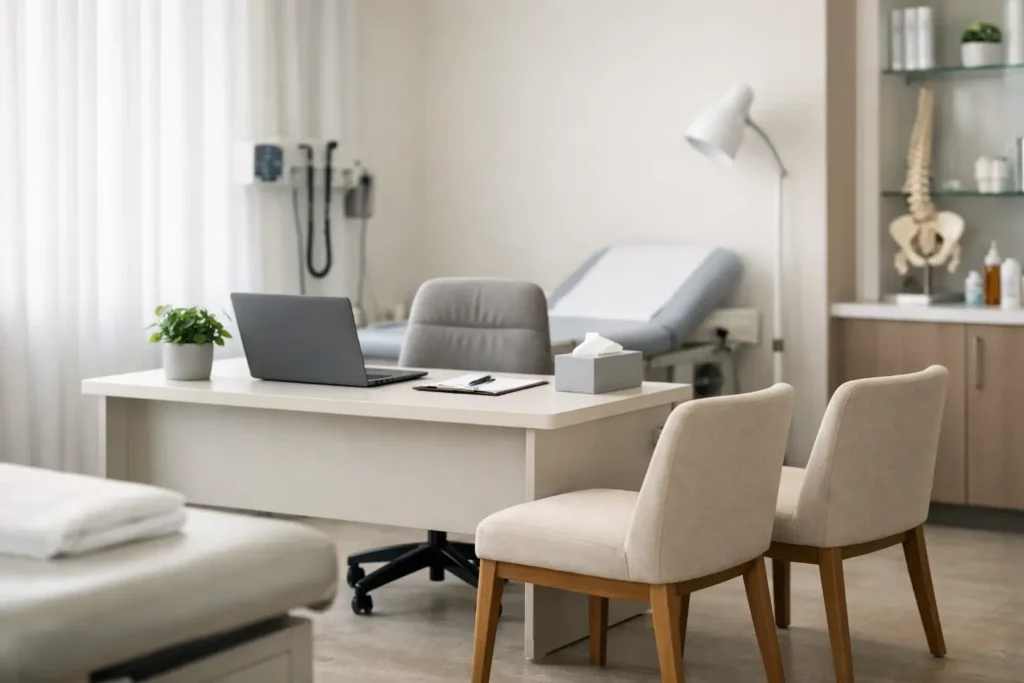
A clinic consultation room has to do several jobs at once. It needs to support focused medical conversations, help patients feel at ease, give clinicians practical access to tools and records, and still stand up to constant daily use. That is why knowing how to furnish clinic consultation rooms is less about filling a room with furniture and more about specifying the right pieces for privacy, hygiene, durability, and flow.
For healthcare operators, designers, and procurement teams, the challenge is usually not a lack of options. It is choosing furniture that looks professional, performs reliably, and works across a broader clinic fit-out without pushing the budget off course. A good consultation room should feel calm and well organized, but it also has to function under pressure.
Start with what the room needs to do
Before selecting any chair, desk, or storage unit, define the room’s actual use. Some consultation rooms are built mainly for discussion and diagnosis. Others need to support basic examinations, note-taking, family attendance, and frequent patient turnover. The furnishing approach changes depending on that mix.
A physician-led specialist clinic may need a more desk-centered setup for longer consultations. A general practice room may need quicker circulation and easier cleaning. Pediatric settings often benefit from softer visual cues and more flexible seating, while executive health clinics may place greater emphasis on a premium but still clinical presentation.
This is where many projects go wrong. They furnish every room the same way for convenience, even though consultation styles differ. Standardization can help with procurement and maintenance, but over-standardization can create friction for staff and a less comfortable experience for patients.
How to furnish clinic consultation rooms for workflow
The most effective consultation rooms are planned around movement. The clinician should be able to greet the patient, sit for discussion, access records, and move into examination mode without awkward repositioning. Furniture should support that sequence rather than interrupt it.
The clinician desk is usually the anchor piece, but it should not dominate the room. In many healthcare environments, an oversized executive desk creates distance and consumes valuable floor area. A compact commercial-grade desk with clean lines often works better, especially when paired with integrated cable management and easy-clean finishes.
Patient seating should be positioned for direct communication, not as an afterthought tucked into leftover space. In some layouts, two patient chairs are the right choice to accommodate a family member or caregiver. In tighter rooms, one primary patient chair and one flexible pull-up chair may be more practical. The right answer depends on average occupancy and circulation clearance.
If digital consultation is central to the practice, screen placement matters. The room should allow clinicians to share information without forcing patients into uncomfortable angles. That often affects the desk orientation and the choice of mobile or fixed ancillary furniture.
The core furniture pieces to specify
Most consultation rooms need the same essential categories, but the performance requirements are higher than in standard office spaces. Seating, tables, storage, and support pieces all need to handle frequent cleaning and repeat use.
Clinician seating should provide ergonomic support for long hours without looking bulky. A commercial task chair with durable upholstery or healthcare-appropriate surfaces is usually the strongest fit. It should move easily, adjust quickly, and maintain a professional appearance over time.
Patient chairs need a different balance. Comfort matters, but so do wipeable materials, stable frames, and ease of entry and exit. Upholstered chairs can work well if the fabric or covering is selected for healthcare use. In many clinics, molded or fully sealed surfaces make maintenance easier, though they can feel less warm. That trade-off depends on the brand experience the clinic wants to create.
Side chairs for accompanying visitors should visually coordinate with the rest of the clinic. Consultation rooms are small, so mismatched furniture stands out quickly. For multi-room projects, a style-led commercial furniture approach helps create consistency without making every room feel identical.
Choose materials that support hygiene and longevity
Healthcare furniture is judged hard over time. The first impression matters, but what matters more is how the room looks after months of cleaning cycles, abrasion, shifting loads, and heavy traffic.
Surfaces should be easy to clean and resistant to staining. Rounded edges can help with both safety and maintenance. Frames should be stable and commercial-grade, especially in high-turnover clinics where seating gets moved constantly. Laminates, powder-coated metals, and healthcare-suitable upholstery are common choices because they strike a practical balance between appearance and durability.
Wood-look finishes are often useful in consultation rooms because they soften the clinical feel without becoming too residential. That said, the finish should still be specified for commercial performance. A room that looks inviting on day one but shows wear quickly will undermine the entire environment.
Color also plays a practical role. Very light finishes can show marks faster, while very dark surfaces can highlight dust and cleaning streaks. Mid-tone palettes are often easier to maintain visually. For many operators, the best result comes from combining clean neutrals with one restrained accent tone that aligns with the clinic brand.
Keep the environment calm, not cold
Patients walk into consultation rooms with varying levels of stress. Furniture cannot solve that entirely, but it can shape the atmosphere. Rooms that feel cluttered, harsh, or overly institutional can increase tension before the conversation even starts.
A calm room usually comes from proportion and restraint. Choose furniture with a contemporary, clean-lined profile, and avoid overfilling the space. A well-scaled desk, supportive chairs, discreet storage, and one or two carefully selected accent elements are often enough.
This is also why waiting-room furniture logic should not be copied directly into consultation rooms. Lounge-style softness may look attractive, but if the seating is too low, too deep, or too casual, it becomes impractical for patient movement and clinician interaction. Consultation rooms need a more upright, purposeful comfort.
Storage should stay close, but out of sight
Storage is often underestimated in consultation room planning. Even in increasingly digital clinics, staff still need access to consumables, forms, equipment, and personal work items. Without proper storage, those items end up visible on desks and counters, making the room look disorganized.
A compact mobile pedestal, integrated cabinet, or low storage unit can keep essentials accessible without adding visual noise. Closed storage is usually better than open shelving in consultation rooms because it supports a cleaner appearance and reduces dust exposure.
If the clinic uses the same consultation room templates across multiple departments, standardized storage dimensions can simplify procurement and replacement. That said, different specialties may still require different internal configurations. Uniform on the outside does not have to mean rigid on the inside.
Plan for accessibility and real patient use
Good consultation room furniture should work for more than the ideal user. Patients vary in age, mobility, size, and confidence. The room needs to support dignified use for all of them.
Chairs with supportive backs, practical seat heights, and stable arm support can make a significant difference, especially for older patients or those recovering from treatment. Clearance around furniture matters just as much. If the path from door to chair is too tight, the room will feel difficult before the consultation has even begun.
This is one area where design intent and operational reality need to meet. A minimalist layout can look excellent on plan, but if it leaves no room for a caregiver, bag storage, or a mobility aid, it will not perform well in practice.
Furnish as part of the whole clinic, not as an isolated room
Consultation rooms should feel connected to the broader healthcare environment. That does not mean every room must be identical, but there should be clear visual continuity across reception, waiting areas, corridors, treatment spaces, and staff zones.
For commercial buyers, this is where working with a project-oriented supplier becomes valuable. Coordinating consultation chairs, staff seating, tables, storage, and adjacent lounge pieces through one style-organized range can reduce specification time and produce a more cohesive result. It also helps with phased rollouts, future replacements, and budget management.
VCUS supports this kind of commercial furnishing approach by helping project teams source stylish and functional furniture across categories, with options suited for healthcare environments where durability, consistency, and pricing discipline all matter.
Budget smart, not cheap
Every healthcare fit-out has cost pressure. But consultation room furniture is not the place to chase the lowest upfront number without considering lifecycle value. Pieces that fail early, clean poorly, or look tired too soon will cost more in replacement, disruption, and brand perception.
A smarter approach is to invest where performance is most visible and heavily used. Clinician chairs, patient seating, desks, and storage should all meet commercial standards first. Decorative extras can be kept lean if needed. Buyers often get better long-term value from a tighter range of well-chosen furniture than from a broader mix of low-cost pieces.
That is especially true when projects involve multiple rooms. Small savings on unit cost can disappear fast if the furniture creates maintenance issues or inconsistent presentation across the clinic.
How to make final selections with confidence
If you are deciding how to furnish clinic consultation rooms, the strongest process is hands-on and scenario-based. Review layouts with actual staff workflows in mind. Test seating comfort, seat height, edge detail, mobility, and cleanability. Check whether drawers open freely in the planned footprint and whether guest chairs still feel balanced when the room is occupied by more than one person.
For designers and procurement teams, showroom evaluation can save costly revisions later. It is much easier to spot scale issues, finish mismatches, or comfort problems before specifying across a full project.
The best consultation rooms rarely feel overdesigned. They feel considered. Every furniture choice has a reason, the room supports clinical work without friction, and patients sense professionalism the moment they sit down. That is the standard worth building toward.
