
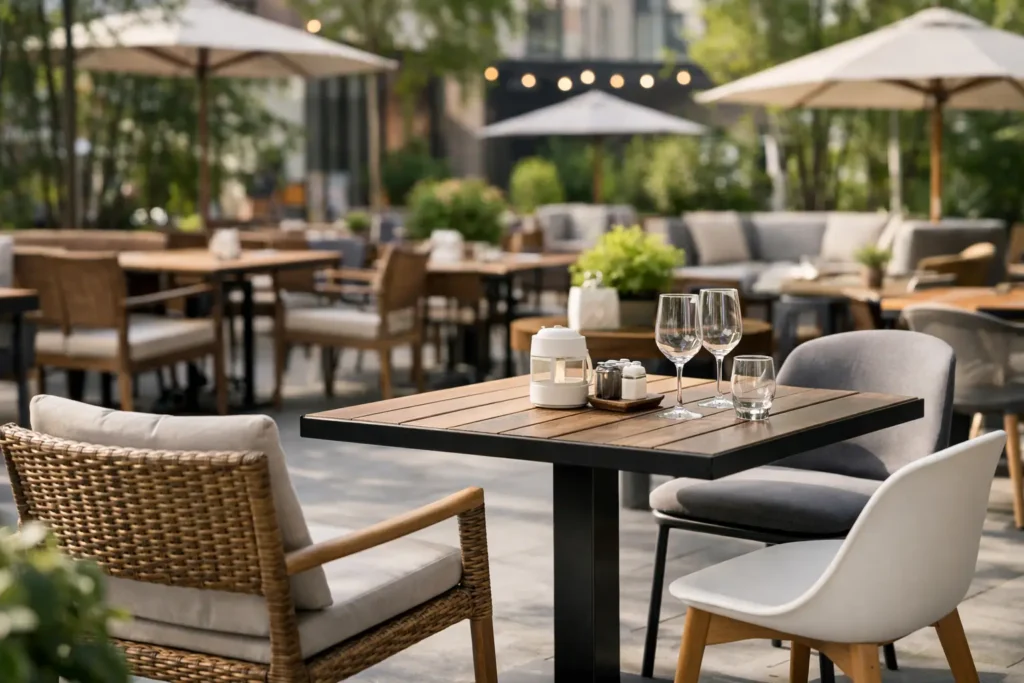
A good outdoor dining area can increase covers, extend dwell time, and strengthen the identity of a restaurant. A bad one does the opposite – chairs wobble, table tops fade, layouts feel cramped, and maintenance becomes a daily headache. That is why knowing how to select outdoor restaurant furniture is not just a design decision. It is an operational one that affects guest experience, staffing, replacement cost, and the overall perception of your venue.
For restaurant owners, designers, and procurement teams, the right specification usually sits at the intersection of four priorities: durability, comfort, visual consistency, and budget control. If one of those is ignored, the furniture may look good on day one but fail quickly in real use. Outdoor restaurant furniture has to perform under sun, rain, spills, frequent cleaning, and constant movement, all while supporting a brand experience guests remember.
How to select outdoor restaurant furniture for commercial use
The first question is not which chair looks best in a catalog. It is how the space will actually be used. A sidewalk cafe, rooftop bar, hotel terrace, and poolside restaurant all place different demands on furniture. Exposure levels, guest turnover, service style, and storage needs should shape every choice.
A high-volume casual dining venue may need lightweight stackable chairs that staff can move quickly during cleaning or event resets. A premium restaurant may accept a heavier frame if it supports a more refined look and a more stable dining experience. Neither approach is automatically right. It depends on the concept, the operational rhythm, and the lifespan expected from the investment.
When evaluating options, think in terms of project fit rather than individual pieces. Outdoor seating, dining tables, bar settings, lounge elements, and accessories should work together visually and functionally. Commercial spaces feel more resolved when furniture comes from a coordinated design language instead of being pieced together item by item.
Start with the environment, not the finish
Outdoor conditions are rarely neutral. Heat, humidity, UV exposure, wind, and rain all influence what will last. In tropical and coastal settings, this matters even more. Materials that perform well indoors can deteriorate fast outside, and even outdoor-rated products vary widely in quality.
Powder-coated aluminum is often a strong commercial choice because it is relatively lightweight, corrosion-resistant, and easy to maintain. Synthetic wicker can work well when the weave quality and frame construction are suitable for hospitality use. Teak and other hardwoods bring warmth and a premium look, but they require a clear maintenance plan if you want to preserve their appearance. Compact laminate, sintered stone, and quality HPL table tops can also offer good durability, though edge detailing and substrate quality make a big difference.
The trade-off is simple. The more natural and tactile the material, the more upkeep it may need. The more technical and low-maintenance the material, the more carefully you need to assess whether it aligns with the venue’s design intent.
Match comfort to dwell time
Not every outdoor seat should feel like a lounge chair. In fact, overly relaxed seating can slow table turnover in some concepts. The right level of comfort depends on how long guests are expected to stay.
Quick-service and casual concepts usually benefit from upright, supportive seating that is easy to get in and out of. Full-service restaurants, wine bars, and hotel terraces may need a more generous sit, with better back support and broader seat widths. If cushions are involved, review the foam, fabric performance, drainage, and drying time. Cushions can elevate the experience, but poorly specified ones quickly become a maintenance problem.
Comfort also includes table height, leg clearance, and the spacing between chairs. A beautiful chair that does not tuck properly under the table can waste valuable square footage. On tight terraces, that inefficiency adds up fast.
Layout matters as much as the furniture itself
A common mistake in outdoor projects is buying furniture before finalizing the layout. This usually leads to overcrowding, awkward circulation, or a mismatch between table formats and service needs. Before selection is finalized, test how many covers the space can realistically support without making the guest experience feel compressed.
Allow enough room for servers to move comfortably, for guests to pull chairs back without collisions, and for accessibility requirements where relevant. Two-top and four-top flexibility is often useful, but the base design and table dimensions should support quick reconfiguration. If tables are regularly joined, the tops and heights need to align cleanly.
This is also where stackability and nesting become practical considerations. Restaurants with weather contingencies, event bookings, or shared-use outdoor zones benefit from furniture that can be moved and stored efficiently. If the space is exposed and furniture must stay outside, then weight, stability, and weather resistance take priority.
Think beyond chairs and tables
Selecting outdoor restaurant furniture often means specifying a broader setting, not just dining pieces. Bar stools, banquettes, lounge seating, side tables, and waiting area furniture may all be part of the guest journey. If those elements are sourced without a unifying approach, the venue can feel fragmented.
For commercial buyers, this is where a project-oriented supplier adds real value. Being able to coordinate finishes, proportions, and style across multiple furniture categories helps create a more distinctive environment while reducing sourcing complexity. It also helps procurement teams avoid the common problem of finding one attractive product that does not translate into a complete scheme.
Budget control is about lifecycle cost
Price matters, but initial unit cost should never be the only filter. The cheapest outdoor furniture often becomes the most expensive once replacements, repairs, freight, and operational disruption are factored in. Commercial furniture should be assessed on lifecycle value.
Ask practical questions. How often will this item be used? How easily can it be cleaned? Can parts be replaced? Will the finish still look acceptable after heavy exposure and repeated sanitizing? Does the supplier understand project timelines and commercial warranty expectations?
A lower-cost chair may still be the right decision in a fast-paced venue with a shorter refurbishment cycle. A more premium option may make better sense for a flagship hospitality setting where design impression is central to the brand. Good specification is rarely about spending more across the board. It is about allocating budget where performance and visibility matter most.
Evaluate supplier reliability early
Even the right product becomes a problem if supply is inconsistent or project support is weak. For commercial projects, furniture selection should include a review of lead times, customization options, finish consistency, packing standards, and after-sales responsiveness.
Professional buyers often need more than off-the-shelf selection. They may require custom upholstery, alternate finishes, matching pieces across indoor and outdoor zones, or phased delivery for multi-stage fit-outs. A dependable commercial furniture partner can simplify those variables and reduce coordination pressure on the project team.
This is especially relevant when the design intent calls for a cohesive look across the entire venue. A supplier with a broad, style-led collection can make it easier to specify complementary pieces without sacrificing practicality or budget discipline.
How to select outdoor restaurant furniture without creating maintenance problems
Maintenance is one of the clearest indicators of whether a specification was realistic. Outdoor restaurant furniture should be easy for staff to wipe down, reset, and inspect. Intricate frames, porous surfaces, or unstable constructions may look appealing in a showroom but become frustrating in daily operation.
Review how surfaces respond to spills, grease, cleaning chemicals, and frequent handling. Look at joints, welds, and glides. Check whether replacement components are available. If a chair has a woven seat, ask how it performs over time under repeated use, not just how it looks when new.
Color choice matters too. Very dark finishes can show dust, salt residue, and scratches more easily in some outdoor conditions. Very light upholstery may elevate the aesthetic but increase cleaning demands. The right answer depends on staffing, concept, and expected wear patterns.
Use samples and mockups whenever possible
For larger projects, physical review is worth the time. Material samples, prototype setups, and showroom comparisons help decision-makers assess scale, finish quality, and comfort more accurately than product images alone. This is often where issues become visible – a table edge that feels too sharp, a chair seat that is too narrow, or a finish that clashes with flooring and facade materials.
Mockups also help align stakeholders. Designers may focus on appearance, operators on practicality, and owners on cost. Reviewing furniture in person creates faster agreement because everyone can weigh the same product against the real needs of the venue. For project buyers working across multiple categories, that clarity can prevent expensive changes later.
At VCUS, this project-based approach is exactly where thoughtful sourcing makes a difference. When outdoor furniture is selected as part of a cohesive commercial environment, the result is not only more polished but easier to execute.
The best outdoor restaurant furniture does not call attention to itself for the wrong reasons. It supports service, reinforces the brand, and holds up under pressure. If your selection process is grounded in use case, environment, comfort, layout, and lifecycle value, the space is far more likely to perform beautifully long after opening day.
