
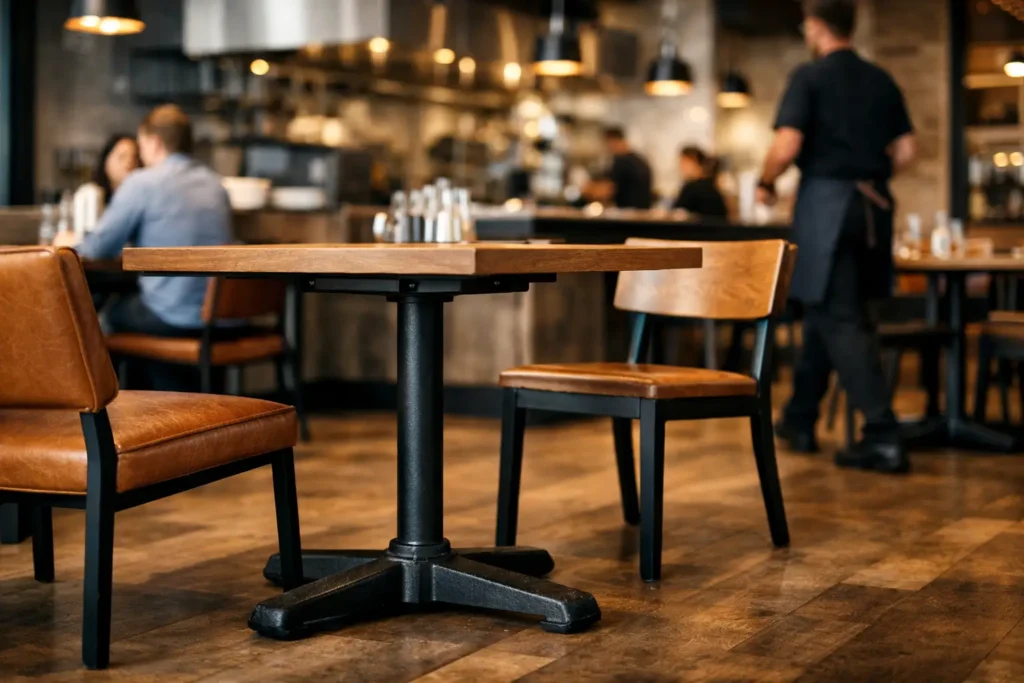
A busy dining room exposes weak furniture fast. When tables start to wobble, shift under load, or show wear around the base, the problem is not just maintenance – it affects guest comfort, service speed, and the overall perception of the venue. That is why durable restaurant table bases for high traffic environments deserve the same level of specification attention as seating, finishes, and floor planning.
For restaurant owners, designers, and procurement teams, the table base is not a background component. It is a structural decision that influences stability, cleaning efficiency, replacement cycles, and how well a space performs during peak service. In high-turnover F&B settings, the right base helps protect both the guest experience and the operating budget.
What makes restaurant table bases hold up in high traffic
Durability starts with daily use patterns, not product claims. A cafe with frequent laptop users creates different demands than a food court, hotel breakfast area, or full-service restaurant with constant table resets. In all of these settings, the base needs to withstand dragging, side loading, repeated cleaning, impact from bags and trolleys, and the strain that comes from tables being pushed together and separated again.
Material quality matters first. Steel remains one of the most dependable choices for indoor commercial use because it offers the weight and structural strength needed for repeated service. Cast iron also performs well, especially where a heavier footprint improves stability. Aluminum can be appropriate in some applications, particularly where corrosion resistance or lighter handling is needed, but it is not automatically the best answer for every high-traffic interior. The key is matching the material to the actual operating conditions.
Construction quality matters just as much as material. Weld consistency, column thickness, base plate integrity, and hardware quality all affect how a table performs after months of use. A base may look substantial in a catalog, but if the joints are weak or the top plate is too light for the tabletop size, problems show up quickly.
Durable restaurant table bases for high traffic need proper weight and balance
A common mistake in commercial fit-outs is choosing a base for appearance first and tabletop compatibility second. In a restaurant, that shortcut becomes expensive. If the base is too light for the top, too narrow for the tabletop dimensions, or poorly proportioned for the layout, wobble and tipping become ongoing issues.
The right weight depends on the table size, top material, and the expected use case. Stone, sintered stone, and solid hardwood tops generally need more support than compact laminate or lighter composite tops. Larger square and round tops also need broader or heavier support than smaller two-seater tables. There is no universal formula that suits every project, which is why commercial buyers should review the full table specification rather than selecting the base in isolation.
Balance is equally important. A slim pedestal base may suit a refined dining concept, but in very high traffic settings it can underperform if the footprint is too small. On the other hand, an oversized base can interrupt legroom, slow cleaning, and make layouts feel visually heavy. The best specifications strike a practical balance between stability, circulation, and design intent.
Base style affects operations as much as aesthetics
Single pedestal bases are popular because they support clean sightlines and flexible seating. They work especially well in restaurants that want a more contemporary, uncluttered look. For smaller tops and carefully planned layouts, they can be an efficient and attractive choice.
But not every dining setup benefits from a single column. Larger communal tables, banquette runs, and tops that see uneven loading often perform better with dual pedestal or trestle-style support. These options distribute weight more effectively and reduce stress on one central point. In high traffic venues, that added structural confidence can make a real difference over time.
Four-leg bases also have their place. They may not deliver the same minimalist look, but they can be highly dependable for certain formats, especially casual dining and fast-paced environments where tables are frequently moved. The trade-off is that legs can interfere more with chair placement and housekeeping access.
This is where experienced commercial sourcing adds value. The best-looking base is not always the best-performing base, and the most heavy-duty option is not always the smartest one for the concept. A successful specification supports both the visual language of the venue and the pace of its operations.
Finish performance is part of durability
In F&B spaces, durability is not just about structural strength. Surface finish plays a major role in how long the base continues to look presentable. Powder-coated steel is a strong commercial option because it resists everyday wear better than many basic painted finishes. It also gives specifiers more flexibility across interior schemes, from matte black and textured neutrals to custom tones that align with a broader furniture package.
That said, finish selection should reflect the actual environment. In open-front venues, semi-outdoor dining areas, or humid locations, corrosion resistance becomes more important. Scratches, chips, and edge wear tend to show sooner on some darker or smoother finishes, particularly in tightly packed restaurants where guests and staff make frequent contact with the base.
A finish that looks excellent on day one but degrades quickly under constant cleaning and impact is not a value buy. Commercial furniture should maintain its appearance through real operating conditions, not just showroom presentation.
Why the floor condition changes the base you should specify
Many table stability complaints are blamed on the furniture when the real issue is the floor. Restaurants often deal with slight level changes, grout lines, textured surfaces, and older substrates that are not perfectly even. In these cases, adjustable glides are not a small feature – they are essential.
A durable base should allow fine adjustment without compromising strength. This helps installers level tables properly during fit-out and gives operators a way to correct minor movement later without replacing the unit. It also reduces the familiar short-term fix of folded paper, cardboard, or improvised packing under one side of the base, which rarely lasts and never looks professional.
Floor protection matters too. In venues with timber, vinyl, or specialty finishes, the wrong glide can cause scratching and premature wear. The right base needs to work with the floor, not against it.
How to specify for long-term value, not just upfront price
Budget always matters in commercial projects, especially when furnishing larger dining areas or rolling out multiple outlets. But table bases are one of those categories where chasing the lowest entry price can create avoidable replacement and maintenance costs.
A low-cost base that loosens, rusts, chips, or destabilizes under commercial use is not economical once service disruptions, technician visits, or piecemeal replacements start adding up. For high traffic restaurants, long-term value usually comes from consistent manufacturing quality, fit-for-purpose engineering, and a finish that holds up under repeated use.
This is also why project buyers often benefit from sourcing through a commercial furniture partner rather than buying fragmented pieces from multiple retail-style channels. When table tops, bases, seating, and layout planning are considered together, the result is usually more cohesive and more reliable. For design-led hospitality projects, that coordination helps protect both the concept and the budget.
VCUS works with commercial buyers who need that balance – stylish and functional furniture, dependable quality, and project-friendly pricing that supports real-world operations.
Durable restaurant table bases for high traffic projects should be tested against the concept
Before final approval, it is worth pressure-testing the specification against the actual venue. Will staff be moving tables daily for group bookings? Will the space handle quick lunch turnover followed by evening service? Is the tabletop material especially heavy? Will the tables sit indoors, near entrances, or in partially exposed dining zones?
These questions often reveal whether a lighter designer base is sufficient or whether the project needs a more heavy-duty commercial model. They also help identify when customization makes sense, such as finish adjustments, top plate changes, or sizing refinements to support a specific tabletop and layout requirement.
Professional buyers already know that a restaurant fit-out succeeds when individual components work together. Table bases are a good example. When they are specified well, they disappear into the experience – guests feel stable seating, staff move efficiently, and the room keeps its intended finish. That is exactly what commercial furniture should do in a high-traffic environment: perform quietly, consistently, and for the long term.
If you are planning a new restaurant, refreshing an existing venue, or specifying for a multi-site hospitality project, treat the table base as a performance decision, not an accessory. The right choice supports the design today and keeps the operation moving long after opening night.
