
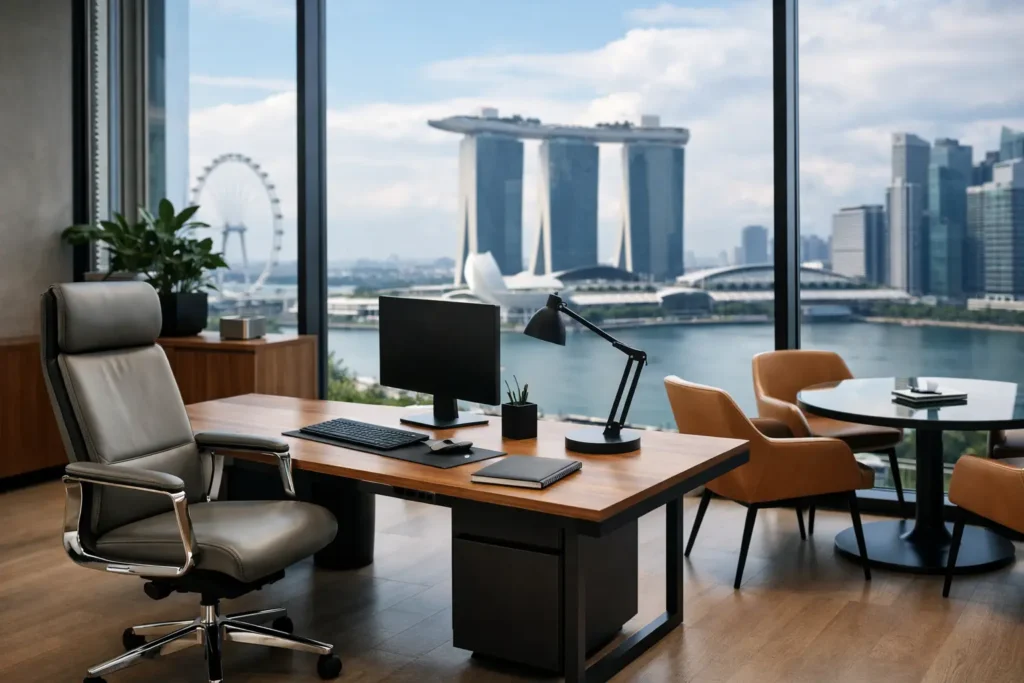
A polished office can fall apart fast when the furniture specification is handled piece by piece. The reception sofa looks right, but the meeting chairs feel generic. Workstations meet the budget, but breakout areas lose the design language. That is why designer office furniture Singapore buyers choose is rarely just about a desk or chair. It is about building a coherent workplace that performs well, reflects the brand, and stays practical under daily commercial use.
For interior designers, architects, procurement teams, and business owners, the challenge is not finding furniture in Singapore. The challenge is finding commercial-grade pieces that work together across the whole project – visually, functionally, and financially. In office environments especially, the best results come from selecting furniture as a system rather than as isolated products.
What designer office furniture means in a commercial project
In a business setting, designer furniture is not simply furniture with a premium look. It has to earn its place. A well-designed office chair should support long hours of use, fit the visual direction of the workplace, and hold up over time. A meeting table should help define how teams collaborate. Lounge seating should create the right first impression while remaining durable enough for constant traffic.
That distinction matters because commercial buyers are working with more variables than residential buyers. There are workflow patterns, cleaning requirements, fire and material considerations, lead times, quantity requirements, and budget controls. A chair that looks impressive in a photo may not be suitable for a project once stackability, maintenance, upholstery wear, or replacement planning come into the picture.
This is where designer office furniture becomes valuable. It brings together form and function in a way that supports the bigger fit-out strategy. The right pieces do not just fill space. They help shape circulation, comfort, focus, collaboration, and brand perception.
Why designer office furniture in Singapore needs a project mindset
Singapore offices are often designed under tight spatial and timeline constraints. Floor plates need to work hard. Every area usually has more than one purpose, and furniture has to support that flexibility without making the space feel cluttered or inconsistent.
A project mindset solves that problem better than ad hoc purchasing. Instead of sourcing reception seating from one supplier, task chairs from another, café stools from a third, and tables from wherever fits the remaining budget, experienced buyers look for a partner that can support multiple categories under one design direction.
That approach has practical advantages. It helps maintain visual consistency from front-of-house to workstations and meeting rooms. It simplifies approval and coordination. It can also reduce risk during procurement because finishes, dimensions, and product suitability can be reviewed in a more organized way.
There is also a cost conversation here. Designer furniture does not always mean expensive furniture. In commercial projects, value often comes from selecting pieces that look considered, perform reliably, and fit the project budget without creating problems later. Paying less upfront for furniture that fails early, looks mismatched, or causes delays is not real savings.
The categories that shape a stronger office specification
A cohesive office is usually built from a few key furniture categories working together. Office seating is the most obvious starting point because daily use is intense and ergonomic performance matters. But the visual impact of seating is just as important. Task chairs, visitor chairs, meeting chairs, and executive seating should feel related even when they serve different functions.
Tables and desks come next. In many projects, these pieces quietly determine how professional the office feels. Boardroom tables, collaborative tables, private office desks, and café tables all contribute to the rhythm of the space. Their proportions, finishes, and leg profiles can either tie the environment together or make it feel fragmented.
Lounge and reception furniture carry a different job. They set the tone. A reception area is often the first physical expression of a company’s brand, while breakout lounges increasingly support informal meetings and flexible work. These pieces need to look refined without becoming delicate or difficult to maintain.
Barstools, outdoor furniture, and modular system furniture can also matter more than expected, especially in workplaces with pantry areas, terraces, event zones, or mixed-use planning. Buyers who consider these categories early usually end up with more consistent and better-performing spaces.
How to evaluate designer office furniture Singapore suppliers
The strongest supplier relationships are built on more than catalog breadth. Commercial buyers need confidence that a supplier understands project realities.
First, look at whether the collection is organized in a way that helps specification. A supplier that offers style-consistent options across chairs, sofas, tables, stools, and workspace furniture makes selection faster and cleaner. That matters when you are trying to furnish an entire office with a unified look rather than assembling a patchwork.
Second, assess whether the supplier is set up for commercial execution. A good-looking product range is one thing. The ability to support quantities, customization, lead-time planning, and delivery coordination is another. For office projects, especially larger or multi-zone ones, reliability often decides whether a project stays smooth or becomes difficult.
Third, consider showroom access and hands-on review. Materials, seat comfort, scale, and finish quality are much easier to judge in person than from a screen. Professional buyers know that physical evaluation can prevent costly mistakes later.
Fourth, ask how the supplier handles budget alignment. The best commercial furniture partners do not push one price level across every application. They help balance investment across high-visibility and back-of-house areas so the office still looks considered without overspending in the wrong places.
Where style and durability need to meet
Office furniture has to survive real use. That sounds obvious, but it is where many attractive specifications become weak. A low-back lounge chair may look perfect in a render, yet feel uncomfortable in an actual waiting area. A tabletop finish may photograph well, yet show wear too quickly in a heavily used meeting room.
This is why durability should be discussed as part of design, not as a compromise after design. The best commercial selections factor in frame strength, upholstery suitability, ease of cleaning, and maintenance expectations from the start. In high-use settings, these choices protect both the visual standard of the project and its long-term operating cost.
It also depends on the kind of office. A corporate headquarters, a sales gallery, a co-working environment, and a healthcare administration office will all need different balances between statement design, ergonomic support, and hard-wearing finishes. There is no single correct answer. There is only a better match for the intended use.
Customization can make the difference
Standard furniture works for some projects, but many office fit-outs benefit from customization. It may be a matter of adjusting upholstery, finish, dimensions, or configurations to better align with a concept or floor plan. In tighter layouts, even small dimensional changes can improve circulation and fit.
Customization also helps maintain brand consistency. When a client wants a particular material direction across reception, meeting rooms, executive offices, and social spaces, tailored selections can create a stronger overall result than purely off-the-shelf purchasing.
Of course, customization comes with planning requirements. It can affect lead times, approvals, and minimum quantities. That does not make it a problem. It simply means it should be built into the procurement strategy early rather than treated as a late-stage addition.
Why cohesive sourcing saves time later
Office projects rarely go wrong because one chair was unattractive. They go wrong when coordination becomes fragmented. Separate vendors can mean mismatched finishes, uneven quality, unclear accountability, and added pressure on the design or procurement team.
Working with a trusted commercial furniture supplier that can support multiple categories reduces that friction. It makes it easier to compare options, refine selections, and maintain a clear line of communication through ordering and delivery. For businesses managing rollout schedules or renovation deadlines, that support is not a minor convenience. It is part of keeping the project on track.
For buyers seeking designer office furniture Singapore projects can depend on, this is often the real difference between a supplier and a project partner. The furniture still has to look right, feel right, and meet the budget. But the process behind it matters just as much.
A well-furnished office should feel intentional from the entrance to the last meeting room. If your next project needs contemporary, commercial-grade furniture that is stylish, functional, and easier to specify across the full space, a showroom-led partner such as VCUS can help you shortlist with more confidence. The smartest office furniture decisions are the ones that still look smart after handover.
