
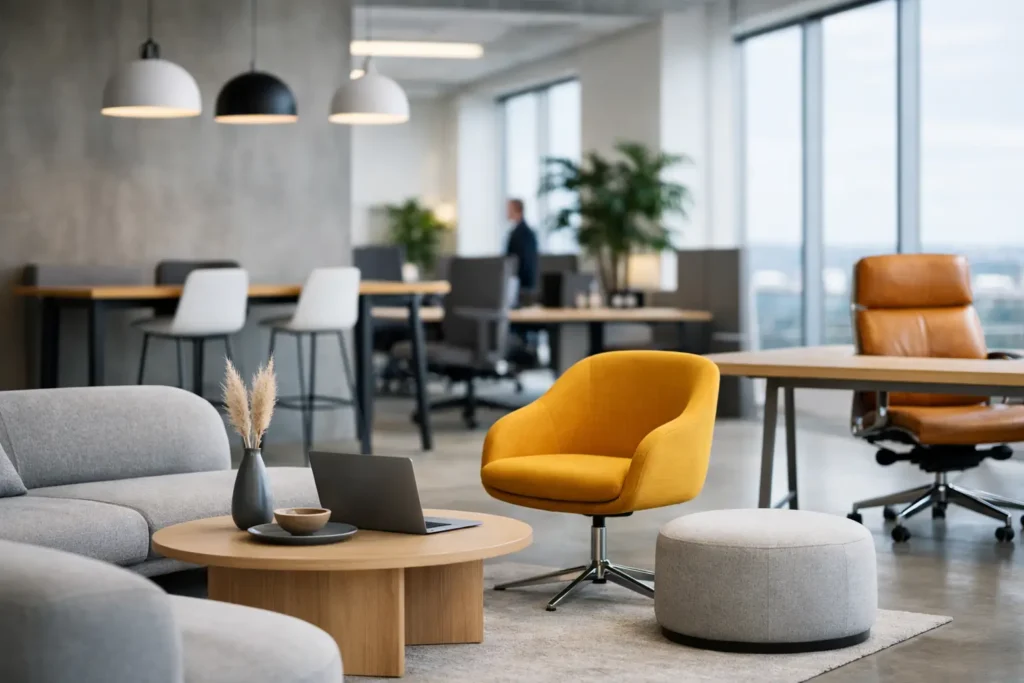
A workplace planned in 2019 would not survive a serious specification review today. The same is true for a hotel lounge, a clinic waiting area, or a campus common space. The future of commercial furniture design is being shaped by a simple reality: business environments now have to work harder, adapt faster, and express more value per square foot than ever before.
For interior designers, procurement teams, and business owners, that shift changes what good furniture looks like. Visual appeal still matters, but it is no longer enough. Commercial pieces now need to support flexible layouts, heavier use, brand identity, easier maintenance, and tighter project budgets – often all at once. The next wave of commercial furniture is not only about trend direction. It is about specification decisions that protect performance over time.
What the future of commercial furniture design really looks like
The future of commercial furniture design will not be defined by one style. It will be defined by how well furniture responds to changing use cases. In practical terms, that means fewer one-dimensional pieces and more adaptable collections that can move across settings without losing visual consistency.
An office breakout chair may need to feel hospitality-driven. A hotel lobby sofa may need to support laptop use and frequent turnover. A healthcare waiting area may need a warmer, less institutional look while still meeting strict durability standards. Furniture categories are no longer staying in neat boxes, and that has major implications for project planning.
This is why cohesive commercial collections are becoming more valuable. Specifiers are under pressure to create environments that feel unified across reception areas, meeting rooms, lounges, dining zones, outdoor sections, and private workspaces. When products are designed to coordinate across categories, the sourcing process becomes faster and the result feels more intentional.
Flexibility is moving from bonus to baseline
For years, flexible furniture was treated as an added feature. Now it is often the starting point. Businesses want spaces that can shift between collaboration, focus work, social interaction, and event use without requiring a full refit.
That does not always mean every product needs casters, folding mechanisms, or modular add-ons. Too much flexibility can create its own problems, especially in premium environments where visual stability and a polished finish matter. But there is a clear move toward furniture that allows easier reconfiguration.
In offices, this shows up through modular lounge seating, mobile tables, and meeting furniture that supports varied group sizes. In hospitality, it appears in dining and lounge formats that can be rearranged for different service patterns. In education and training spaces, it means furniture that helps a room switch function quickly without looking temporary.
The trade-off is that highly adaptable furniture must still feel solid. Commercial buyers are right to question whether a multi-use item will age as well as a more fixed alternative. The better approach is not maximum flexibility everywhere. It is targeted flexibility where layouts are likely to change.
Durability is becoming part of the design conversation
Durability used to sit in the technical column while design handled the visual side. That separation is fading. The future of commercial furniture design brings those two concerns together because clients increasingly expect furniture to look refined and hold up under daily pressure.
This is especially relevant in high-traffic sectors such as F&B, healthcare, education, and shared office environments. Surface finishes, edge details, upholstery choices, structural integrity, and cleanability all affect lifecycle value. A chair that photographs well but deteriorates quickly is not a design win. It is a replacement cost waiting to happen.
At the same time, overengineering every piece can push budgets in the wrong direction. Not every area requires the same performance standard. A private boardroom, a cafe terrace, and a student commons should not be specified as if they face identical wear patterns. Smart buyers are segmenting furniture decisions by usage intensity, cleaning demands, and replacement risk.
That is where a project-focused supplier adds real value. The right recommendation is rarely the most expensive option. It is the option that matches the environment honestly.
Commercial spaces are becoming more residential in feel
One of the strongest design shifts across sectors is the move toward softer, more inviting commercial interiors. Offices want to attract people back. Hotels want public spaces that feel memorable and usable throughout the day. Clinics and education spaces want to reduce stress and improve comfort. Furniture plays a central role in that shift.
We are seeing more rounded forms, warmer finishes, mixed materials, and lounge-inspired silhouettes used in places that once relied on strictly utilitarian pieces. This does not mean commercial interiors are becoming casual for the sake of it. It means clients understand that comfort, atmosphere, and emotional response are part of business performance.
Still, residential influence has limits. A chair for a restaurant cannot be chosen like a chair for a living room. Seat heights, maintenance requirements, stackability, stain resistance, and turnover rates still matter. The opportunity is in balancing hospitality-style comfort with commercial-grade construction.
Brand expression matters more than trend chasing
Many commercial buyers have moved past the idea of filling a space with whatever is currently fashionable. They want furniture that supports a brand experience and stays relevant longer than a short design cycle.
That is a healthier direction for the industry. Trend-led specification can work for select accent pieces, but large-scale commercial projects need a clearer logic. A workplace may want a contemporary, international look that appeals to staff and visitors. A hospitality venue may want a distinct identity that feels polished without becoming dated. A showroom may need furniture that supports product presentation instead of competing with it.
In each case, furniture becomes part of the brand system. It communicates positioning, quality expectations, and intended customer experience. That is why curated style-led collections are gaining ground. They help specifiers build consistency across multiple zones while still allowing enough variation to avoid repetition.
Customization will keep growing, but with discipline
Customization is not new in commercial furniture, but expectations are becoming more specific. Buyers increasingly want adjustments in finish, upholstery, dimensions, and configuration so a product works for a particular concept or floor plan.
This is where experience matters. Customization is valuable when it solves a real project need. It becomes risky when it creates lead time issues, inconsistent quality, or cost creep without meaningful design benefit. A custom top finish that aligns with a brand palette may be worth it. Redesigning a proven product from scratch for a minor visual difference usually is not.
The future will favor suppliers that can offer controlled customization – enough flexibility to support design intent, but within a reliable production framework. For project teams, that balance reduces surprises and helps protect schedules.
Outdoor and mixed-use furniture will see stronger demand
Commercial environments are using outdoor areas more strategically than before. Restaurants want additional seating capacity. Hotels want experience-driven terraces and poolside zones. Offices and education settings want usable open-air spaces that support wellness and informal gathering.
As a result, outdoor furniture is becoming less of a side category and more of a core part of project planning. The design expectations are rising as well. Buyers no longer want outdoor areas to feel visually disconnected from the interior concept.
This creates demand for coordinated indoor-outdoor ranges, weather-suitable materials with strong aesthetic value, and pieces that can handle climate exposure without looking overly technical. Here again, the right answer depends on the site. A covered balcony has different demands from a fully exposed dining terrace.
Procurement decisions will favor partners, not just product sellers
The future of commercial furniture design is also changing how buyers choose suppliers. Product range still matters, but project support matters just as much. Professional buyers want a partner who can help them specify across categories, maintain design consistency, manage customization, and keep delivery realistic.
That is particularly true for multi-zone projects where chairs, sofas, tables, barstools, office seating, outdoor furniture, and system pieces must work together visually and functionally. A fragmented sourcing process often leads to avoidable mismatches in scale, finish, comfort level, and lead time.
For this reason, more businesses are looking for established commercial furniture suppliers that can support the full fit-out journey, from showroom selection to quantity planning and coordinated supply. At VCUS, this is exactly where project value is created: not through isolated items, but through reliable, design-forward commercial collections that help professionals furnish complete environments with confidence.
The next few years will reward buyers who specify with both imagination and discipline. The best spaces will not be the most expensive or the most trend-driven. They will be the ones furnished with clarity – where every piece supports the way people work, wait, meet, dine, heal, learn, and return.
