
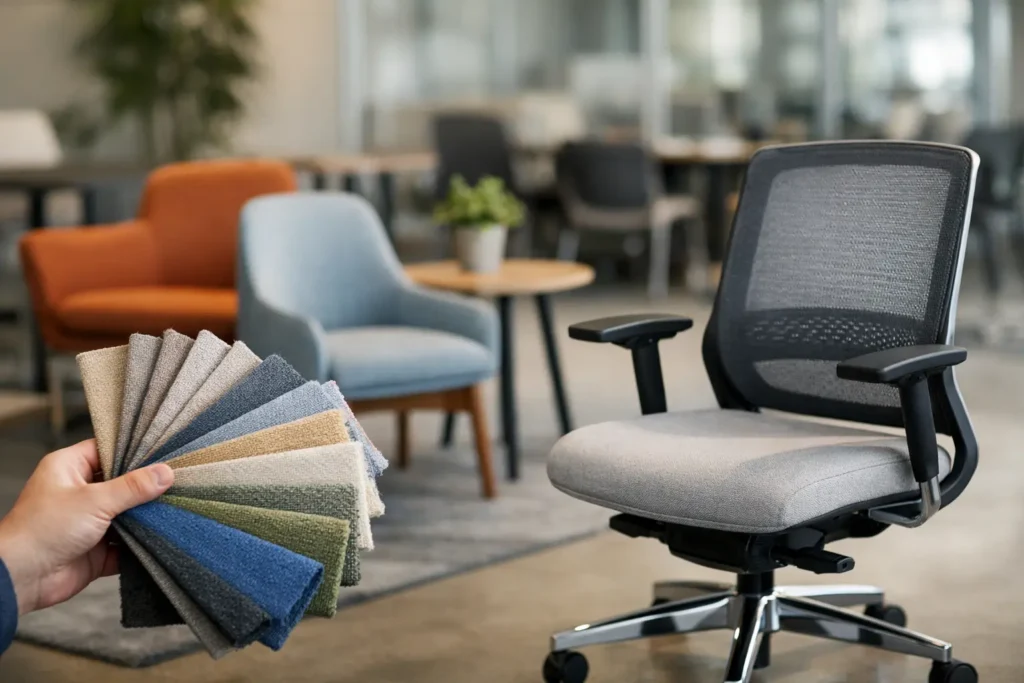
A chair that looks right on a mood board can fail fast on a project floor. In commercial interiors, contract seating solutions have to do more than complement the design concept. They need to hold up to daily use, support the intended experience, align with code and maintenance needs, and stay within budget across the full scope.
That is where many projects get complicated. Seating is rarely a one-line item. A single fit-out may require task chairs for workstations, lounge seating for reception, dining chairs for breakout areas, barstools for pantry zones, outdoor pieces for terraces, and occasional seating for waiting areas. If those pieces are sourced in isolation, the result is often a fragmented scheme, uneven quality, and more procurement friction than most teams can afford.
What contract seating solutions should actually deliver
For commercial buyers, the best contract seating solutions are not just products. They are coordinated answers to a project brief. That means the seating has to satisfy aesthetic goals and practical demands at the same time.
Design consistency is usually the first requirement. Offices, hotels, restaurants, healthcare facilities, and education spaces all benefit from a clear visual language. When seating across different zones shares a compatible style, material direction, and proportion, the interior feels intentional rather than pieced together. That matters to designers, but it also matters to operators who want a polished brand environment.
Performance is just as important. A lounge chair in a hotel lobby faces different wear conditions than a meeting chair in a corporate office or a visitor chair in a clinic. Load-bearing capacity, frame construction, upholstery durability, cleanability, and replacement cycles all come into play. Seating that is under-specified may save money upfront, but it often costs more once repairs, complaints, and premature replacement enter the picture.
Then there is procurement efficiency. On larger projects, buyers need a supplier that can help organize selections across categories, keep finish options under control, and support quantity planning, customization, and delivery scheduling. This is often the difference between a smooth roll-out and weeks of back-and-forth over mismatched lead times and inconsistent samples.
How to evaluate contract seating solutions by space type
A good specification starts with use case, not catalog order. Different environments ask different things from seating, and trade-offs are rarely the same from one sector to the next.
Office environments
In offices, seating usually has to balance ergonomics, mobility, and a professional visual standard. Task chairs get the most attention, but side chairs, training chairs, meeting chairs, and lounge seating shape the daily experience just as much. A workstation chair with strong adjustability may be the right call for long-duration use, while a boardroom chair may prioritize posture, clean lines, and presence over deep ergonomic customization.
The common mistake is over-specifying every seat as if it needs to do everything. It usually does not. A more effective approach is to match performance to duration and purpose, then keep the design language consistent across the full office.
Hospitality and F&B
Hotels, clubs, cafes, and restaurants place heavy demands on seating because appearance and turnover matter at the same time. Guests notice comfort immediately, but operators live with maintenance. Upholstery that looks luxurious may not suit a high-spill dining setting. A delicate frame detail may not survive constant movement across hard flooring.
Hospitality projects also tend to require more variety within one concept. Dining chairs, lounge armchairs, banquettes, barstools, and outdoor seating all need to feel connected. This is where a curated commercial collection adds real value. It shortens the path to a cohesive guest environment without forcing every area to look repetitive.
Healthcare and education
In healthcare and education settings, durability and practicality rise to the top. Easy-clean surfaces, stable construction, and sensible ergonomics often matter more than decorative detailing. Yet these spaces still benefit from design-conscious choices. Patients, visitors, students, and staff respond to environments that feel considered and welcoming.
The right seating solution in these sectors often comes down to balance. You want furniture that supports hygiene, longevity, and frequent use, but not at the cost of creating an institutional atmosphere that feels cold or outdated.
Why a coordinated range matters more than a single good chair
Many buyers can find one decent chair. The harder part is building a complete seating package that works across the project. This is why contract sourcing is different from retail buying.
When seating is selected from a coordinated range, it becomes easier to manage proportion, finish consistency, and visual continuity. The reception lounge can connect naturally to meeting rooms. Dining chairs can relate to barstools and occasional seating. Outdoor pieces can echo the same contemporary direction as interior selections. The space feels resolved, and the specification process becomes easier to control.
There is also a practical advantage. Working across one supplier or one well-organized collection reduces sample confusion, simplifies approvals, and often improves pricing efficiency at project scale. For specifiers handling multiple stakeholders, that kind of clarity is not a small benefit. It protects both time and margin.
Cost control without sacrificing the look
Budget pressure is a constant in commercial projects, but cost control should not be confused with choosing the cheapest option in each category. Low entry pricing can look attractive until quality issues, inconsistent finishes, or replacement needs start eroding the savings.
Better value usually comes from selecting contract seating solutions that are designed for commercial use, priced realistically for project quantity, and flexible enough to support the required aesthetic without custom-building every item from scratch. In many cases, a standard product with the right upholstery or finish option delivers a strong design outcome at a far better cost than a fully bespoke piece.
It also helps to think in layers. Not every area needs the same spend level. Front-of-house hospitality seating, executive meeting spaces, and signature waiting areas may justify a higher design investment, while back-of-house or lower-dwell zones can be specified more efficiently. Smart allocation tends to outperform blanket cost-cutting.
Customization is useful, but only when it solves a real project need
Customization is often essential in commercial work, but it should serve the brief rather than complicate it. Changing upholstery, finish, seat height, or dimensions can make a product better suited to the application. It can also help designers maintain brand consistency across a project.
At the same time, custom requests can affect lead times, minimum quantities, and approval cycles. If a standard option already meets the functional and visual requirements, that may be the more efficient route. The strongest suppliers will be honest about where customization adds value and where it simply introduces risk.
For buyers managing active timelines, that kind of guidance matters. It keeps the project moving while still leaving room for distinctive results.
What to look for in a commercial seating partner
A supplier should do more than quote chairs. They should understand how seating works within the broader furniture package and the realities of project execution.
That means having breadth across categories, a clear point of view on design, and enough commercial experience to advise on durability, suitability, and quantity planning. It also means being able to support showroom selection, finish review, and coordinated delivery. For overseas or multi-phase projects, logistics capability becomes even more important.
VCUS works with interior designers, business owners, and procurement teams that need this combination of style, practicality, and dependable project support. The real value is not just access to contemporary seating. It is the ability to specify matching pieces across a full commercial environment without losing control of quality, timeline, or budget.
Contract seating solutions that support the whole project
The strongest commercial interiors are rarely built around a hero piece alone. They come together because every component supports the intended experience, and seating plays a central role in that outcome. It shapes comfort, movement, first impressions, and how people use a space over time.
That is why choosing contract seating solutions deserves a more disciplined approach. Buyers who think beyond the single item and focus on coordinated design, real-world durability, and supplier reliability tend to get better project results. Not just better-looking spaces, but spaces that function well long after handover.
If a seating scheme can help your project feel cohesive, perform under pressure, and stay commercially sensible, it is doing exactly what it should.
