
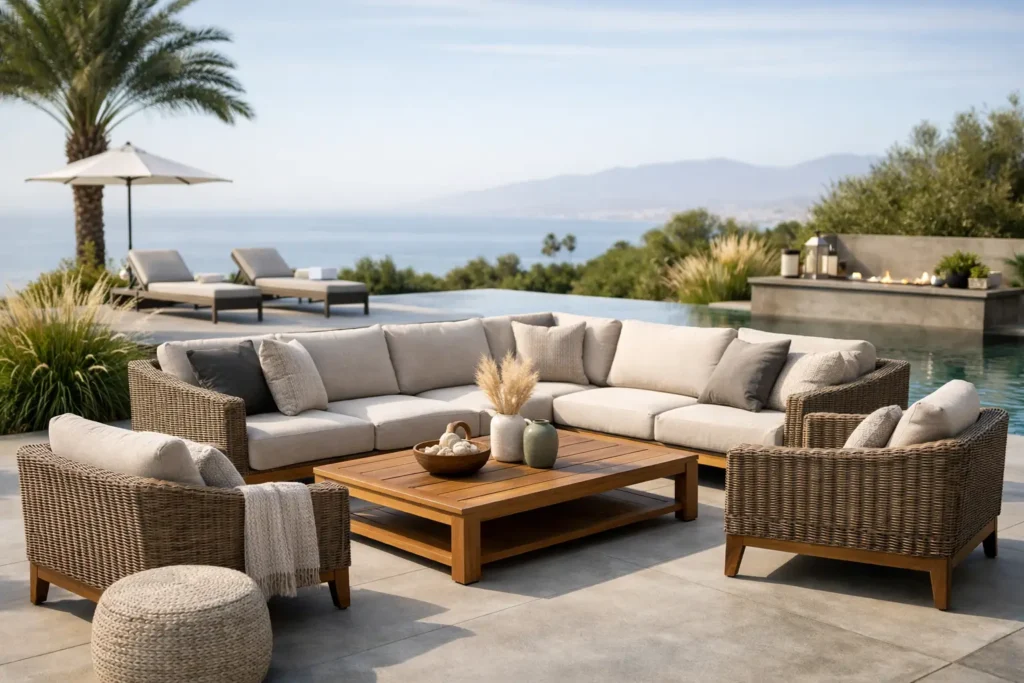
A hotel pool deck can look complete on opening day and feel under-furnished by the first busy weekend. The difference is rarely a matter of adding more chairs. It comes down to specifying the right scale, materials, comfort, and layout from the start. When professional buyers review outdoor lounge furniture sets, they need to assess more than appearance. Every piece must support the guest experience, withstand its environment, and remain practical for operations teams.
For hospitality, F&B, workplace terraces, country clubs, and education campuses, outdoor lounge furniture is a long-term commercial asset. A well-selected collection creates a cohesive extension of the interior design scheme while giving visitors a reason to stay longer, meet comfortably, and return.
Review Outdoor Lounge Furniture Sets by Commercial Use
The best set depends on what people are expected to do in the space. A low, relaxed sofa arrangement that works beside a resort pool may be unsuitable for a café terrace where guests need an upright seat to eat and work. Before comparing styles, define the setting, expected dwell time, traffic level, and service requirements.
Hospitality and poolside settings
Resorts, hotels, and clubs generally benefit from deep seating, generous daybeds, modular sofas, and low tables that encourage guests to settle in. Comfort is a priority, but so is visual consistency across a large area. Matching lounge chairs, two- or three-seat sofas, coffee tables, side tables, and sun loungers allow designers to create several seating zones without making the deck feel pieced together.
In wet areas, quick-drying cushions and frames that resist corrosion are essential. A beautiful fabric is not the right choice if it holds water after a rain shower or demands daily handling by housekeeping. Specify removable cushion covers where possible, and consider how the furniture will be moved or stacked during cleaning and events.
F&B terraces and rooftop venues
For restaurants, bars, and cafés, outdoor lounge furniture needs to balance atmosphere with turnover. Lounge seating can create premium zones for cocktails, waiting areas, or private group bookings, but seats that are too low can frustrate guests ordering food. Pair sofa-height seating with appropriately scaled tables, or reserve deeper lounge sets for clearly defined social areas.
Rooftops add another consideration: wind. Lightweight furniture is easier for staff to rearrange, yet it may shift in exposed locations. Larger tables, weighted bases, and modular pieces that connect securely can help preserve the intended layout without sacrificing the relaxed look clients expect.
Office and institutional outdoor spaces
Commercial outdoor lounges are increasingly used as informal meeting spaces, staff breakout zones, and student gathering areas. Here, ergonomics and durability often matter more than resort-style softness. Consider lounge chairs with a supportive sit, tables at a usable height, and layouts that give people the option to work alone or converse in groups.
For schools, healthcare facilities, and high-traffic common areas, avoid delicate details that are difficult to maintain. A simple, well-built set with replaceable components will usually deliver stronger long-term value than an intricate design that looks impressive only when new.
Materials That Earn Their Place Outdoors
Outdoor furniture materials should be reviewed against the actual climate, not just a product photograph. Sun, humidity, heavy rain, pool chemicals, salt exposure, and frequent cleaning all influence how a set will perform. In Singapore and similar tropical environments, moisture management and UV resistance deserve particular attention.
Powder-coated aluminum remains a strong commercial choice because it is relatively lightweight, corrosion-resistant, and available in many contemporary finishes. It is particularly useful for terraces and hospitality projects that need furniture staff can reposition. Quality matters, however. Examine the finish consistency, weld quality, drainage design, and protection at points where frames meet the ground.
Synthetic rattan can bring warmth and texture to resort, garden, and casual dining concepts. It works best when the weave is tightly finished over a stable frame and designed for commercial exposure. Lower-quality woven materials can become brittle, fade unevenly, or loosen under regular use. For a substantial project, ask whether the material has been selected for UV resistance and whether matching pieces will remain available for future expansion.
Teak and other outdoor-rated timbers offer a more natural, premium character. They can be an excellent choice for boutique hospitality and landscaped settings, but they require an honest maintenance plan. Timber changes color outdoors and may need periodic care if the desired finish is to be maintained. If the operator cannot commit to that upkeep, aluminum or a wood-look alternative may be the more dependable specification.
Outdoor upholstery should not be treated as an afterthought. Look for cushions with water-resistant covers, breathable filling, and fabrics intended for UV exposure. Dark colors may show less visible staining, while lighter tones can create a more refined hospitality setting but need more attentive cleaning. The right answer depends on operations, not only the mood board.
Comfort, Scale, and the Layout Around the Set
A furniture set is successful when it gives a space definition without reducing circulation. This is particularly important in commercial environments where service routes, accessibility, emergency paths, and cleaning access cannot be compromised.
Start with the footprint of each zone rather than the individual product dimensions alone. A sofa may fit neatly against a wall, but the full arrangement also needs room for a coffee table, leg clearance, and a comfortable route around seated guests. On a hotel deck, leave enough space for staff carrying towels, food, or drinks. In a workplace courtyard, ensure that lounge zones do not block the natural movement between doors, amenities, and meeting rooms.
Seat height affects how the set will be used. Deep, low sofas feel relaxed and exclusive, but they can be difficult for some guests to enter and exit. A mixed layout is often the stronger commercial decision: use lounge sofas and low tables for social zones, then add supportive armchairs or dining-height seating nearby for flexibility.
Modular furniture is especially valuable when a project needs adaptable layouts. Sectional sofas can be configured for intimate corners, larger group seating, or event formats. The trade-off is that modular systems need connectors, stable bases, and well-considered proportions. Without these details, modules can drift apart and make a polished venue look poorly managed.
Look Beyond the Initial Purchase Price
Project budgets should account for the full cost of ownership. An inexpensive outdoor lounge set may appear attractive during procurement, yet cost more over time if cushions fade quickly, frames corrode, or replacement pieces cannot be sourced. Commercial buyers should evaluate product lifespan, maintenance demands, warranty coverage, and the ability to replenish items as the site evolves.
Supply consistency is equally important. Outdoor areas are often completed in phases, and hospitality operators may need to replace damaged pieces without changing the design language of the entire venue. A supplier with a curated, coordinated range can make this process easier by providing matching tables, seating, and accessories from the same style family.
Customization may also be worthwhile for projects with a distinct identity. Frame finishes, cushion fabrics, and configuration choices can align outdoor areas with interior palettes, brand colors, or architectural materials. Customization should be confirmed early, with clear lead times and approval samples, so it strengthens the project instead of creating a late-stage procurement risk.
Questions to Ask Before You Specify
Before finalizing an outdoor lounge collection, confirm whether the furniture is intended for continuous commercial use, how it performs in direct sun and rain, and what cleaning routine the manufacturer recommends. Ask about cushion construction, replacement covers, frame protection, and whether spare units can be ordered later.
It is also worth reviewing physical samples whenever possible. Finish color, weave density, cushion firmness, and overall scale can differ significantly from catalog images. A showroom review gives designers and project teams a better understanding of how the collection will feel in a completed environment.
For larger fit-outs, consolidate outdoor lounge furniture with related dining, bar, and indoor lounge pieces where practical. This simplifies coordination and produces a more intentional visual experience across the property. VCUS supports this approach with contemporary, project-ready furniture collections designed for cohesive commercial specification.
The right outdoor lounge set should make the space feel effortless to guests and manageable to the people who run it. Select for the real conditions of the site, not just the first impression, and the investment will continue to support better commercial experiences long after opening day.
