
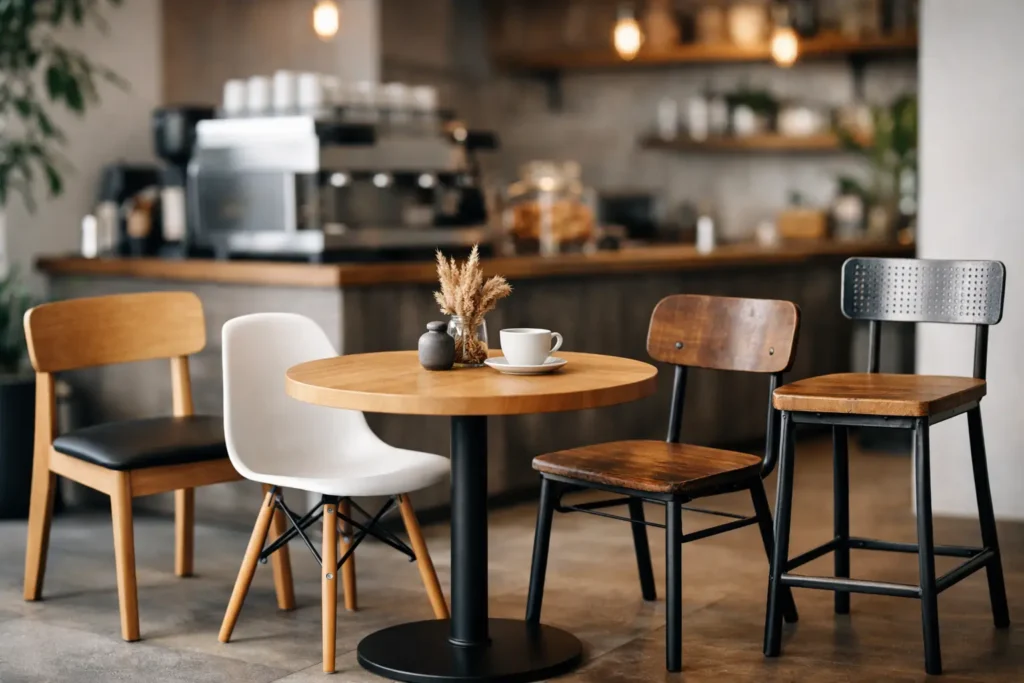
A cafe chair can look exceptional on opening day and still become an expensive mistake within six months. Spilled drinks, dragged seating, frequent cleaning, humidity, sun exposure, and continuous customer turnover place real demands on every finish. Selecting the best cafe furniture materials is therefore not simply a design decision. It is a specification decision that affects maintenance costs, guest comfort, brand presentation, and the working life of the entire venue.
For cafe owners, interior designers, and F&B project teams, the right answer is rarely one material used everywhere. Successful spaces combine materials according to how each zone is used: durable table surfaces at high-turnover dining areas, comfortable seating where guests linger, and weather-resistant pieces at outdoor frontage or terraces. The goal is a cohesive interior that continues to perform after thousands of covers.
What Defines the Best Cafe Furniture Materials?
The best material depends on the venue concept, expected traffic, cleaning routine, location, and budget. A specialty coffee bar with compact seating has different priorities from an all-day brunch concept, a food court outlet, or a hotel cafe. Before selecting finishes, establish how long customers typically stay, whether food service is messy, how often tables will be moved, and who will maintain the furniture.
For most commercial cafes, five criteria should lead the decision: durability under repeated use, resistance to stains and moisture, ease of cleaning, guest comfort, and design consistency across chairs, tables, barstools, and lounge pieces. Upfront price matters, but lifecycle value matters more. A lower-cost chair that needs regular replacement can quickly cost more than a well-built commercial model with the right frame and finish.
Wood Brings Warmth, but Needs the Right Finish
Solid wood remains a leading choice for cafe chairs, stools, and selected table bases because it creates immediate warmth and visual authenticity. Oak, ash, beech, rubberwood, and walnut-toned finishes can support concepts ranging from Scandinavian minimalism to contemporary bistro interiors. Wood also pairs naturally with upholstered seats, metal details, and stone-look tabletops.
Its limitation is maintenance. Unprotected timber can absorb moisture, show water rings, and deteriorate in humid or heavily cleaned environments. For commercial use, specify sealed or lacquered surfaces designed for regular wiping, and ensure chair joints are properly constructed for repeated movement. Solid wood is particularly effective in air-conditioned indoor dining areas, quieter cafes, and hospitality venues where material character is central to the experience.
Wood veneer offers a practical alternative for tabletops and case goods. It provides a natural grain appearance at a more controlled cost and can improve consistency across a larger project. Veneer still requires careful edge protection and appropriate cleaning products, but it is often a sensible choice when the design calls for timber at scale.
When laminate is the better tabletop choice
High-pressure laminate is one of the most practical materials for high-turnover cafe tables. It is available in timber, stone, concrete, and solid-color looks, while offering strong resistance to everyday stains and easier cleaning than many natural surfaces. For quick-service cafes, food courts, staff dining areas, and family-oriented venues, laminate can deliver a polished result without making maintenance difficult.
Pay close attention to edge detailing. Exposed or poorly finished edges are often where moisture damage begins. A quality tabletop with a durable edge treatment and a stable commercial base will stand up far better to daily service than a visually similar residential table.
Metal Frames Deliver Commercial Strength
Powder-coated steel and aluminum are among the most dependable frame materials for cafe furniture. They are suited to chair legs, table bases, barstools, benches, and outdoor seating because they handle repeated movement and heavy use well. Their clean lines also fit industrial, contemporary, and minimalist interiors without adding unnecessary visual weight.
Powder-coated steel is a strong indoor choice, especially for tables and chairs that need a slim profile with dependable structural support. Black remains popular, but textured neutrals, bronze tones, and custom colors can help tie furniture to a broader brand palette. For tables, a well-designed metal base also improves stability and makes floor cleaning easier.
Aluminum is usually the better option for outdoor cafes, covered walkways, and semi-open dining areas. It is lightweight, corrosion-resistant, and easy for staff to reposition. In Singapore and other humid climates, outdoor furniture should not be selected based on appearance alone. Specify finishes intended for exterior use, and consider where rainwater, direct sun, salt air, and cleaning chemicals will affect the pieces.
Upholstery Makes Customers Stay Longer
Upholstered cafe seating changes the character of a venue. Banquettes, lounge chairs, and padded dining chairs create a more relaxed, premium setting and can encourage longer dwell times. They are especially effective in hotel cafes, dessert concepts, coworking-adjacent cafes, and spaces designed for informal meetings.
However, fabric selection determines whether upholstered furniture remains an asset. Commercial-grade vinyl, performance fabric, and leather-look upholstery are generally easier to maintain than standard residential textiles. Vinyl works well for banquettes and high-use dining chairs because it can be wiped clean and withstand frequent service. Performance fabrics can introduce texture and softness while offering better stain resistance, though they require a clear cleaning protocol.
Avoid specifying pale, delicate fabrics in self-service areas unless the venue has the staffing and maintenance standards to support them. Consider darker tones, patterned textiles, or replaceable seat cushions where spills are likely. Comfort should not come at the expense of operational practicality.
Polypropylene Is Practical for Flexible Seating
Polypropylene chairs are an efficient choice for casual cafes, outdoor dining, educational campuses, and high-volume F&B settings. They are lightweight, stackable in many designs, easy to clean, and available in a wide range of colors and silhouettes. A well-designed polypropylene chair can look contemporary while making daily reset and cleaning considerably easier for staff.
Not every plastic chair is suitable for commercial use. Look for proven weight capacity, reinforced construction, UV resistance for outdoor locations, and a finish that will not become brittle or fade prematurely. Polypropylene is often best used where flexibility and resilience are more important than a formal or luxurious feel.
For a more elevated result, combine molded polypropylene seating with timber-look tables, powder-coated bases, or upholstered banquettes. The contrast keeps the environment approachable while giving the cafe a deliberate, design-led identity.
Best Cafe Furniture Materials for Table Surfaces
Tabletops receive the most direct wear, so material selection deserves special attention. Spills, hot cups, cleaning solutions, bags, laptops, and moving tableware all leave their mark over time. The right surface should suit the menu and service model, not only the mood board.
Laminate is usually the strongest all-around option for indoor commercial cafes due to its value, variety, and easy-care performance. Solid wood or veneer can create a richer atmosphere, but should be reserved for venues prepared to maintain it. Compact laminate is highly moisture-resistant and useful for outdoor or semi-outdoor conditions, while sintered stone and ceramic surfaces provide a premium, scratch-resistant look for feature tables and upscale hospitality settings.
Natural stone and marble create distinction, but they are not automatically the most practical choice. They can stain, chip, or require sealing, particularly in busy beverage-led environments. If the project calls for a stone appearance, a stone-look laminate, ceramic, or sintered surface may provide a better balance of visual impact and ongoing maintenance.
Build a Material Palette, Not a Collection of Isolated Pieces
The most successful cafe interiors do not rely on one material repeated without purpose. They build a controlled palette. For example, a warm timber chair, charcoal powder-coated table base, durable laminate tabletop, and wipeable upholstered banquette can create contrast while remaining visually consistent. This approach also lets the project team place more expensive materials where customers notice them most and use hardwearing alternatives where the demands are higher.
Consistency is particularly important when a cafe includes counter seating, dining tables, lounge corners, and outdoor areas. The furniture should feel connected even when materials change to meet different performance needs. Coordinating finishes, frame colors, upholstery tones, and tabletop profiles helps create a complete environment rather than a series of separate purchases.
For larger projects, review physical samples before finalizing the specification. Test surfaces under the venue lighting, assess chair comfort at the actual table height, and confirm that the selected materials can be supplied consistently across the required quantity. This is where an experienced commercial furniture partner can reduce risk, particularly when customization, phased delivery, or matching pieces across multiple zones are required.
A well-specified cafe should still look intentional after the rush hour, not just before it. VCUS helps project teams evaluate commercial furniture materials, matching collections, and practical finishes so every seat and surface supports the experience you intend to deliver. Visit the showroom with your plans, menu concept, and finish references, then select materials that will keep working long after opening day.
