
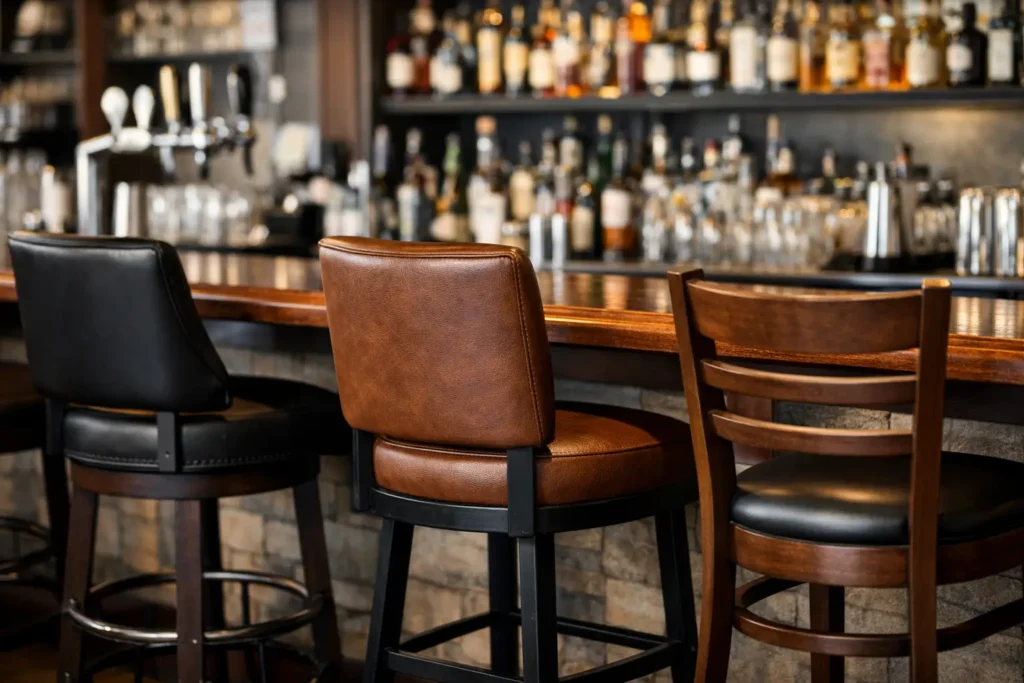
A busy bar does not wear out furniture slowly. It tests every joint, finish, weld, and footrest from the first week of service. If you are specifying the best restaurant barstools for heavy use, the right choice is not just about style. It is about protecting uptime, controlling replacement costs, and keeping the space looking sharp under real commercial traffic.
For restaurant owners, designers, and procurement teams, barstools sit at the intersection of design and punishment. They are pulled, leaned back on, stacked with bags, hit by cleaning equipment, and used by hundreds of guests every week. A stool that looks good in a catalog but fails in six months becomes an expensive mistake. A stool that is built for commercial use, easy to maintain, and consistent with the wider interior scheme does much more than fill seats. It supports the entire guest experience.
What makes the best restaurant barstools for heavy use?
The short answer is durability, but that word gets used too loosely. In commercial environments, durability means the stool performs well under repeated impact, shifting body weight, frequent cleaning, and constant movement across hard floors. It also means the stool retains its appearance well enough that you are not forced into early replacement for cosmetic reasons.
Frame construction matters first. Metal frames are often the safest choice for high-turnover restaurant bars because they handle repeated use well and are less vulnerable to moisture, spills, and knocks than many timber options. Powder-coated steel is especially practical where you want a contemporary finish and dependable daily performance. Aluminum can work well too, particularly when weight and mobility matter, but the gauge and build quality still need close review.
Solid wood barstools can absolutely work in heavy-use settings, especially in hospitality concepts where warmth and material character are part of the brand. The trade-off is that not all wood stools are equal. Commercial-grade timber stools need strong joinery, reinforced stretchers, and finishes suited to repeated cleaning. A residential-looking wood stool with weak joints may fit the concept visually but fail under restaurant traffic.
The seat and back design deserve just as much scrutiny. Upholstered stools can elevate comfort and perceived quality, but they need contract-appropriate materials. Vinyl, performance fabrics, and easy-clean synthetic leathers are usually better suited to food and beverage settings than delicate textiles. If your venue has fast turnover, spill risk, and limited maintenance bandwidth, a molded seat or sealed timber seat may be the more practical specification.
Barstool materials and where each one works best
The best material depends on the operating model of the venue. A cocktail bar with longer dwell times has different needs than a quick-service concept where guests sit briefly and turnover is constant.
Metal barstools are often the workhorse choice. They suit industrial, modern, and many contemporary hospitality interiors, and they tend to perform well where floors are cleaned aggressively and stools are moved often. Look for welded frames, stable footrests, and finish quality that resists chipping. If the coating fails early, the stool may remain structurally sound but quickly look tired.
Wood barstools bring more warmth and can soften harder interior palettes. They often work well in bistros, hotel lounges, and restaurants aiming for a more elevated atmosphere. The key is to avoid underbuilt models. Heavy-use wood stools should feel planted, not lightweight or flexible, and the footrest area should be properly reinforced because that is where many failures begin.
Polypropylene and molded plastic options can be smart in casual hospitality, especially where cleaning speed matters. They are practical, often cost-efficient at scale, and can work well indoors or in semi-outdoor settings depending on the product. The trade-off is perception. In some restaurants, they can read too casual unless the form is carefully selected.
Upholstered barstools sit at the premium end of the guest experience, but they require smarter planning. In fine dining or hotel F&B spaces, they can support longer stays and strengthen the overall interior story. Even so, comfort should not come at the expense of serviceability. Removable seat pads, replaceable upholstery, and stain-resistant materials can make a major difference over the life of the project.
The details buyers should not ignore
Many stool failures come down to small details that were overlooked during specification. Footrests are a common weak point. Guests use them heavily, often from the side rather than straight on, so they need to be properly integrated into the frame. A decorative foot bar is not the same as a structural one.
Glides are another detail with outsized impact. The wrong glide can damage flooring, create excessive noise, or wear down too quickly. In restaurants with tile, stone, or timber-look surfaces, the right floor protection helps preserve both the stool and the fit-out.
Weight and stability should be balanced carefully. A very light stool may be easy for staff to reset, but it can also feel less substantial and may tip more easily. A very heavy stool may communicate quality but slow down cleaning and daily operations. The right commercial stool feels stable without becoming a handling problem.
Seat height must also be exact. Too low, and the posture feels awkward at the bar counter. Too high, and guests feel cramped. This seems basic, but it is still a frequent issue on mixed-use hospitality projects where bar heights vary between dining counters, beverage bars, and lounge areas.
How comfort affects revenue, turnover, and brand perception
The best restaurant barstools for heavy use are not necessarily the softest or most padded. Commercial comfort is about duration, posture, and fit for purpose. A backrest can improve dwell time and encourage additional orders in casual dining or cocktail settings. In high-turnover venues, a backless stool may be easier to place, easier to clean, and more space-efficient.
This is where project goals matter. If the bar is a destination zone where you want guests to stay for another round, comfort becomes part of revenue strategy. If the bar is mainly overflow seating or quick dining, durability and layout efficiency may matter more than lounge-level comfort.
The stool should also fit the visual language of the wider space. Commercial buyers rarely source barstools in isolation. They need them to work with dining chairs, tables, lounge seating, and often adjacent waiting or reception zones. A style-organized collection is useful because it helps maintain design consistency across the project without creating unnecessary sourcing complexity.
Best restaurant barstools for heavy use by venue type
For quick-service and casual dining restaurants, simple metal or molded stools often make the most sense. These spaces need easy maintenance, efficient resets, and reliable performance at a sensible project cost.
For full-service restaurants, mixed-material stools can offer a better balance of comfort and finish. Metal frames with upholstered seats, or timber-look stools with commercial-grade construction, often suit these environments well.
For hotel bars and premium hospitality spaces, the specification typically shifts toward stronger visual impact and greater guest comfort. Upholstered backs, refined finishes, and more tailored silhouettes become appropriate, provided the product still meets the demands of daily commercial use.
For outdoor or semi-outdoor dining bars, moisture resistance and UV performance become non-negotiable. Not every stool marketed for hospitality is suitable for exposed conditions, so procurement teams should confirm where the stool can realistically perform over time.
Why procurement value is bigger than unit price
The cheapest stool on a spreadsheet is rarely the lowest-cost decision over the life of a restaurant. Replacement cycles, inconsistent finish quality, installation issues, and maintenance burden all add cost. So does visual deterioration. If a stool still functions but makes the venue look worn, it is no longer doing its job.
This is why commercial buyers often benefit from working with a supplier that understands broader project requirements, not just single-item sales. Specification support, finish coordination, customization, and dependable supply matter when the goal is a cohesive, hard-working interior. For many hospitality projects, the strongest value comes from choosing stools that align with the concept, stand up to service, and can be sourced as part of a wider furniture package. That is where an experienced commercial partner such as VCUS can simplify decision-making for designers, operators, and fit-out teams.
Before sign-off, it is worth reviewing samples in person, checking weld quality and finish consistency, and testing how the stool feels after repeated use, not just first impression. Ask practical questions. How easy is it to clean? Can upholstery be refreshed? Are replacement glides available? Is the lead time realistic for the project program? These are the issues that shape long-term satisfaction.
The right restaurant barstool should earn its place every day. It should support the design intent, hold up under pressure, and keep your venue looking composed during the busiest service of the week. Choose with that standard in mind, and the result is not just a better stool. It is a better-performing space.
