
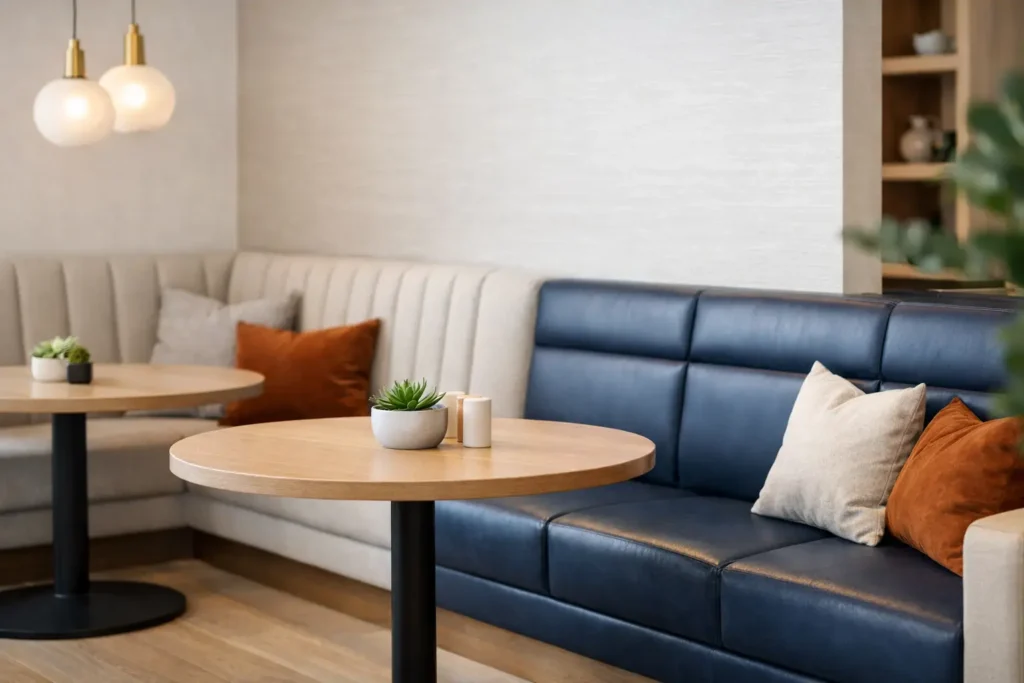
Why banquette seating earns its floor space
A restaurant can have a strong menu, a smart concept, and a prime location, then lose margin through a poor seating plan. Tables sit too far apart, corners go unused, walkways become tight, and guest comfort drops after the first 30 minutes. In many dining rooms, the fix is not simply adding more chairs. It is rethinking how the perimeter and fixed zones work.
That is where custom banquette seating for restaurants becomes a practical design and operations decision, not just a stylistic one. A well-designed banquette can increase seat count, define circulation, improve acoustic comfort, and give the space a more intentional identity. For owners, designers, and fit-out teams, it often delivers one of the clearest returns per square foot when planned properly.
The key phrase is planned properly. Banquettes are highly effective, but they are not interchangeable with loose seating. Dimensions, upholstery, back pitch, cleaning access, and table pairing all affect whether the result feels premium or problematic.
What custom banquette seating for restaurants actually solves
In commercial F&B environments, space pressure is constant. Every extra seat matters, but not at the expense of service flow or guest experience. Custom banquettes help solve this by using wall lines, corners, and awkward footprints more efficiently than standalone chairs can.
They also create a clearer zoning strategy. A banquette can anchor a casual dining run, frame semi-private booths, or soften a larger room with repeated upholstered sections. In open-plan restaurants, this matters because fixed seating helps the room feel organized without relying on hard partitions that can make the layout feel smaller.
From a brand standpoint, banquettes do more than fill a wall. They shape the visual rhythm of the restaurant. The stitch detail, upholstery color, plinth finish, channel back, or curved profile can reinforce whether the venue feels refined, energetic, contemporary, or approachable. For operators building a concept that needs to be recognized instantly, that consistency matters.
There is also the comfort factor. Guests tend to perceive banquette seating as more relaxed and more premium than rows of standard dining chairs, especially in restaurants designed for longer dwell time. That can support beverage sales, dessert orders, and repeat visits, although the result depends heavily on the ergonomics.
Where standard banquettes fall short
Off-the-shelf banquettes can work for some fast, repeatable concepts, but many commercial projects need more control than standard modules allow. Site dimensions are rarely perfect. Column positions interrupt runs, walls are not always true, and service routes can create dead zones if the seating does not follow the plan precisely.
That is why custom work tends to make more sense in project environments. The design team can align the banquette to the exact table size, aisle width, and desired seat count, instead of compromising the layout to fit a pre-made unit.
Material performance is another major reason to customize. Restaurants place very different demands on furniture than offices or residential settings. Upholstery must resist staining and abrasion. Foam density must hold its shape under daily turnover. Base construction must withstand impact from cleaning equipment, bags, shoes, and frequent guest movement. If the venue serves families, late-night crowds, or high-volume lunch traffic, the wear profile changes again.
Custom specification lets buyers adjust these details for the actual operating model, not an assumed one.
The design choices that matter most
The success of custom banquette seating for restaurants usually comes down to a handful of decisions that look simple on paper but have real operational impact once the venue opens.
Seat depth is one of them. Too shallow, and the banquette feels upright and unforgiving. Too deep, and shorter guests lose support unless loose cushions are added, which creates a maintenance issue. Back angle has the same effect. A more relaxed pitch may suit lounge dining, but quick-service or high-turnover concepts often benefit from a more upright sit.
Seat height needs to be coordinated with the table base and top thickness. Even a small mismatch can make dining uncomfortable. This is especially relevant when banquettes are paired with custom tables or mixed seating arrangements across the venue.
Then there is the question of fixed versus flexible layout. A full wall banquette can maximize capacity beautifully, but it reduces day-to-day rearrangement. That trade-off is often acceptable in restaurants with a stable table plan, but less ideal in venues that host frequent private events or changing group sizes.
Privacy is another variable. Higher backs can improve acoustics and create a more intimate feel, particularly in premium dining zones or club-style concepts. But they also add visual weight. In compact restaurants, oversized backs can make the room feel boxed in if not balanced carefully.
Material selection is not just about appearance
Restaurant seating takes abuse. Spills, friction, constant entry and exit, and cleaning chemicals all test the finish package every day. That is why material selection should be approached with the same discipline as kitchen surfaces or flooring.
Upholstery choice depends on the concept and service style. Faux leather can be practical for wipe-down maintenance and a sharper visual finish, but fabric can feel warmer and more layered in the right setting. Textured materials help hide minor wear, while smooth surfaces can read more polished but may show scratches or creasing sooner. There is no single best option. It depends on traffic profile, brand image, and cleaning protocol.
The internal build matters just as much. Commercial-grade foam, stable framing, reinforced joints, and well-finished bases are what keep the banquette looking consistent after months of use. A beautiful banquette that loses shape quickly becomes a replacement problem, not a design feature.
For procurement teams and operators, this is where value should be judged carefully. Lower upfront pricing can be attractive, but lifecycle cost matters more in high-use hospitality environments. Repairs, premature reupholstery, and seating downtime all carry a cost.
Planning for operations, not just handover day
Many banquette decisions are made during design development, but the consequences show up after opening. That is why the best restaurant seating plans consider maintenance and service from the start.
Cleaning access is a good example. If crumbs, dust, and spills collect in hard-to-reach gaps, the seating will age poorly no matter how good it looked on installation day. Toe-kick design, base recess, and edge detailing all influence how easily staff can clean the area.
Entry and exit comfort also matter more than many teams expect. Guests should not need to slide awkwardly into position or disturb neighboring diners every time someone leaves the table. In some layouts, segmented booth arrangements make more sense than one uninterrupted run for exactly this reason.
Lead time and installation should also be treated as part of the furniture strategy. Custom banquettes are built to project requirements, so early coordination is essential. Site measurement, shop drawings, finish approvals, and sequencing with flooring, wall finishes, and table placement all affect the final result. Reliable suppliers help avoid the costly handover-stage adjustments that can derail opening schedules.
How professional buyers should evaluate a supplier
For designers, contractors, and business owners, the right supplier is not simply the one with a good-looking reference image. The real test is whether they can support the full project requirement with consistency and control.
That includes understanding restaurant ergonomics, offering finish options suited to commercial use, coordinating banquettes with matching chairs and tables, and delivering within project timelines. It also means being able to advise honestly when a concept detail looks strong visually but may underperform in real service conditions.
This is where an experienced commercial furniture partner adds value. A project-led supplier can help buyers keep the seating package cohesive across the dining area, waiting zone, lounge, and bar while staying within cost parameters. At VCUS, this kind of support is central to how commercial spaces are furnished – with customization, dependable project coordination, and design-conscious solutions that stay practical for operations.
Getting the balance right
The best banquette is not always the most elaborate one. In some restaurants, a clean upholstered run with durable detailing will outperform a more decorative build. In others, a statement curved booth may justify the investment because it becomes part of the venue identity. It depends on the concept, turnover, price point, and physical footprint.
What should stay constant is the decision-making standard. Banquette seating should improve capacity without forcing the room. It should support comfort without creating maintenance headaches. It should strengthen the brand without pushing the budget out of control.
When those factors are aligned, custom banquette seating stops being a line item and starts becoming one of the most effective fixed assets in the dining room. If you are planning a new restaurant or upgrading an existing layout, it is worth treating the banquette as a strategic specification from day one, not a finishing touch added at the end.
