
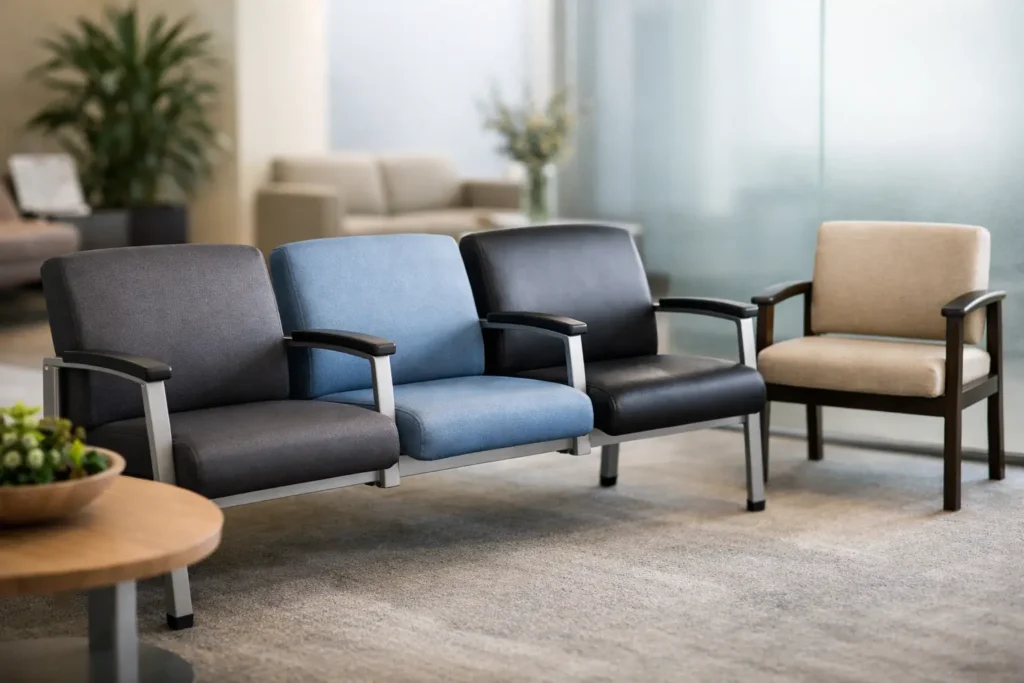
When a waiting room starts failing, everyone notices
In healthcare environments, seating is usually one of the first elements to show wear. Torn upholstery, wobbling arms, stained surfaces, and sagging cushions quietly change how a facility feels before a patient ever reaches reception. For specifiers and facility decision-makers, that is not a small cosmetic issue. It affects maintenance costs, cleaning time, brand perception, and the overall patient experience.
That is why healthcare waiting room seating durable enough for daily commercial use should never be treated as a simple commodity buy. The right specification supports infection control, keeps replacement cycles under control, and helps create a calm, professional environment that still feels welcoming.
What durable seating really means in healthcare
Durability in a healthcare waiting room is not only about whether a chair can take weight. It is about how the entire product performs under constant use, repeated cleaning, shifting patient needs, and long operating hours. A chair can look strong on paper and still become a poor investment if the upholstery cracks after aggressive cleaning or the frame starts loosening under high traffic.
For most healthcare projects, durability sits at the intersection of structure, finish, maintenance, and design life. A well-built frame matters. So do high-wear surface materials, quality foam, reinforced joints, and the ability to maintain a clean appearance over time. In a busy clinic, specialist center, or hospital outpatient area, seating is used by patients, families, elderly visitors, and staff throughout the day. That creates a very different performance requirement from light-duty office breakout seating.
There is also a practical procurement point here. The cheapest chair is rarely the lowest-cost option once service calls, early replacement, and visual deterioration are factored in. Commercial buyers usually benefit more from seating that holds its form and finish for years, even if the initial unit price is slightly higher.
Why healthcare waiting room seating durable enough for daily traffic needs a different spec
Healthcare spaces ask more from seating than many other commercial environments. People may sit for ten minutes or for several hours. Some may need extra stability when standing up. Others may arrive with mobility aids, bags, or children. Cleaning teams may sanitize surfaces multiple times a day. That mix changes the specification.
A hospitality lounge chair may look attractive, but if it has deep tufting, complex stitching, porous fabric, or low seat height, it may not suit a healthcare setting. In contrast, waiting room seating for healthcare should balance comfort with cleanability and accessibility. The best results usually come from furniture designed for commercial healthcare or from commercial collections selected with healthcare realities in mind.
This is where experienced project suppliers add value. Product selection is not only about style. It is about matching frame type, material, seat profile, and configuration to the volume and behavior of the space.
The material choices that make the biggest difference
Material selection tends to determine whether seating still looks serviceable after years of use. Upholstery is often the first point of failure, so it deserves close attention. Vinyl and healthcare-grade synthetic upholstery are common because they are easier to wipe down and resist spills better than many woven fabrics. That said, not every vinyl performs the same way. Lower-grade options can harden, split, or discolor under frequent cleaning.
For projects that want a warmer, less clinical look, high-performance commercial fabrics may still be suitable in selected zones, especially lower-risk or shorter-wait areas. But there is always a trade-off. Fabric can improve acoustic softness and visual comfort, yet it may require more maintenance and may not be ideal for every healthcare setting.
Frame materials matter just as much. Powder-coated metal, solid hardwood with commercial finishing, and reinforced internal steel structures are often preferred because they stand up well to heavy use. Plastic shell seating can also be effective in some clinics if the design is commercial-grade and easy to sanitize, though lower-end molded options may scuff or fade quickly.
Foam density is another detail buyers should not overlook. If foam collapses early, the chair can look tired long before the frame fails. Seating that retains shape under frequent use protects both comfort and appearance.
Design details that improve lifespan and usability
Small design choices often have the biggest long-term impact. Open-arm chairs can help patients sit down and stand up more easily. Slightly higher seat heights can improve accessibility for elderly users. Wider seats or bariatric-friendly options may be necessary depending on patient demographics. If these needs are ignored, even durable seating can become a poor functional fit.
From a maintenance perspective, simple silhouettes usually perform better. Fewer seams, fewer crevices, and easy-to-reach surfaces make cleaning faster and more consistent. Legs and bases should also be considered carefully. A sled or fully grounded base may offer stability in some settings, while four-leg designs can simplify replacement and reconfiguration. It depends on the layout, floor finish, and traffic pattern.
Modular beam seating can work well in high-volume outpatient areas where efficient planning matters. Lounge chairs and compact sofas may be more appropriate in specialist clinics, private medical centers, or premium reception spaces where the waiting experience is part of the brand. Neither is automatically better. The right choice depends on patient turnover, dwell time, and the image the facility wants to project.
Balancing durability with a calmer patient experience
There is a common mistake in healthcare projects: specifying seating that is technically hard-wearing but visually harsh. Waiting areas should be durable, but they should not feel institutional unless there is a clear operational reason. Patients notice the environment immediately, and seating plays a major role in whether a space feels stressful or reassuring.
This is where design-conscious procurement makes a measurable difference. Soft contemporary forms, coordinated finishes, and a cohesive furniture language can make a healthcare space feel more considered without compromising performance. Commercial buyers do not need to choose between durability and design. They need collections that deliver both, with enough range to maintain consistency across reception, consultation support spaces, and adjacent lounge areas.
For many projects, that consistency matters just as much as the individual chair specification. A healthcare interior that feels coherent supports trust. It also makes the space easier to refresh over time because matching or complementary pieces are easier to source.
Budget control without false economy
Most project teams are working within clear cost parameters. That is reality. But cost control should be approached across the life of the furniture, not just the purchase order. Durable seating reduces disruption, lowers replacement frequency, and often protects the visual quality of the fit-out much longer.
There are still sensible ways to control budget. One approach is to tier the specification by zone. High-traffic primary waiting areas may justify the most heavy-duty models, while lower-use consultation waiting points or staff-adjacent lounges can use lighter commercial options. Another approach is to standardize frame families and vary finishes or upholstery by area. This keeps the project looking intentional while helping procurement stay disciplined.
Customization can also help when standard products are close but not quite right. Adjusting upholstery, dimensions, or finish selections may produce a stronger project outcome than forcing a generic off-the-shelf solution into every area. For healthcare buyers managing larger fit-outs, that flexibility can be the difference between a workable scheme and one that creates avoidable issues later.
How to evaluate a supplier for healthcare seating projects
Product matters, but supplier capability matters just as much. Healthcare projects rarely need only a chair. They need coordinated decision-making, reliable lead times, finish clarity, and confidence that the supplier understands commercial use conditions.
Buyers should look for a partner that can support specification across categories, not only a single waiting chair model. A cohesive healthcare environment may include reception seating, tandem seating, visitor chairs, side tables, consultation room furniture, staff seating, and lounge pieces in related finishes. Working with a supplier that can coordinate across those categories simplifies selection and reduces mismatch risk.
This is also why showroom evaluation is valuable. Seating comfort, height, scale, and finish quality are difficult to assess from images alone. For project teams that need both style confidence and performance reassurance, hands-on review usually leads to better decisions. At VCUS, that project-oriented approach is central to how commercial buyers shortlist furniture for healthcare and other business environments.
A better spec starts with the right questions
Before selecting models, it helps to define how the waiting room actually functions. Is the space handling quick patient turnover or long dwell times? Are elderly patients a key user group? How aggressive is the cleaning regime? Does the project need premium brand presentation, or is operational efficiency the priority? Will pieces need to match adjacent departments or future phases?
Those questions shape the answer more than trend-driven aesthetics ever will. Some projects need compact, highly practical seating with maximum cleanability. Others need a more elevated reception feel without sacrificing performance. Often the best result sits somewhere in between.
Durable healthcare seating is not about buying the hardest-looking product in the catalog. It is about specifying furniture that keeps performing, keeps the space looking credible, and keeps the project commercially sensible long after installation. For healthcare environments under constant pressure, that kind of durability is not a luxury. It is good planning.
If the waiting room is expected to work hard every day, the seating should be specified like it matters – because it does.
