
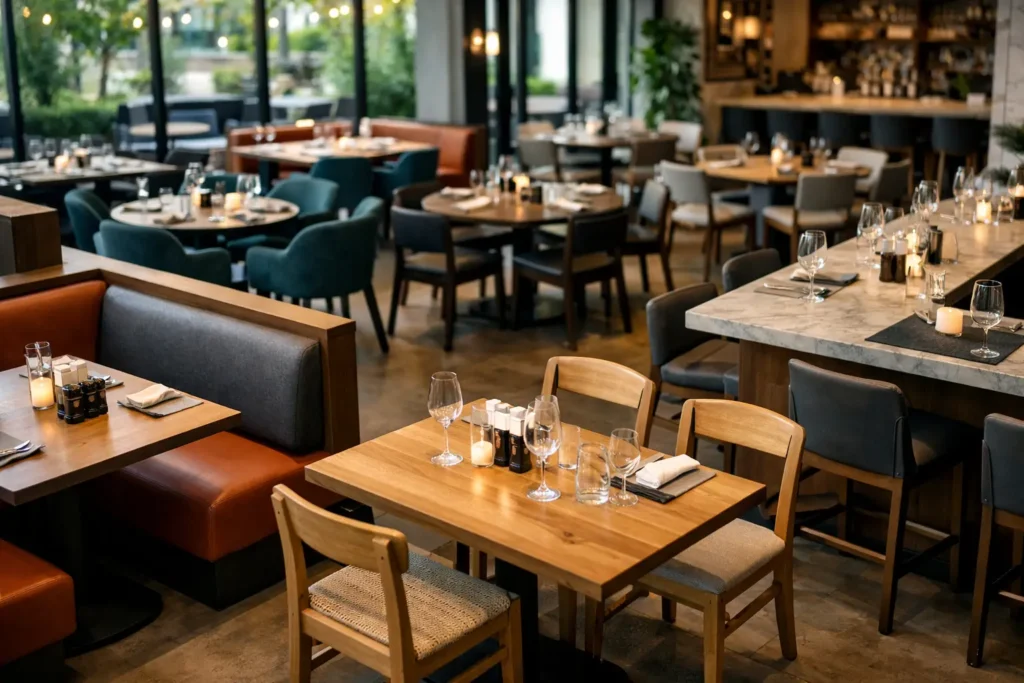
A full dining room can still underperform if the floor plan slows service, frustrates guests, or wastes sellable space. A strong restaurant seating layout guide is not just about fitting in more covers. It is about shaping circulation, comfort, table mix, and furniture specification so the room works as well on a busy Saturday night as it does during a quieter lunch service.
For owners, designers, and fit-out teams, seating layout is where commercial performance and interior design meet. The wrong plan creates bottlenecks, uneven table utilization, and a room that feels cramped even when the aesthetic is right. The right plan supports revenue, improves staff movement, protects guest comfort, and gives the entire venue a more intentional, design-forward presence.
What a restaurant seating layout guide should solve
At project level, layout decisions need to answer more than one question at once. How many guests can the room support comfortably? How quickly can staff move between kitchen, POS, service stations, and tables? Which seating types support the brand concept, average party size, and expected turnover? Those factors are connected, and treating them separately often leads to expensive revisions after opening.
A practical layout should balance four pressures – capacity, circulation, guest experience, and furniture durability. Push too hard on capacity and you compromise comfort and service speed. Leave too much empty space and the venue may look under-occupied while underperforming commercially. This is why experienced operators and specifiers start with operating realities before they finalize table counts.
Start with the service model, not the furniture
The most common mistake in restaurant planning is choosing seating types before defining how the venue will actually operate. A quick-service concept has very different requirements from a high-end dining room, a hotel café, or a bar-led restaurant with a strong evening crowd.
If the venue depends on fast turnover, smaller tables with flexible joining options usually outperform fixed large-party setups. If the concept is built around longer dwell times, comfort becomes a stronger priority, and banquettes, upholstered chairs, and more generous spacing may justify a lower seat count. In compact city locations, that trade-off needs to be handled carefully because every square foot has revenue implications.
Staff movement matters just as much. A layout that looks balanced on plan can fail in operation if servers have to cut across guest paths or queue around tight corners. The best layouts support intuitive movement from entry to host point, from kitchen to dining floor, and from tables to restrooms without friction.
Build the floor around zoning
A restaurant rarely operates as one uniform room. Even smaller venues benefit from zoning, because different seat types can serve different guest behaviors and sales patterns.
Window seating often suits couples and smaller parties, while central table zones can be configured for more flexible groupings. Banquette lines along walls help maximize perimeter use and create a more anchored visual structure. Bar-height seating can add energy and support walk-ins, but it should not dominate if the concept depends on broad demographic appeal or longer meal periods.
Waiting areas, cashier points, and takeaway pickup zones also need to be considered early. When these functions are squeezed into leftover space, they often disrupt the main dining experience. A well-zoned layout protects the revenue-producing floor while still giving support functions enough room to work properly.
Restaurant seating layout guide for table mix
A useful restaurant seating layout guide should help teams think in ratios, not just totals. The total number of seats matters, but the mix of 2-tops, 4-tops, communal tables, banquettes, and bar seating has a bigger impact on actual utilization.
Most restaurants overestimate how often they will need large tables and underestimate how often they will seat parties of two. Too many fixed 6-tops can leave capacity stranded during regular service. Flexible 2-top and 4-top configurations usually perform better because they can be combined when needed while remaining efficient during quieter periods.
Banquettes are often one of the smartest commercial tools in a layout because they increase seating efficiency along walls and create a more polished, intentional look. That said, they reduce flexibility if dimensions are not planned properly. Loose tables paired with banquettes tend to work best when operators want both efficiency and adaptability.
Bar stools, lounge seating, and high communal tables can also add range to a floor plan, especially in hospitality-led concepts. But these should support the operating strategy rather than exist as visual variety. If guests are unlikely to choose bar-height seating for full meals, those seats may inflate the headline count without delivering equal value.
Get circulation widths right
Circulation is where many layouts succeed or fail. Designers may be tempted to compress aisles to gain one more table, but cramped clearances have a direct effect on guest comfort, staff efficiency, and perceived quality.
Main pathways should feel obvious and unobstructed. Staff should be able to move with trays, clear tables, and access service points without turning every busy period into a traffic problem. Guests should be able to sit down and stand up without colliding with passing servers or adjacent diners.
This is also where furniture dimensions become critical. A chair with a generous footprint may look excellent in a catalog but reduce workable aisle space once occupied. Table bases, arm profiles, and stool spacing all affect actual circulation. That is why layout planning should always use real product dimensions, not placeholders.
Comfort is part of the brand experience
Guests may not talk about seat pitch or table offset, but they notice when a space feels too tight, too noisy, or awkward to use. Comfort shapes review scores, repeat visits, and average dwell time.
Chair selection needs to match expected meal duration and customer profile. Casual dining may favor lighter, easy-maintenance seating that supports frequent cleaning and quick resets. More premium venues often need better back support, richer finishes, and a more considered mix of chair and banquette seating. Outdoors or semi-outdoors, weather resistance becomes just as important as style consistency.
Table size matters too. Operators sometimes choose smaller tops to increase counts, then discover guests have nowhere to place plates, drinks, or shared dishes. In markets where group dining and dish sharing are common, undersized tables can hurt the guest experience quickly. It is better to plan around realistic table use than theoretical minimums.
The furniture spec has to support the layout
Even the strongest floor plan underperforms if the furniture selection is inconsistent or not fit for commercial use. For B2B projects, layout and specification should be developed together so dimensions, finish durability, maintenance requirements, and visual cohesion are aligned.
This is where working with a trusted commercial furniture supplier adds value. Instead of assembling pieces from disconnected sources, project teams can specify coordinated seating, tables, bar stools, and lounge elements that support both the design language and the operational brief. That is especially useful across larger hospitality projects where consistency matters across dining, waiting, bar, and outdoor zones.
Material choice should reflect actual wear conditions. Upholstery adds comfort and perceived value, but in high-turnover environments it must be selected with cleaning and long-term appearance in mind. Timber-look finishes can warm up a room, but they need commercial-grade resilience. Metal frames may improve durability, though they can shift the visual tone if not balanced carefully.
Plan for flexibility, not just opening day
A layout that only works for the launch phase can become restrictive within months. Menus change, service styles evolve, and operators often discover different peak patterns than they originally expected.
That is why modularity matters. Tables that can be reconfigured, chairs that stack or move easily, and zoning that can support private bookings or event use give the venue more commercial resilience. Flexibility is particularly important for hotel dining spaces, mixed-use hospitality venues, and restaurants that serve different audiences across breakfast, lunch, and dinner.
There is always a balance to strike. Too much flexibility can make a room feel temporary or visually unresolved. Too much fixed furniture can limit revenue opportunities. The right answer depends on concept, footprint, and operating ambition.
Common layout mistakes to avoid
Most seating issues can be traced back to a few planning errors. One is chasing maximum capacity without pressure-testing service flow. Another is relying on standard space assumptions instead of the actual furniture being specified. A third is overlooking the visual rhythm of the room, which can leave the floor looking cluttered even when dimensions technically work.
Acoustics are also often ignored. Hard surfaces, tightly packed tables, and reflective finishes can make a room feel louder and more stressful than intended. In some concepts that energy is desirable. In others, it undermines the dining experience. Layout, upholstery, and surface specification all influence this.
Finally, many teams underestimate how much guest perception is shaped by spacing. People do not measure aisle widths, but they remember whether the room felt generous, calm, and well organized. That feeling supports brand value in a very direct way.
A smarter approach to restaurant seating layout guide decisions
The best restaurant seating layout guide is one that connects design intent with day-to-day performance. It should help project teams test seat count against comfort, circulation against service speed, and furniture selection against long-term durability and cost control.
For commercial buyers and specifiers, this is not about choosing between style and function. The strongest hospitality environments deliver both. When the layout is planned with realistic operating needs and the furniture is specified as part of a cohesive whole, the result is a space that looks confident, performs reliably, and supports stronger returns over time.
If you are planning a new venue or refining an existing floor, treat layout as a commercial design decision, not a late-stage drawing exercise. The right plan gives every chair, table, and walkway a job to do – and guests can feel the difference the moment they step inside.
