
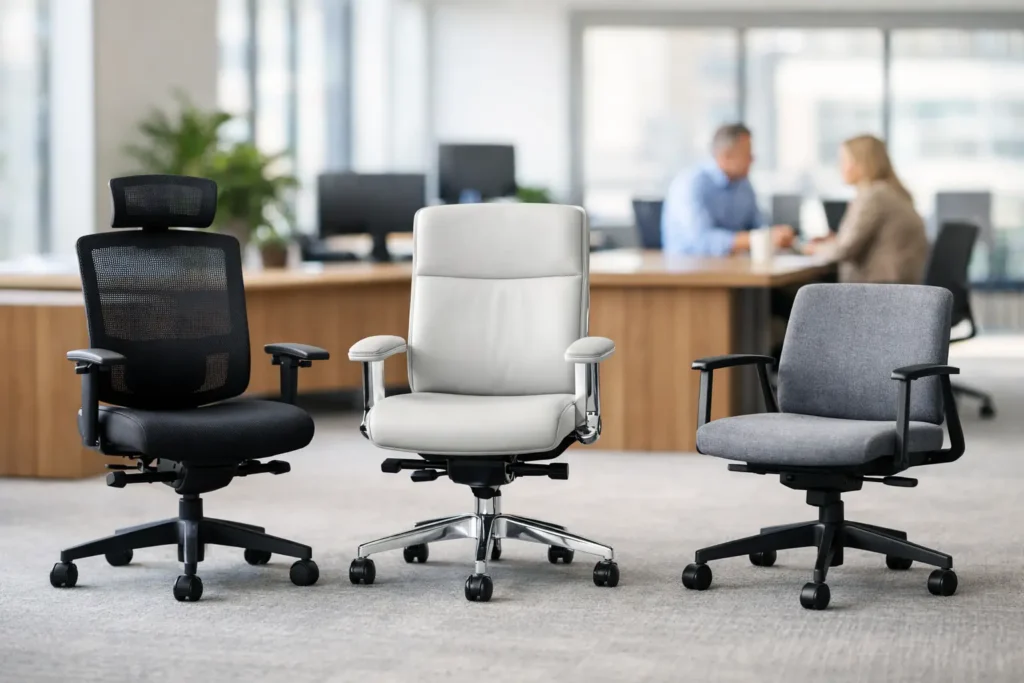
A chair that looks right on a mood board can fail fast on a live project. The seat depth is wrong for shared use, the mesh sags under constant occupancy, the base finish clashes with the rest of the fit-out, or the lead time slips and holds up handover. That is why an office seating specification guide matters. For commercial projects, seating is never just about appearance. It affects comfort, productivity, maintenance, compliance, and how confidently a space performs over time.
For interior designers, procurement teams, and business owners, the challenge is not finding a chair. It is specifying the right seating across different work settings while keeping design consistency, budget control, and delivery reliability intact. A good specification process reduces rework, protects the project timeline, and helps create an office that feels considered rather than pieced together.
What an office seating specification guide should solve
At project level, office seating usually needs to do several jobs at once. It must support users with different body types, align with the visual language of the workplace, stand up to repeated use, and fit the commercial budget. In many cases, it also needs to work across multiple zones, from executive rooms and open-plan workstations to meeting spaces, touchdown areas, and reception lounges.
That is where many specifications go off track. A chair can be technically sound but visually out of place. It can be stylish but too costly to roll out at scale. It can be affordable but unsuitable for long-duration task work. The right approach is to treat seating as part of a broader workplace system, not as an isolated product decision.
Start with use case, not product type
The most reliable specifications begin with how each zone will actually be used. Task chairs for daily workstation use need a different level of ergonomic adjustment than visitor chairs in a meeting room. Training rooms may need stackability or easy movement. Executive spaces often require a more polished finish, but still need proper support if they are used for long hours. Collaborative zones may prioritize flexibility and lighter visual presence over full ergonomic complexity.
This sounds obvious, but it is often skipped when deadlines are tight. Buyers default to a single chair family for every setting, then discover that one model cannot serve every function. Sometimes standardization is the right move for cost and consistency. But in many office projects, a mixed specification gives better long-term value because each area performs as intended.
Ergonomics: where performance really shows
If a chair will be used for focused desk work, ergonomics should not be treated as a premium extra. Seat height adjustment is the baseline. What matters next depends on the user profile and occupancy pattern. In assigned seating environments, a wider range of adjustments can make sense because users can set the chair to their preference. In hot-desking setups, controls need to be intuitive and durable enough for repeated use by different people.
Back support, lumbar shaping, seat depth, arm adjustability, and recline control all influence comfort over a full workday. The trade-off is that more adjustments can increase cost and complexity. Not every office needs highly engineered ergonomic chairs at every desk. But if staff are seated for long periods, under-specifying can become expensive in another way through complaints, replacements, or a workspace that simply feels poor to use.
Material choice matters here too. Mesh backs offer breathability and a lighter visual profile, which suits contemporary office interiors. Upholstered backs can feel more substantial and may better support a softer executive or hospitality-influenced workplace look. Neither is automatically better. It depends on the design direction, maintenance expectations, and occupancy pattern.
Durability is not just about the frame
Commercial seating fails in small ways before it fails completely. Casters wear out. Arm pads split. Mechanisms loosen. Upholstery pills or stains. Finishes chip where traffic is highest. A strong office seating specification guide should look beyond headline aesthetics and ask how each component will perform in real use.
For high-traffic offices, durability should be assessed across the full chair build – base, mechanism, castors, upholstery, stitching, foam density, and surface finish. A chair with a polished image but weak component quality can become a false economy very quickly. This is especially relevant in shared office settings, meeting rooms with heavy turnover, and reception areas where furniture is constantly in use.
Maintenance is part of durability. Some fabrics read beautifully in a sample book but are unforgiving in practice. Light tones can elevate a workplace, yet they may need more careful selection in busy environments. Textures that hide wear and surfaces that clean easily often perform better over the life of the project. For many commercial buyers, the best specification is not the one that looks perfect on day one. It is the one that still looks credible after years of use.
Office seating specification guide for design consistency
Office seating is often specified late, after key materials and architectural elements are already set. That can create a mismatch between the workplace concept and the final furniture package. The cleaner approach is to consider seating early as part of the interior language.
Shape, stitch detailing, leg profile, arm style, and finish palette all affect whether the office feels cohesive. A workstation chair may need to sit comfortably alongside meeting chairs, lounge seating, and breakout pieces without looking like it came from another project. This is particularly important in client-facing offices where perception matters.
Design consistency does not mean every chair must match exactly. It means the specification should feel curated. A well-organized collection approach can help specifiers balance function with visual continuity across multiple zones. This is where working with a project-oriented supplier becomes valuable, because the goal is not just filling a schedule of products. It is building a furniture package that makes sense together.
Budget control without cutting the wrong corners
Most office projects have a seating budget that needs to stretch across several categories. The temptation is to reduce cost by stripping back quality across the board. A better strategy is to allocate budget where performance matters most.
Task seating usually deserves stronger investment than occasional-use chairs. Reception or executive areas may warrant upgraded finishes because they shape first impressions. Meeting rooms might benefit from simpler models if occupancy is shorter. When buyers take this tiered approach, they protect user experience where it counts while still keeping overall project spend disciplined.
There is also a scale question. Customization, imported finishes, and specialized upholstery can elevate the scheme, but they can affect lead times and pricing. For some projects, that is justified. For others, a standard range with carefully selected options offers the better balance. It depends on the delivery program, the project image, and how much flexibility the client has on budget and handover.
The practical checks that save projects
An office seating specification guide should never stop at comfort and appearance. Procurement success depends on practical verification. Dimensions need to work with workstation layouts and meeting table heights. Movement clearances matter in dense floor plates. Chair arms may interfere with desks if sizing is not reviewed early. Weight, stackability, and mobility can affect how spaces function day to day.
Lead time is another frequent blind spot. A suitable chair is only suitable if it can arrive when the project needs it. For multi-item commercial fit-outs, supply coordination is often as important as the specification itself. This is why experienced buyers look at stock position, customization timelines, shipping requirements, and installation sequencing before sign-off.
Mock-ups and showroom reviews are worth the effort, especially for larger rollouts. What reads well on paper may feel different in person. Seat comfort, material quality, color tone, and construction details are easier to judge physically than through a product sheet alone. For design and procurement teams, this step can prevent expensive adjustments later.
Choosing a supplier that supports specification properly
The best seating specification can still become a difficult project if supplier support is weak. Commercial buyers need more than a product catalog. They need clear technical information, finish coordination, customization guidance, realistic lead times, and a supply partner who understands project pressure.
That is why many professional specifiers prefer working with an established commercial furniture supplier rather than assembling seating from disconnected retail sources. The value is in coordinated selection, consistent quality, and a smoother route from design intent to delivered installation. For businesses managing office, hospitality, healthcare, or education environments, that level of support helps reduce risk across the whole furniture package.
VCUS works with this reality every day – helping project teams specify stylish and functional seating that supports design goals without losing sight of budget, durability, or delivery. That balance is what commercial furniture buying demands.
The strongest office seating decisions are rarely the flashiest ones. They are the ones that keep working – for the people using the space, for the teams delivering the fit-out, and for the business long after opening day. If your seating schedule can do all three, you are specifying well.
