
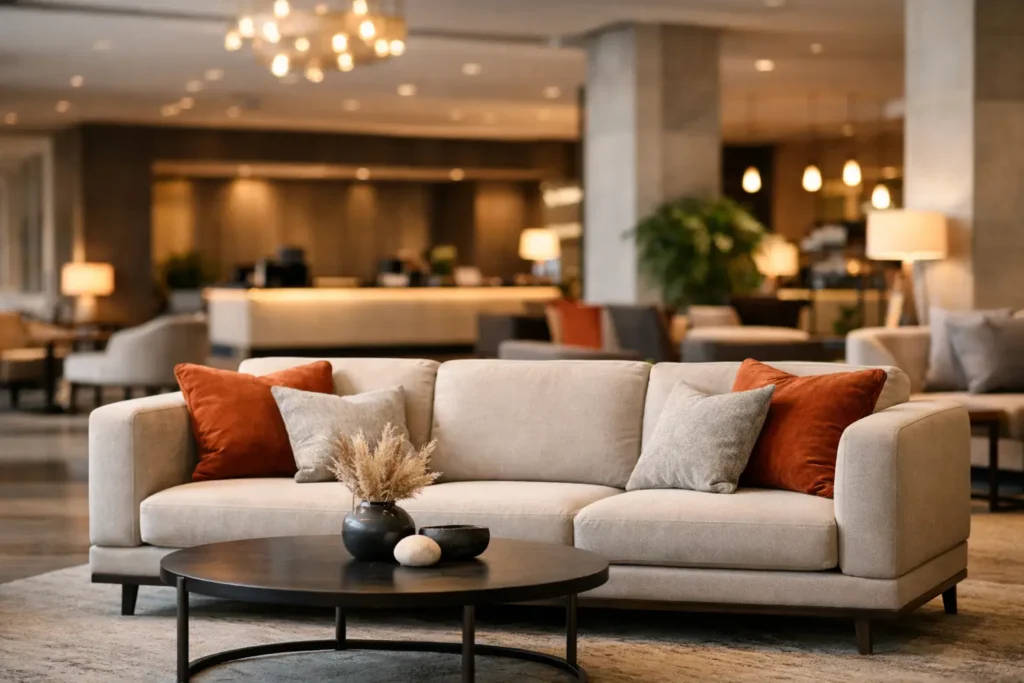
A hotel lobby sofa starts working before a guest ever sits down. It sets the tone at check-in, frames the first photo a visitor takes, and quietly signals whether the property feels premium, relaxed, business-ready, or tired. That is why choosing the best hotel lobby sofas is less about picking a good-looking piece and more about specifying seating that performs under constant public use while supporting the identity of the space.
For hospitality buyers, designers, and operators, the right sofa has to do several jobs at once. It needs to look current without becoming dated too quickly, feel comfortable across short and extended stays, withstand heavy traffic, and fit within project budgets and lead times. A sofa that succeeds in a private residence can fail quickly in a lobby. Commercial specification requires a different standard.
What makes the best hotel lobby sofas
The best hotel lobby sofas are designed for both impression and endurance. In practical terms, that means proportion, upholstery, seat construction, and maintenance requirements all matter as much as silhouette. A dramatic sofa may look strong in renders, but if the seat depth is awkward or the arms scuff easily, it becomes a liability within months.
In hospitality settings, visual appeal has to be balanced with turnover, luggage contact, cleaning routines, and diverse guest profiles. A boutique hotel may want sculptural statement pieces with more personality, while a business hotel may need universally comfortable seating that supports waiting, informal meetings, and short-duration use. Neither approach is wrong. The better choice depends on the lobby’s traffic patterns, guest mix, and brand positioning.
A strong hotel lobby sofa usually shares a few traits. It has a clear commercial-grade structure, upholstery suited to frequent cleaning, cushions that hold shape, and dimensions that support easy circulation. It also belongs to a wider design language, making it easier to specify matching lounge chairs, coffee tables, side tables, and accent seating across the property.
Start with the lobby’s real function
Before comparing styles, define what the lobby is expected to do every day. Some hotel lobbies act mainly as arrival zones, where guests sit briefly while checking in or waiting for transport. Others function as social lounges, co-working zones, or all-day meeting points. The more multifunctional the space, the more carefully the sofa selection needs to be planned.
If guests commonly work on laptops in the lobby, overly soft, low-profile sofas can look elegant but perform poorly. If the lobby is meant to feel exclusive and intimate, large modular seating may create too casual a mood. If luggage traffic is constant, delicate detailing and light fabrics may increase maintenance costs. Good specification starts with these realities, not with trends.
This is also where zoning matters. One large sofa arrangement is not always better than several smaller groupings. In many projects, a mix of 2-seaters, 3-seaters, and lounge-format sofas creates more flexibility than a single oversized feature piece. Smaller compositions can improve flow, simplify replacement planning, and support different guest behaviors within the same lobby.
Style matters, but longevity matters more
Hospitality interiors need design impact, but they also need staying power. The safest choice is not necessarily bland. It is a sofa style with enough character to elevate the space, without relying on details that will date quickly or wear unevenly.
Clean-lined contemporary sofas remain a dependable choice for many hotel projects because they work across business, upscale, and lifestyle settings. Curved sofas can soften harder architectural spaces and create a more welcoming first impression, especially in larger lobbies. Tufted or channel-backed designs can add richness, but they need careful upholstery selection because heavily detailed surfaces collect dust and can be more demanding to maintain.
The best hotel lobby sofas often sit in the middle ground between statement and utility. They feel distinctive, but not so specific that the entire lobby has to be redesigned around them in three years. For project teams managing lifecycle costs, that balance is usually the smarter investment.
Upholstery and finish choices that hold up
Material specification is where many lobby sofa decisions succeed or fail. The right upholstery depends on traffic volume, cleaning frequency, local climate considerations, and the overall tone of the property.
Commercial-grade fabric works well when warmth, texture, and acoustic softness are priorities. It offers design flexibility and can make a lobby feel less transactional. That said, not every fabric is suitable for hospitality use. Abrasion resistance, stain behavior, colorfastness, and ease of spot cleaning all need to be reviewed carefully.
Faux leather and performance upholstery are often practical choices in high-contact areas because they are easier to wipe down and generally more forgiving in busy public environments. Genuine leather can project luxury, but it is not always the most efficient choice for every hotel category or climate. It also shows wear differently over time, which may be desirable in some properties and problematic in others.
Darker tones tend to hide wear better, but an all-dark scheme can make a lobby feel heavy. Lighter upholstery can look refined, yet it demands stricter housekeeping discipline. In many successful projects, a mid-tone base with textured finishes gives the best balance between appearance and maintenance.
Comfort should match guest behavior
Comfort is not one fixed standard. A lobby sofa is not meant to perform exactly like a suite sofa or a residential sectional. The right comfort level depends on how long guests are expected to sit and what they are doing while seated.
For short waits, slightly firmer seat cushions usually perform better because they support easy sitting and standing, particularly for older guests and travelers managing bags. For lounge-oriented hotel concepts, a deeper and softer seat can encourage longer dwell time and create a more relaxed atmosphere. The trade-off is that very soft seating may lose shape faster under heavy public use if the internal construction is not strong enough.
Arm height, back support, and seat height matter more than many buyers expect. A sofa can look proportionate in a showroom but feel awkward once installed in a large lobby with mixed-age users. Mock-ups, showroom testing, and material sampling are worth the effort because they reduce costly mistakes at project stage.
Size, scale, and layout can make or break the space
Even the best hotel lobby sofas fail if the scale is wrong. Oversized seating can choke circulation and make a lobby feel cramped. Undersized sofas can leave a high-ceilinged space feeling sparse and commercially unresolved.
The right scale comes from reading the architecture properly. Ceiling height, width of walkways, reception desk position, column placement, and nearby tables all influence the ideal sofa dimensions. In compact lobbies, tighter sofa depths and raised-leg designs often help maintain visual openness. In larger lobbies, modular or curved arrangements can anchor the room more effectively than standard linear seating.
Layout should also anticipate movement. Guests arrive with luggage, staff need clear cleaning access, and occasional reconfiguration may be required for events or seasonal styling. Sofas should support these operational needs rather than complicate them.
Procurement value is more than the unit price
For commercial buyers, value comes from the full project picture. The lowest upfront sofa cost may create higher replacement, maintenance, or coordination costs later. The best hotel lobby sofas are usually the ones that combine reliable quality, design consistency, and practical lead-time management at a price that protects the overall fit-out budget.
This is where working with an experienced commercial supplier makes a measurable difference. Hospitality projects benefit from access to coordinated collections, customization options, and project support across categories, not just one isolated furniture item. When the sofa, lounge chair, occasional table, and complementary seating can be specified through a cohesive range, the lobby feels more resolved and the procurement process becomes more efficient.
A project-focused supplier such as VCUS can be especially valuable when buyers need contemporary design, commercial durability, and price discipline without overcomplicating specification. For hotels balancing image and budget, that combination matters.
How to shortlist the best hotel lobby sofas for a project
A practical shortlist usually starts with four questions. Does the sofa align with the hotel’s positioning? Is it engineered for commercial traffic? Can the upholstery and finish package be maintained by the operations team? And does the supplier support the broader project with consistency, customization, and reliable delivery?
If one of those answers is weak, the piece may still be attractive, but it is probably not the right lobby sofa. Specifying for hospitality is always a matter of fit. The best option on paper is not always the best option for the property.
The strongest hotel lobbies feel effortless to the guest, but that effect is built on disciplined choices behind the scenes. When a sofa is selected with equal attention to design, durability, comfort, and procurement reality, it does more than fill a seating area. It helps the entire arrival experience feel considered, credible, and ready for years of daily use.
A well-chosen lobby sofa should make the space easier to operate and easier to remember – and that is usually the smartest kind of investment.
