
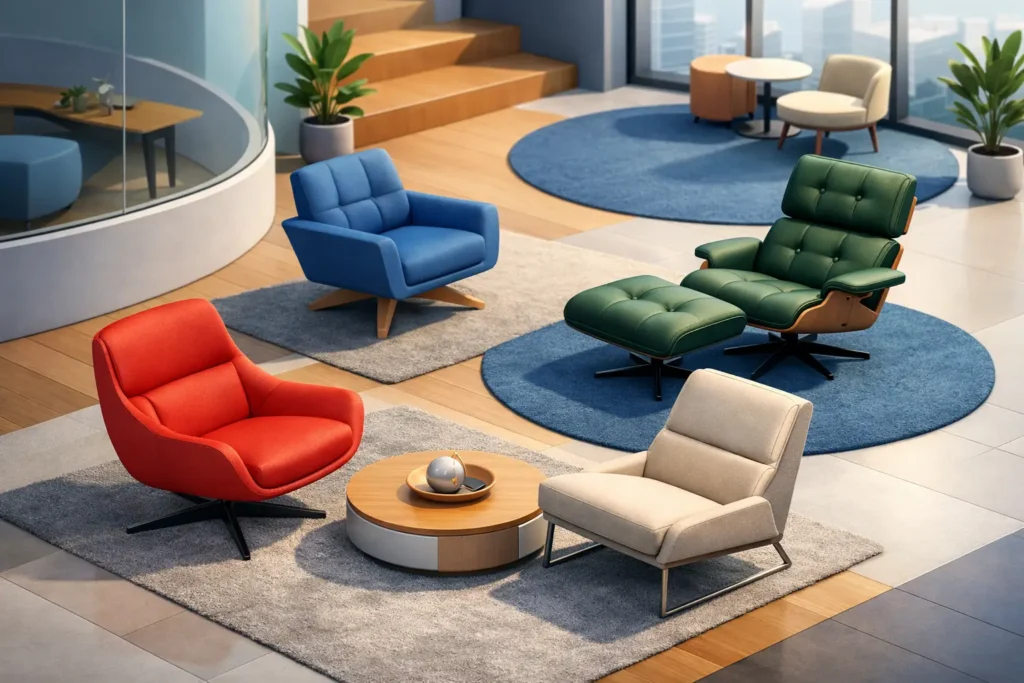
A lounge chair can make or break a waiting area, hotel lobby, executive lounge, or breakout corner. The best commercial lounge chairs do more than look polished in a mood board – they need to hold up to daily traffic, support your design concept, and stay practical for procurement, maintenance, and replacement planning.
For commercial projects, the right choice is rarely about a single “best” chair. It depends on how the space is used, who uses it, how often it is cleaned, and whether you need one statement piece or a coordinated family of seating across the site. That is why experienced specifiers usually evaluate lounge chairs as part of a broader furnishing strategy, not as isolated products.
What makes the best commercial lounge chairs
In residential settings, buyers can prioritize soft comfort or a trend-forward silhouette without worrying too much about long-term wear. Commercial spaces are different. A lounge chair in a hotel lobby, office reception, or healthcare waiting area has to balance aesthetics with durability, cleanability, and consistency across multiple units.
A strong commercial lounge chair starts with structural integrity. The frame, joinery, base construction, and upholstery method matter because they affect how the chair performs after months and years of use. A well-designed chair should feel stable when users sit down and stand up repeatedly, without looseness, wobble, or visible fatigue at stress points.
Comfort also needs to be judged in a commercial context. Deep, low lounge seating may look inviting in a boutique hospitality setting, but it can be less suitable for elderly users, short-stay waiting areas, or business environments where people sit briefly and need to rise easily. The best specification is often the one that matches the pace and posture of the space.
Visual versatility is another marker of quality. Commercial buyers usually need lounge chairs that work with side tables, sofas, dining seating, barstools, and occasional pieces in a coordinated palette. A chair can be beautiful on its own and still be the wrong choice if it forces the rest of the scheme into compromise.
Best commercial lounge chairs by space type
Office lounges and reception areas
In offices, lounge chairs need to support a professional first impression without feeling cold. Reception and breakout zones benefit from chairs with clean lines, supportive seat angles, and finishes that align with the wider workplace design language. Timber accents, powder-coated metal bases, and durable fabric or faux leather upholstery often work well because they present a refined look while remaining practical.
For high-traffic receptions, it is usually smarter to avoid overly delicate profiles or very soft seat pads that quickly lose shape. If the project includes multiple touchpoints such as reception, meeting lounges, private waiting areas, and collaborative corners, choosing a family of lounge chairs in related forms can help maintain design cohesion across the office.
Hotels, clubs, and hospitality venues
Hospitality projects often call for more character. Here, lounge chairs can carry more sculptural value, richer upholstery, and stronger visual identity. That said, a striking chair still needs to perform under heavy guest use, luggage contact, regular cleaning, and frequent repositioning.
For lobby and lounge settings, specifiers often look for chairs that photograph well, anchor the room, and remain comfortable for both short waits and longer conversations. In bars, clubs, and F&B hospitality spaces, stain resistance and easy maintenance become even more important. A slightly firmer seat can also outperform a plush one in busy venues because it tends to retain its form longer.
Healthcare and wellness environments
In healthcare, practical performance usually takes the lead. The best commercial lounge chairs for clinics, specialist centers, and wellness spaces should feel welcoming without complicating maintenance. Upholstery selection matters more here than in many other sectors, especially where frequent disinfection or higher hygiene standards apply.
Chairs with supportive arms, moderate seat height, and easy ingress and egress are often a better fit than deep bucket-style lounge seating. The visual language should still feel considered. Patients and visitors respond well to interiors that reduce institutional harshness, but the specification has to remain grounded in durability and cleaning requirements.
Education and training spaces
Educational settings vary widely. A private college lounge, faculty hub, or student commons may need relaxed seating that can handle intensive daily use. In these spaces, lounge chairs should be durable, simple to maintain, and adaptable enough to sit alongside modular soft seating, tables, and collaborative furniture.
Designers often benefit from selecting chairs with compact footprints and strong material resilience. Oversized pieces can look impressive but create planning issues when circulation, occupancy, and furniture flexibility are priorities.
How to shortlist the right chair
The fastest way to reduce risk is to assess lounge chairs through five filters: use case, dimensions, materials, maintenance, and supply consistency.
Use case comes first. Ask whether the chair is for waiting, informal meetings, hospitality lingering, private relaxation, or multi-purpose public use. This determines the right seat depth, back angle, arm design, and overall posture.
Dimensions are just as important as appearance. A chair can look ideal in a product image and still feel undersized in a hotel lobby or oversized in a compact office reception. Commercial planning requires attention to circulation clearances, spacing between pieces, and the visual balance between lounge seating and surrounding tables or sofas.
Material selection should follow the environment. Fabric can bring warmth and a residential feel, but not every fabric suits high-traffic commercial use. Faux leather and performance upholstery can simplify maintenance, while timber, steel, and composite finishes each introduce different durability and design implications. The right answer depends on the site, not just the style direction.
Maintenance is where many otherwise strong choices fall apart. Tufting, exaggerated seams, highly textured upholstery, or very low-set frames can create cleaning and upkeep challenges. For many commercial buyers, a chair that looks 10 percent less dramatic but performs 30 percent better is the smarter long-term choice.
Supply consistency matters when projects require repeated orders, phased installations, or future expansion. It is not enough to approve a sample. You also need confidence that the product line, finish quality, and related categories can support the wider project.
Design trade-offs worth thinking through
There is rarely a perfect chair with no compromise. A statement lounge chair may elevate the interior but come at the cost of stackability, lead time, or maintenance simplicity. A very economical model may solve the budget problem yet weaken the perceived quality of the overall fit-out.
This is why commercial furniture selection works best when style and function are evaluated together. If the space is meant to project premium brand value, the chair should contribute to that experience. If the site has intensive public traffic, durability may need to outrank sculptural appeal. If procurement timelines are tight, availability and repeatability can be more important than chasing a highly specific silhouette.
The best commercial lounge chairs are usually the ones that fit the project brief clearly and continue to do their job after handover. That is a more useful benchmark than choosing whatever looks best in isolation.
Why coordinated sourcing matters
Most commercial buyers are not sourcing one chair. They are building a full environment. A lounge chair has to sit comfortably within a larger furniture plan that may include sofas, occasional tables, dining chairs, meeting seating, barstools, and outdoor pieces.
This is where working with a project-focused commercial supplier creates real value. Instead of piecing together products from disconnected sources, specifiers can shortlist lounge chairs within a broader collection logic. That makes it easier to control finish consistency, maintain a coherent design language, and manage pricing across categories.
For project teams balancing aesthetics, budget, and deadlines, this approach saves time and reduces avoidable friction. A trusted commercial furniture supplier such as VCUS can support that process with a style-organized range, customization options, and practical guidance shaped around commercial use rather than residential retail assumptions.
Choosing with the full lifecycle in mind
The best decision is the one that still looks smart after installation, daily use, cleaning cycles, and future reorders. Commercial lounge chairs should be selected with the full lifecycle in mind – not just concept approval.
That means looking beyond first impressions. Ask how the chair will age, how easy it will be to maintain, whether it supports the intended user experience, and how it contributes to the rest of the project. When those answers line up, you are not just buying seating. You are specifying a more reliable, more cohesive commercial environment.
If you are shortlisting lounge seating for an office, hotel, healthcare, education, or F&B project, the right chair is the one that earns its place every day – visually, functionally, and commercially.
