
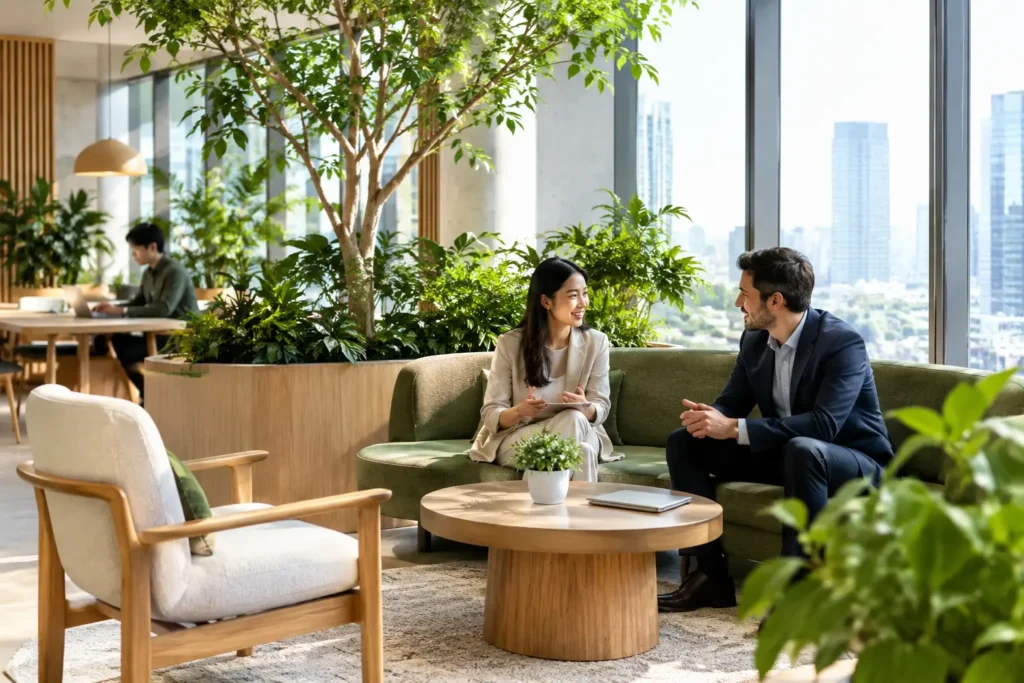
A reception area with a timber meeting table, upholstered lounge seating in moss and clay tones, and planters integrated into a bench does more than look current. It gives visitors an immediate sense of warmth and care. That is the practical value of biophilic furniture design: bringing natural references into commercial interiors in ways that support the experience of employees, guests, patients, students, and customers.
For commercial projects, this is not simply a matter of adding greenery beside standard furniture. The strongest schemes build nature-inspired material, color, form, and sensory comfort into the furniture specification itself. Done well, the result is a cohesive environment that feels distinctive without compromising cleanability, durability, fire requirements, budget control, or project timelines.
What Biophilic Furniture Design Means in Practice
Biophilic design is based on the human preference for connection with nature. In interiors, that can include daylight, plants, water, natural textures, organic geometry, and views outdoors. Furniture is a major part of how this principle becomes tangible, particularly where architecture cannot be changed or where a renovation needs to deliver impact quickly.
A biophilic furniture specification may use solid timber or timber-look table surfaces, woven textures, softly rounded seating, earthy upholstery, and modular planters that define social zones. It can also mean selecting furniture that makes space for greenery, such as a communal table with a central planter trough or a banquette with planted dividers.
The goal is not to make every room look rustic. Commercial interiors still need clarity, professionalism, and a strong fit with the brand. A financial office may interpret biophilic design through refined oak finishes and restrained botanical tones. A resort restaurant may use more expressive rattan-inspired textures, curved sofas, and lush planting. The right approach depends on the sector, daily use, maintenance resources, and visual identity of the client.
Why Nature-Inspired Furniture Matters for Commercial Interiors
Commercial spaces are judged by how they perform as much as how they photograph. An office needs to support concentration and collaboration. A hotel lobby needs to establish character while handling constant traffic. A healthcare waiting area needs to feel reassuring, hygienic, and easy to navigate.
Nature-inspired furniture can help designers meet these demands by softening hard, highly finished environments. Rounded chair backs and tables reduce visual severity. Warm-grain finishes counterbalance glass, metal, and stone. Textured fabrics add depth to large open areas without requiring excessive decoration. These choices can make a project feel more settled and welcoming, especially in urban settings where direct contact with nature may be limited.
There is also a commercial advantage in memorability. When a space has a consistent material palette and a clear relationship to its surroundings, it is easier for visitors to recall. For hospitality and F&B operators, that supports a stronger guest experience. For employers, it helps create a workplace people want to spend time in. For education and healthcare environments, it can make shared spaces feel less institutional.
Specify the Right Materials, Not Just the Right Look
Natural materials are central to biophilic furniture design, but authentic appearance alone is not enough for a commercial project. Every finish must be assessed against its location, expected traffic, cleaning regime, and lifecycle cost.
Timber is a strong choice for meeting tables, café tables, occasional tables, and feature joinery. Its grain introduces variation that no flat laminate can fully replicate. Yet exposed timber needs the correct protective coating, especially in F&B settings where spills and repeated cleaning are unavoidable. A high-quality wood veneer or commercial-grade timber-look surface may be the more suitable solution for a high-use project, delivering the intended warmth with greater consistency and easier maintenance.
Upholstery deserves the same level of scrutiny. Bouclé, wool-look textiles, and tactile weaves can create a comfortable, residential character, but not all are appropriate for public-facing seating. Specify contract-rated fabrics with suitable abrasion performance, stain resistance, and cleanability. In healthcare or high-turnover hospitality environments, antimicrobial or wipeable upholstery may be necessary. The palette can remain natural even when the material must be highly technical.
Planting is another area where practical planning matters. Living plants add a genuine sensory benefit, but they require irrigation, light, drainage, and regular care. Preserved or artificial planting can be appropriate for low-light zones, overhead features, or sites without a maintenance provider. The key is to use it selectively and integrate it thoughtfully rather than treating it as an afterthought.
Natural Color Palettes Need Contrast
Greens, sand, terracotta, charcoal, and warm wood are dependable choices, but an all-beige biophilic scheme can quickly lose definition. A commercial interior needs visual hierarchy. Pair softer natural colors with darker frames, a deep green statement chair, or a stone-look tabletop to give the space structure.
This also helps with maintenance. Very pale upholstery and flooring may look calm at handover but show wear quickly in a busy café, training center, or lobby. Mid-tone fabrics with subtle texture often offer a more forgiving and project-friendly balance.
Furniture Strategies by Space Type
In workplaces, biophilic design works particularly well in arrival areas, breakout zones, cafeterias, and informal meeting settings. A mix of timber communal tables, upholstered lounge chairs, mobile planters, and acoustic screens in felted or woven finishes can create choice without fragmenting the floor plan. For workstations, the effect may be quieter: warm desk finishes, rounded-edge tables, and natural-color task seating can support a consistent scheme.
For hospitality, the furniture should reinforce the desired pace and mood. Low lounge seating with curved silhouettes encourages guests to pause in a lobby or club lounge. Dining chairs in timber, cane-inspired, or upholstered finishes can give restaurants a sense of craft while remaining suitable for repeated use. Outdoor areas require a different specification entirely, with weather-resistant frames, UV-stable materials, and cushions designed for the local climate.
In healthcare and education, durability and safety lead the decision-making. Choose chairs with easy-clean surfaces, stable bases, rounded corners where appropriate, and layouts that preserve clear circulation. Biophilic cues can come through wood-look finishes, calm color combinations, and furniture forms that are less severe than traditional institutional pieces. The environment should feel human without becoming difficult to maintain.
Build a Cohesive Specification Across Categories
The most effective commercial projects do not select a single biophilic statement piece and stop there. They carry a controlled design language across seating, tables, meeting furniture, barstools, outdoor pieces, and accessories. That does not mean every item must match exactly. It means the finishes, proportions, and visual weight should feel intentional when viewed together.
Start by establishing two or three anchor materials. For example, a project may pair light oak, matte black metal, and olive upholstery. From there, select furniture categories that repeat those cues at different scales. A meeting table might use the oak and black combination, lounge chairs may introduce olive textile, and dining stools can bring the dark frame through into a café area.
This approach simplifies procurement as well as design coordination. Specifiers can compare options within a focused palette, approve samples efficiently, and reduce the risk of mismatched substitutions later in the project. It is especially valuable for multi-zone spaces and regional rollouts where consistency needs to be maintained across sites.
Customize Where It Has the Greatest Impact
Customization can make a standard collection feel tailored to the project. Upholstery selection, table dimensions, frame colors, and configuration changes often deliver more value than designing every item from scratch. A modular sofa can be adapted to fit an irregular lounge area. A table can be sized for the actual meeting room rather than a generic plan. A planter divider can be finished to align with the reception desk or wall paneling.
However, custom work should be introduced early. Lead times, minimum quantities, material approvals, and installation requirements need to be confirmed before the final specification is issued. A dependable furniture partner helps identify where customization improves the scheme and where a readily available standard item protects the program and budget.
Avoid Common Biophilic Design Mistakes
The most common mistake is treating greenery as decoration rather than part of a complete spatial strategy. A few plants cannot compensate for uncomfortable chairs, poor circulation, or an inconsistent furniture palette. Start with functional planning, then use biophilic elements to improve the character of the space.
Another issue is overusing one material. Excessive wood, rattan, or green upholstery can make a commercial setting feel themed rather than considered. Balance natural references with contemporary frames, clean-lined forms, and durable contract finishes.
Finally, do not overlook operations. Confirm who will care for living plants, how upholstered pieces will be cleaned, whether planters affect access to power or floor cleaning, and how replacement items can be sourced. A design that works on opening day should continue working after years of use.
A well-specified biophilic interior gives commercial spaces a stronger emotional quality while staying grounded in performance. For projects that need coordinated furniture across multiple zones, VCUS can support the selection of stylish, functional pieces that bring this direction to life without losing sight of durability, value, and delivery requirements. Bring your floor plans, finish references, and operational needs to the conversation early, and the finished space will feel natural for the people who use it every day.
