
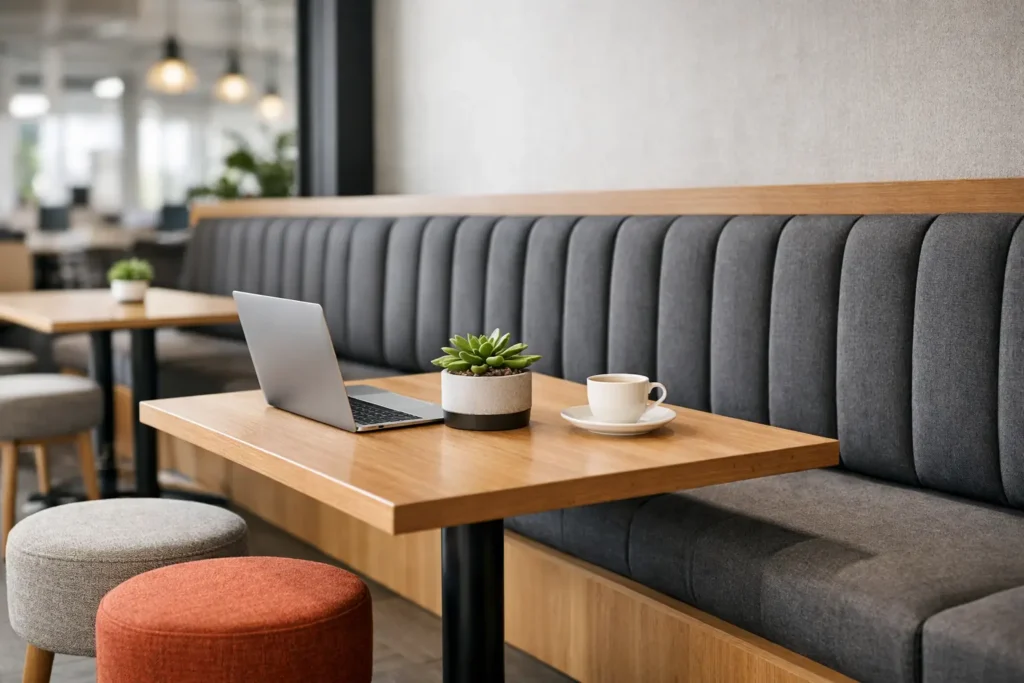
A dining room can look generous on paper and still feel tight once chairs start scraping back, servers begin passing through, and every table needs a little more breathing room than expected. That is usually the moment banquette seating moves from a nice design idea to a practical planning decision.
For restaurant operators, designers, and fit-out teams, banquette seating is not just about adding softness along a wall. It is one of the most effective tools for improving seat count, shaping circulation, controlling the visual language of the space, and building a more comfortable guest experience. When specified well, it helps a restaurant perform better without making the room feel crowded or overworked.
Why banquette seating for restaurant design keeps getting specified
In commercial F&B projects, every square foot needs to justify itself. Freestanding tables and chairs offer flexibility, but they also create inefficiencies. You need clear pull-back zones, wider circulation allowances, and more room between table edges and adjacent seating positions. Banquettes reduce that waste.
By placing fixed or semi-fixed seating along perimeter walls, window lines, columns, or central dividers, you can tighten the footprint of each dining setting while still maintaining comfort. That makes banquette seating for restaurant design especially valuable in high-rent urban locations, compact cafes, and dining concepts that need to balance turnover with atmosphere.
There is also a clear visual advantage. Banquettes create a stronger architectural line than loose seating alone. They help anchor the room, define zones, and give the interior a more intentional, finished character. In hospitality projects, that matters. Guests notice when a space feels resolved.
The trade-off is that banquettes demand more planning up front. Once installed, they are not as easy to reposition as chairs. That means dimensions, upholstery choices, aisle widths, and table spacing need to be considered early, not after the floor plan is already fixed.
Layout efficiency is only part of the value
Most buyers start with banquettes because they want to improve capacity. That is valid, but capacity alone is not the full story.
A well-designed banquette changes how guests read the space. It can make a narrow dining room feel calmer by reducing visual clutter. It can add privacy without building solid partitions. It can also support a wider mix of table sizes, from two-tops to larger joined settings, which is useful for restaurants handling fluctuating party sizes throughout the week.
This is where project experience matters. The best result is rarely about fitting the maximum number of seats. It is about creating the right balance between revenue efficiency and perceived comfort. A room that looks packed, sounds harsh, or feels difficult to move through may technically seat more people, but it often performs worse over time.
Where banquettes make the biggest impact
Perimeter wall seating is the most common application, and for good reason. It turns otherwise passive edge space into productive seating while keeping circulation concentrated and easier to manage. In compact dining rooms, this can transform the layout.
Central banquettes can also work well, particularly as double-sided units. These help divide open dining areas into more intimate sections without interrupting sightlines. In larger restaurants, they can bring scale down and make the room feel more welcoming.
Window banquettes are popular for cafes and casual dining concepts because they create desirable seats and a strong street-facing impression. They can also support brand identity, especially when upholstery, stitching, and backrest detailing are designed as part of the overall concept rather than treated as an afterthought.
That said, not every restaurant should rely heavily on built-in seating. Fast-changing concepts, multipurpose event venues, or operations that frequently reconfigure the floor may benefit from a more flexible mix of banquettes and movable furniture.
Getting the dimensions right
Banquettes fail most often at the specification stage. They may look good in renderings but feel awkward in actual use because the proportions are off.
Seat height needs to work with the table base and tabletop thickness. Seat depth should support comfort without forcing guests to lean forward. Backrest pitch matters more than many teams expect, especially for longer dwell-time dining formats. If the seat is too deep or the back too upright, guests will start shifting within minutes.
Table relationship is equally important. The distance from seat front to table edge needs to allow easy access while keeping diners comfortably positioned during the meal. In commercial settings, small dimensional errors repeat across every table, so they become operational problems quickly.
There is no single universal measurement because restaurant concepts vary. A quick-service venue, all-day cafe, and upscale dining room each call for different comfort expectations and turnover patterns. The right spec depends on how long guests stay, what kind of dining posture suits the concept, and how tightly the layout needs to perform.
Materials need to match the real operating environment
Banquette upholstery is one of the most visible surfaces in a restaurant, so it has to do two jobs at once. It needs to support the design concept, and it needs to stand up to daily commercial use.
For many projects, performance vinyls and commercial-grade faux leathers remain practical choices because they are easier to clean and more resistant to spills. In higher-end settings, woven textiles may offer a warmer look, but they need to be chosen carefully for stain resistance, abrasion performance, and maintenance demands. The wrong material can age badly even if it looks excellent on opening day.
The internal build matters just as much. Foam density, joinery, substrate quality, and reinforcement all affect how a banquette holds its shape over time. In high-traffic F&B environments, underbuilt seating quickly shows compression, sagging, or loose upholstery lines. That makes the whole restaurant feel tired sooner than it should.
For project buyers, this is where value should be judged beyond initial unit price. A cheaper specification that needs early refurbishment is rarely the more economical choice.
Banquette seating for restaurant design should support service flow
Guests experience comfort from the seat itself, but operators experience comfort from how the room functions during service.
Banquettes can improve service flow by creating cleaner pathways and more predictable table positions. Servers spend less time navigating chair backs and uneven clearances. Cleaning routines can also be simpler when fewer loose furniture pieces need to be moved constantly.
Still, the layout has to respect access. Tight aisles, poorly placed corners, and table spacing that makes entry awkward will create friction for both guests and staff. Banquettes are often described as space-saving, but that should never mean forcing the dining room beyond what service can support.
A restaurant that feels easy to move through tends to feel more premium, even at a mid-market price point. That is a design win and an operational win at the same time.
Customization is often where the best results come from
Off-the-shelf seating can work for some projects, but banquettes usually deliver the strongest value when they are tailored to the floor plan and concept. Curve conditions, wall irregularities, integrated planters, divider backs, under-seat storage, and coordinated finishes all benefit from custom thinking.
For design teams, customization also helps maintain consistency across the wider furniture package. A banquette should not feel disconnected from the dining chairs, tables, barstools, or lounge pieces in the same venue. Cohesion matters, especially in branded hospitality environments where every touchpoint contributes to the guest impression.
This is why many professional buyers prefer working with a project-oriented commercial furniture partner rather than sourcing piece by piece. Coordination becomes easier, finish matching is more controlled, and the final result is more coherent. For restaurant projects where timeline, budget, and design intent all need to stay aligned, that support can make a major difference. VCUS works with this exact project reality, helping specifiers and operators balance style, durability, customization, and commercial value across a full fit-out.
What to settle before you place the order
Before fabrication starts, a few decisions should be locked in. Confirm the final floor plan against actual site dimensions, not just tender drawings. Review upholstery and finish samples under realistic lighting. Check cleaning requirements with the operator, not only the designer. And make sure table bases, power points, skirting details, and wall conditions have all been coordinated.
It is also worth discussing future maintenance. Can upholstery panels be replaced without rebuilding the whole unit? Are corner details vulnerable to damage from bags or trolley contact? Does the plinth detail make floor cleaning harder? These are not glamorous questions, but they matter in live commercial environments.
Good restaurant design is rarely about one statement piece. It is about how every element supports the next. Banquette seating does that quietly but powerfully. When it is planned with the same discipline as the kitchen flow, lighting, and front-of-house circulation, it earns its place many times over – in layout efficiency, guest comfort, and long-term value.
If a restaurant needs to look sharper, seat smarter, and operate with less friction, banquettes are often one of the clearest places to start.
