
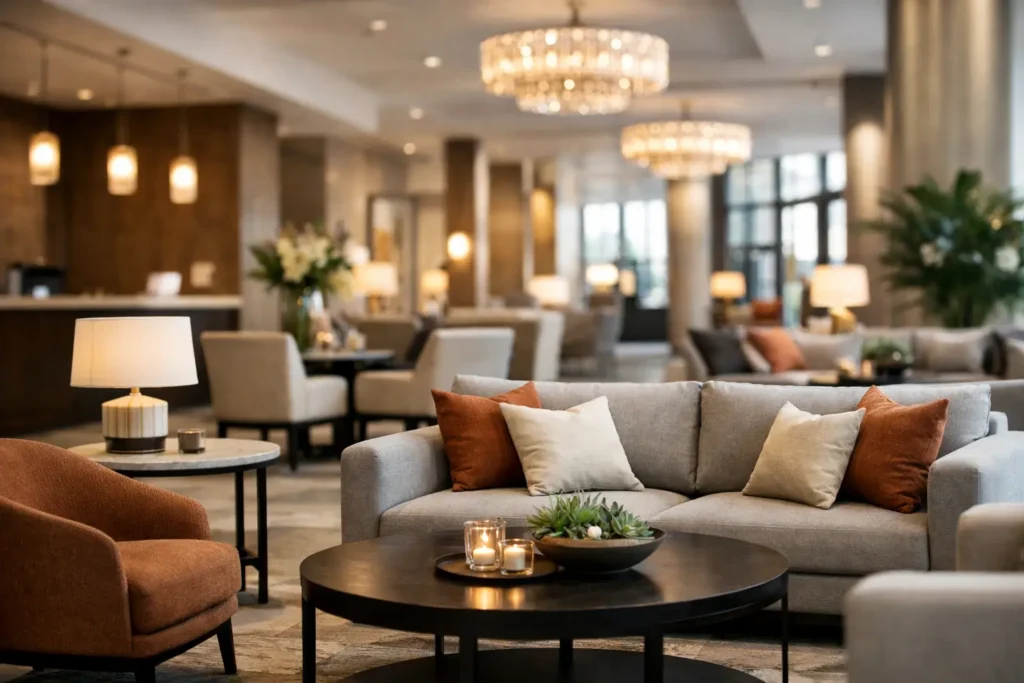
A hotel lobby tells guests what to expect before they reach the room, the restaurant, or the lift. If you are planning how to furnish a hotel lobby, the real challenge is not choosing attractive pieces. It is building a space that handles traffic, supports operations, reflects the property’s brand, and still feels comfortable at every hour of the day.
That balance is where many projects succeed or fall apart. A lobby can look impressive in renders yet perform poorly once guests arrive with luggage, check-in queues form, and seating gets used far harder than expected. For hotel owners, designers, and procurement teams, good furnishing decisions come from treating the lobby as both a welcome space and a working commercial environment.
How to furnish a hotel lobby starts with function
Before reviewing sofa shapes or coffee table finishes, define what the lobby needs to do. In some properties, it is primarily a reception and waiting zone. In others, it also acts as a lounge, informal meeting area, cafe spillover space, or social hub for guests and visitors. A boutique hotel may lean into intimacy and character, while a business hotel may prioritize efficiency, circulation, and plug-and-work usability.
This is why lobby furnishing is rarely about filling a large open area with matching lounge pieces. The stronger approach is to break the space into functional zones with clear intent. You may need a reception zone, a short-stay waiting area, a more relaxed lounge cluster, a luggage-friendly transition space, and sometimes bar-height or work-friendly seating for guests using laptops. When each zone has a role, furniture selection becomes far more precise.
Circulation matters just as much as aesthetics. Guests should be able to move naturally from the entrance to reception, from reception to lifts, and from seating to other amenities without weaving awkwardly through tables and chairs. If traffic patterns are ignored, even premium furniture will feel like an obstacle.
Build the layout before you specify the pieces
One of the most common mistakes in hotel projects is selecting statement furniture too early. A large sculptural sofa may look impressive on a mood board, but if it blocks sightlines, reduces bag clearance, or creates dead corners, it quickly becomes a liability.
Start with a scaled plan that accounts for peak usage. Think about luggage movement, housekeeping access, concierge activity, queue formation, and guests who may stay for five minutes or fifty. In hospitality, furniture needs to support fast transitions and longer dwell times at the same time.
A practical layout often includes a mix of open and anchored seating. Open seating gives flexibility and visual spaciousness. Anchored seating, such as a sofa group with occasional chairs and tables, helps define the lounge experience and prevents the lobby from feeling temporary or under-planned. The best results usually come from combining both.
If the property has a generous footprint, avoid the temptation to spread furniture too thin. Large empty gaps can make a lobby feel cold and unfinished. On the other hand, overfurnishing creates visual noise and operational friction. The right density depends on guest profile, service style, and the property’s positioning.
Choose seating with commercial use in mind
Seating does most of the visual and functional work in a hotel lobby. It shapes first impressions, guest comfort, and the amount of time people are willing to spend in the space. But hospitality seating should never be chosen on appearance alone.
Sofas and lounge chairs need to balance comfort with posture. Very soft seating may look inviting, yet it can be difficult for older guests or business travelers to get in and out of gracefully. Extremely low seats can create the same problem. In busy properties, medium-depth lounge seating with supportive backs is often the safer choice because it suits a wider range of users.
This is also where product mix matters. A lobby furnished entirely with sofas can feel monotonous and limit flexibility. A stronger specification usually combines two-seaters or three-seaters with lounge chairs, occasional chairs, benches, and in some cases barstools or high stools near work counters. That variation supports different guest behaviors without losing design cohesion.
Durability is non-negotiable. Upholstery should be selected for abrasion resistance, cleanability, and long-term appearance retention. Frame strength, joint quality, and cushion resilience matter far more in commercial use than they do in residential settings. A stylish piece that degrades quickly is not cost-effective, even if the initial price looks attractive.
Tables should support behavior, not just styling
Tables are often treated as accessories, but in hotel lobbies they have a direct effect on usability. Guests need somewhere to place a coffee, phone, key card, laptop, shopping bag, or welcome drink. If those touchpoints are missing, the seating arrangement feels incomplete no matter how polished it looks.
Coffee tables work well in lounge clusters, but side tables are often even more useful because they increase individual convenience. In mixed-use lobbies, small movable tables can add flexibility, especially when guests use the space for informal meetings or short work sessions.
Material choice deserves close attention. Stone-look and wood-look finishes can bring warmth or sophistication, but the surface must be suitable for heavy turnover. Fragile edges, easily scratched tops, and unstable bases become maintenance issues quickly. Commercial-grade construction is what preserves the design intent over time.
Materials and finishes need to match the property’s reality
A beautiful lobby is not only about form. It is about how well the materials hold up under daily pressure. That means selecting finishes based on traffic, cleaning routines, climate considerations, and the type of guest use the property sees.
For example, light upholstery can create a refined look, but in a high-turnover environment it may require more maintenance than the operations team wants to manage. Darker fabrics or textured weaves may be more forgiving, though they can alter the mood of the space. Timber finishes add warmth, while metal elements can sharpen a contemporary concept. The right answer depends on the brand direction and the maintenance strategy.
This is where hospitality projects benefit from working with a commercial furniture partner rather than sourcing piece by piece from retail-style channels. Coordinating finishes across sofas, chairs, tables, barstools, and accent pieces creates a more complete environment and reduces specification risk. It also makes it easier to value-engineer without losing the overall design language.
How to furnish a hotel lobby for brand consistency
A lobby should feel connected to the hotel’s wider identity. If the rooms, restaurant, and public areas speak one visual language while the lobby says something else, guests notice the disconnect immediately.
Brand consistency does not mean every item must match. It means the furniture should work together through proportion, materiality, color balance, and style direction. A contemporary business hotel may favor clean-lined lounge seating, disciplined palettes, and integrated work surfaces. A resort-led property may want softer forms, warmer textures, and more relaxed social groupings. A design-led boutique hotel may need signature pieces, but those pieces still have to perform commercially.
This is also why curated collections are useful in hospitality projects. When furniture categories are designed to sit well together, specifiers can build cohesive spaces faster and with more confidence. For project teams juggling deadlines, approvals, and budgets, that consistency saves time.
Budget control matters from the first selection
Every hotel project has a budget, and experienced buyers know that good value is not the same as buying the cheapest product available. Furnishing decisions should be evaluated against lifespan, maintenance needs, replacement risk, and visual longevity.
Spending heavily on one hero piece while compromising on every high-use chair is rarely the best allocation. In most lobbies, the smarter approach is to invest in the pieces that carry the highest usage and visual weight, then build supporting layers around them. That might mean prioritizing durable lounge seating, contract-grade tables, and versatile occasional chairs before adding decorative extras.
Lead time and supply reliability also affect cost. Delays can create installation issues, opening setbacks, and expensive substitutions. This is why many professional buyers prefer a supplier that can support coordinated project sourcing across categories, handle customization where needed, and manage delivery expectations clearly. For hotel fit-outs, reliability is part of value.
Don’t overlook lighting, spacing, and guest comfort
Furniture does not operate in isolation. Even the right pieces can underperform if the surrounding conditions are wrong. Lighting affects how fabrics read, how welcoming a seating group feels, and whether guests can comfortably work or read in the space. Power access increasingly matters too, especially in business-focused properties.
Spacing also influences comfort more than many teams expect. If seating is arranged too far apart, the lobby can feel formal and uninviting. Too close, and it loses privacy. The right balance depends on whether the property wants quick turnover, relaxed lingering, or a combination of both.
Acoustics play a part as well. Upholstered furniture, rugs, and well-planned layouts can help soften noise in large lobby volumes. That has a direct effect on perceived comfort and service quality.
A well-furnished hotel lobby should feel effortless to the guest, even though it takes careful planning to get there. The strongest results come from specifying for movement, comfort, durability, and brand fit at the same time. When those elements are aligned, the lobby does more than look good on opening day – it continues to support the guest experience and the business behind it long after the project is complete.
