
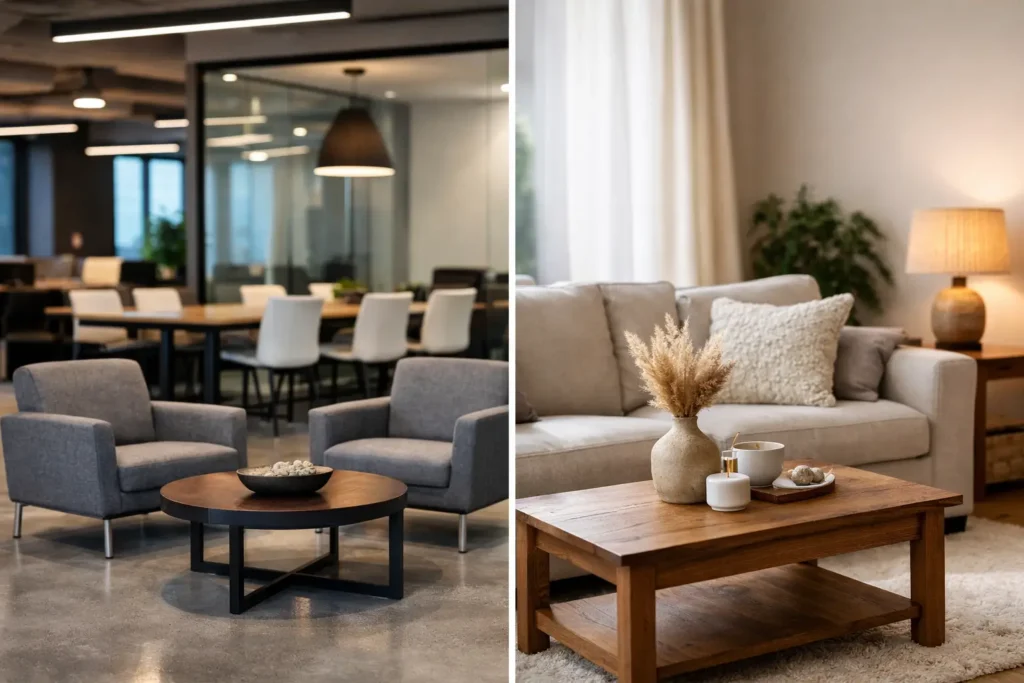
A chair that looks perfect in a living room can fail quickly in a lobby, meeting room, or restaurant. That is the real issue behind commercial furniture vs residential furniture. For business owners, designers, and procurement teams, the choice is not just about appearance. It affects durability, maintenance, compliance, user experience, and long-term project cost.
At a glance, residential furniture is made for private use by a limited number of people in a home setting. Commercial furniture is built for repeated daily use in shared environments such as offices, hotels, cafes, clinics, schools, and showrooms. That difference shapes everything from construction methods to material selection.
Commercial furniture vs residential furniture: the core difference
The simplest way to understand commercial furniture vs residential furniture is to look at the level of performance expected. Residential pieces are typically designed around comfort, style, and moderate household use. Commercial pieces must do all of that while also standing up to heavier traffic, stricter operational demands, and tighter project requirements.
In a home, a dining chair may be used a few times a day by the same family. In a restaurant, that same chair could be used by dozens of guests in a single shift. In a corporate office, task seating may be occupied for eight or more hours each day. In healthcare or education settings, furniture may need to support cleaning protocols, mobility needs, and specific safety standards.
This is why commercial products are often engineered differently at the frame, joinery, upholstery, and finish levels. The goal is not simply to make furniture stronger. It is to make it more reliable in demanding environments where downtime, repairs, and replacements create operational problems.
Durability is where the gap becomes obvious
If you are specifying for a business environment, durability is usually the first major separator. Commercial furniture is commonly built with higher-grade internal structures, contract-rated materials, and finishes that can tolerate frequent use. That may include reinforced metal frames, kiln-dried hardwood structures, high-density foam, heavy-duty glides, and performance fabrics chosen for abrasion resistance and easier cleaning.
Residential furniture can be beautifully made, but it is not always tested for the same cycle of use. A sofa that performs well in a private apartment may show wear much faster in a hotel lounge or office reception. Seams can loosen, cushions can lose shape, and surfaces can scratch or stain more easily when exposed to a constant flow of users.
For project teams, this matters because the purchase price tells only part of the story. A lower-cost residential item may look attractive upfront, but if it needs replacement in a fraction of the time, the real cost rises quickly.
Maintenance and lifecycle costs matter more in commercial spaces
Commercial interiors are managed environments. They need to look presentable while staying functional under pressure. That is why maintenance should be part of the buying decision from the start.
Commercial furniture is often selected with serviceability in mind. Materials may be chosen for stain resistance, easy wipe-downs, replaceable components, or better resistance to dents and scratches. In hospitality and food and beverage settings especially, finishes that age well can protect the visual standard of the space and reduce disruption to operations.
Residential pieces are less likely to be specified around those maintenance demands. They may offer softness, warmth, or decorative appeal, but in a high-use environment those benefits can come with more upkeep.
Safety, compliance, and performance standards
Another major difference between commercial furniture vs residential furniture is compliance. Business environments often require products that meet specific fire, safety, ergonomic, or performance criteria. Depending on the sector, there may also be expectations around accessibility, hygiene, and material suitability.
For example, office seating may need ergonomic support for prolonged use. Hospitality furniture may need finishes suitable for public spaces. Healthcare environments may require surfaces that can withstand strict cleaning routines. Educational settings may call for furniture built for movement, impact, and intensive daily wear.
Residential furniture is not usually developed with those same commercial obligations in mind. That does not make it poor quality. It simply means it was designed for a different context.
This is where experienced commercial sourcing becomes valuable. Specifiers need more than a product that looks right in a catalog. They need confidence that the furniture can perform in the actual environment it is being purchased for.
Design intent is different too
Some buyers assume commercial furniture sacrifices style for practicality. That used to be more common. Today, strong commercial collections are expected to deliver both.
The difference is in how design is approached. Residential furniture is often created as a standalone piece that works within a home lifestyle. Commercial furniture is more often specified as part of a complete environment. It needs to support circulation, zoning, branding, user comfort, and consistency across multiple touchpoints.
That is particularly important in offices, hotels, clubs, restaurants, and showrooms, where a fragmented furniture mix can weaken the overall experience. Designers and procurement teams are not just buying one chair or one sofa. They are building a cohesive language across lounge seating, dining tables, task chairs, barstools, outdoor furniture, and more.
A trusted commercial supplier helps simplify that process by offering style-organized ranges that work together across categories. That saves time in specification and helps maintain design consistency without losing sight of budget.
Why commercial furniture is usually the better value for business use
Commercial furniture often carries a higher initial price than residential alternatives, but value should be measured over the life of the project. In most business environments, contract-grade furniture delivers better overall return because it is built for the way the space actually operates.
Think about replacement cycles, maintenance labor, guest or employee perception, and the cost of disruption when furniture fails. A reception area with sagging lounge seating sends the wrong message. A restaurant that constantly repairs loose dining chairs absorbs unnecessary operational friction. An office that underinvests in task seating may affect comfort and productivity.
When viewed through that lens, commercial furniture is less about spending more and more about buying correctly.
There are cases where residential furniture can still make sense
It is not always a hard no. In low-traffic areas, private executive rooms, serviced apartments, or staged spaces with limited use, certain residential-style pieces may be considered. Some boutique projects also intentionally blend residential warmth into commercial interiors.
But even then, the decision should be deliberate. You need to assess traffic levels, maintenance demands, user profile, and replacement tolerance. If the space is public-facing or operationally intensive, commercial-grade options are usually the safer choice.
How to choose the right option for your project
Start with the function of the space before you focus on aesthetics. Ask how often each item will be used, who will use it, how it will be cleaned, and what level of wear it must absorb. Then evaluate whether the furniture supports the operational needs of the project as well as the visual concept.
For offices, ergonomics and daily comfort should be high on the list. For hospitality, durability, finish performance, and guest impression matter equally. For healthcare and education, safety, hygiene, and resilience are central. For F&B, easy maintenance and stable construction are non-negotiable.
It also helps to work with a supplier that understands full-project requirements rather than one-off product sales. That means support with category matching, customization, material selection, lead times, and coordinated supply across a complete fit-out. For many professional buyers, that is where a commercial partner creates real value.
VCUS serves exactly this type of requirement, helping business owners, interior designers, and project teams source design-forward commercial furniture that balances aesthetics, performance, and project-friendly pricing.
The smarter question is not which looks better
When buyers compare commercial furniture vs residential furniture, the conversation often starts with style and price. The better question is which option is right for the way the space will actually be used.
If the project needs furniture that supports heavy traffic, consistent branding, easier maintenance, and a longer service life, commercial furniture is usually the stronger decision. It protects the look of the space, supports daily operations, and gives specifiers more control over quality and continuity.
Good commercial interiors are not built on appearance alone. They are built on products that hold up, work hard, and still look right long after opening day. That is the standard worth buying for.
