
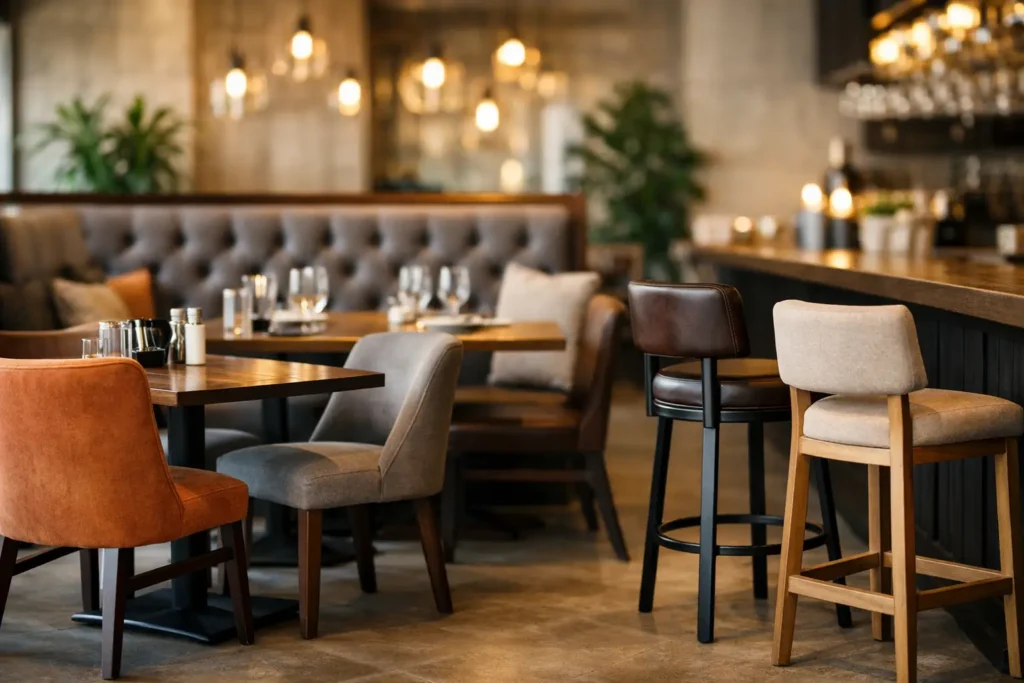
Opening week problems rarely start with the menu. They start when tables arrive in one finish, chairs in another, bar stools miss the counter height, and the outdoor pieces are not rated for commercial use. A solid restaurant furniture package guide helps avoid that kind of expensive mismatch by treating furniture as a coordinated project, not a series of isolated purchases.
For restaurant owners, interior designers, and fit-out teams, the real goal is not simply filling a floor plan. It is creating a dining environment that looks consistent, performs under daily wear, supports turnover, and stays within budget. That is where a package approach makes sense. Instead of sourcing one item at a time, you specify a complete set of furniture categories that work together visually and operationally.
What a restaurant furniture package guide should actually cover
A proper package is more than tables and chairs. In most restaurant projects, it includes dining chairs, side chairs, banquette seating, bar stools, dining tables, communal tables, lounge seating for waiting areas, outdoor furniture when applicable, and sometimes divider or system elements that help organize the space. If the concept includes a café zone, private dining room, or bar, each area may require a different seating mix while still maintaining a unified look.
That is why package planning starts with zoning. A quick-service restaurant has different demands from a full-service dining concept. A hotel restaurant may need softer seating and a more layered atmosphere. A high-turnover F&B venue often prioritizes easy cleaning, stackability in some areas, and replacement flexibility. The package has to respond to the business model, not just the mood board.
Start with the operating model, not the mood board
Design matters, but operating reality should set the brief. Before selecting styles, clarify seat count, expected turnover, average dwell time, service format, and whether layouts need to shift for peak periods or private events. These decisions affect the right balance of two-tops, four-tops, bar seating, and larger shared tables.
This is also where many projects either protect their budget or lose control of it. If you lock in a beautiful chair that is too wide for the table spacing, you may reduce total seat count. If the tabletop finish stains too easily, maintenance costs rise. If the bar stool has the wrong footrest height, comfort drops and guests do not stay as long as intended. Furniture should support revenue, workflow, and guest experience at the same time.
The core categories in a restaurant furniture package
Chairs are usually the visual anchor. They carry much of the style language and have the highest touch frequency, so they need to perform. In restaurant settings, commercial-grade construction matters more than a residential lookalike. Frame strength, joinery, finish durability, and ease of cleaning should all be checked early.
Tables are where package decisions become technical. The base and top combination must suit circulation, stability, cleaning routines, and the ability to reconfigure layouts. A compact pedestal base can improve legroom, but it depends on the tabletop size and material weight. Laminate, veneer, sintered stone, solid surface, and compact surfaces each come with trade-offs in cost, edge durability, stain resistance, and visual character.
Bar stools require even more precision than standard seating. Seat height must match the bar or counter correctly, and that measurement should be verified from finished floor level, not just the drawing set. Backrest shape, swivel function, and upholstery choice also change how long guests remain comfortable.
Banquettes can be one of the smartest investments in an F&B project when used well. They improve space efficiency, support better zoning, and create a more premium feel. But they also require careful dimensioning and upholstery selection. If seat depth or back angle is off, comfort suffers. If the material is hard to maintain, the clean aesthetic does not last.
How to build a package that looks cohesive
A restaurant furniture package guide should help buyers think in collections and families rather than random pieces. Cohesion does not mean every chair and table must match exactly. It means the finishes, forms, and material tones belong to the same design language.
One practical method is to define a small palette first. That may include one timber tone, one metal finish, one primary upholstery color, and one accent material. From there, you can vary silhouettes across zones without losing consistency. A dining chair and lounge chair do not need identical shapes, but they should feel related.
This is especially useful in larger hospitality and mixed-format restaurant spaces. The main dining room may need a refined upholstered chair, while the casual spillover area uses a lighter side chair and the bar introduces a stronger metal element. When specified properly, the whole space still reads as one environment.
Budget control without cutting the wrong corners
Most buyers do not overspend because they chose quality. They overspend because they specify too late, revise too often, or source categories from too many disconnected vendors. A package approach keeps the budget visible from the start.
The best way to manage cost is to rank priorities. Guest-facing focal areas may justify more premium finishes or upholstery. Back-of-house adjacent zones, fast-turn seating, or secondary spaces may benefit from more durable, economical options. That does not mean compromising the overall concept. It means allocating spend where it has the greatest visual and operational return.
Standardization also helps. Repeating selected frames across multiple zones, with finish or upholstery variations, can protect design consistency while improving purchasing efficiency. For project teams managing multiple outlets, this becomes even more valuable because replacement and future rollout become simpler.
Durability is a design decision
In restaurant settings, furniture is tested every day by movement, spills, impact, cleaning chemicals, and changing occupancy. That is why durability should be treated as part of the design brief rather than a technical note at the end.
Commercial-grade materials are not all equal, and the right choice depends on concept. A fine dining venue may prioritize tactile finishes and richer upholstery, but still needs cleanability and frame stability. A busy café may lean toward lighter, hard-wearing surfaces that can be wiped down quickly and moved often. Outdoor dining introduces another layer, where UV resistance, moisture tolerance, and finish stability become essential.
The same applies to maintenance. Some materials look excellent at handover but become high-cost liabilities in six months. A good package balances appearance with realistic upkeep requirements.
Lead times, logistics, and why package buying reduces risk
Restaurant projects rarely fail because no furniture was available. They run into trouble because products come from too many sources, finish approvals happen too late, or the shipment sequence does not align with site readiness. Package buying reduces those coordination risks.
When furniture categories are planned together, the project team can review finishes, dimensions, quantities, and substitutions in one coordinated process. This is especially important for overseas projects, multi-site rollouts, or restaurant groups that need reliable repeatability. A trusted commercial furniture supplier can streamline that process by aligning sourcing, customization, and delivery around the fit-out schedule.
This is one area where showroom review still matters. Material samples and specification sheets are useful, but in hospitality environments, physical evaluation often reveals comfort, scale, and finish details that drawings cannot fully capture.
A practical restaurant furniture package guide for specifiers
If you are preparing a package, start with the floor plan and seat count strategy. Then define the zones, clarify the operating model, and shortlist furniture by category, not by isolated hero pieces. Review dimensions against circulation, kitchen flow, and service paths before finalizing aesthetics.
Next, confirm the finish palette and identify where customization is worth using. In many restaurant projects, upholstery, tabletop surfaces, and metal or wood finishes offer enough flexibility to create a distinctive look without reinventing every item. After that, pressure-test the package for durability, maintenance, and replacement practicality.
Finally, assess the supplier as carefully as the furniture itself. Breadth of range matters because cohesive specification is easier when seating, tables, lounge pieces, bar stools, and outdoor items can be coordinated through one experienced project partner. For commercial buyers, that is not just convenient. It is one of the easiest ways to protect timeline, budget, and design intent at the same time.
A strong restaurant furniture package does more than furnish a space. It helps the business open with confidence, operate efficiently, and present a consistent brand experience from the first guest onward.
