
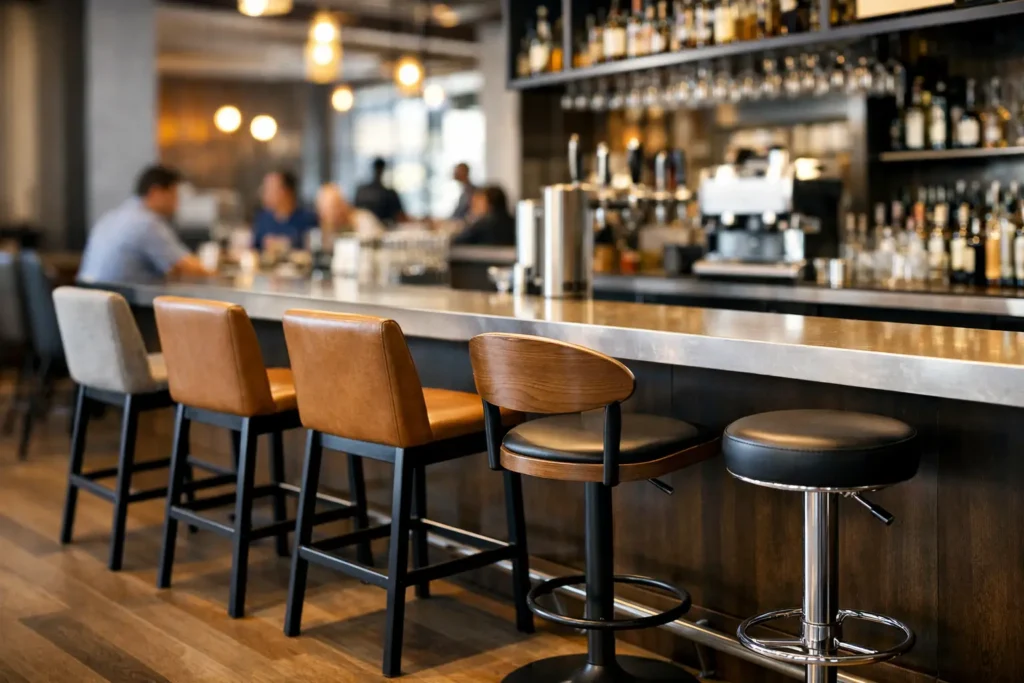
A bar stool that looks sharp on opening day can become a maintenance problem by month three if it was never specified for real commercial use. In busy cafes, hotel lounges, staff pantries, clubs, and F&B counters, seating takes constant abuse – shifting weight, dragging feet, spills, cleaning chemicals, and nonstop turnover. That is why commercial bar stools for high traffic need to be selected as part of a wider project strategy, not as a quick style decision.
For designers, procurement teams, and business owners, the right stool has to do more than match the concept board. It has to hold up under daily wear, support efficient cleaning, align with the rest of the interior, and stay within budget across volume orders. Good specification balances all four.
What high-traffic performance really means
In commercial environments, durability is not just about whether a stool breaks. It is also about how well it keeps its shape, finish, and appearance over time. A stool can remain structurally sound and still look tired long before the rest of the space does. Scratched footrests, chipped powder coating, loose joints, flattened seats, and stained upholstery all reduce the perceived quality of the venue.
High traffic performance usually comes down to repeated contact points. Guests push off from the seat edge. Shoes grind against the base and footrest. Bags hit the frame. Staff move stools during cleaning and service reset. In hospitality settings especially, a stool is touched more often and more aggressively than many buyers expect.
That is why commercial-grade construction matters. Residential bar stools may appear similar at a glance, but the internal build, material thickness, joinery, and finish protection are often not made for all-day public use.
How to evaluate commercial bar stools for high traffic
The strongest specifications start with the frame. Metal frames are often the safest choice for demanding environments because they offer a favorable balance of strength, slim visual profile, and maintenance ease. Powder-coated steel works well in contemporary hospitality and office breakout spaces, while stainless steel can be a practical option where corrosion resistance matters more.
Solid wood bar stools can also perform well in high-use settings, especially when the construction is properly reinforced and the finish is suitable for commercial cleaning. They tend to bring warmth to restaurants, clubs, and lounge concepts, but wood does show dents and edge wear differently than metal. That is not always a flaw – in some venues, a slightly lived-in finish suits the brand. In others, it reads as premature wear.
The seat material is the next decision point. Upholstered seats improve comfort and can elevate the look of a space, but they introduce maintenance variables. Faux leather and performance vinyl are often practical for F&B, healthcare, and certain education settings because they wipe down easily. Fabric can work in lower-spill environments, though stain resistance and cleaning protocols need to be considered early, not after installation.
If the project calls for all-hard-surface seating, molded polypropylene, plywood, or finished timber seats can be highly effective. They reduce cleaning time, simplify replacement planning, and often deliver better lifecycle value in very busy areas. The trade-off is comfort. For short dwell times, that may be acceptable. For cocktail lounges, hotel bars, or premium hospitality venues, buyers usually need more comfort and a more refined finish.
The details that get missed most often
Footrests deserve more attention than they usually get. In many commercial bar stools for high traffic, the footrest is the first area to show visible damage. If it is poorly protected, the finish can wear through quickly from shoe contact alone. Some stools are better suited to heavy use because they incorporate durable metal kick plates or more resilient finish treatments at that exact stress point.
Glides are another small detail with major operational impact. The wrong glide can damage flooring, create noise, or wear down too quickly under constant movement. This matters in hospitality, but it matters just as much in offices, clubhouses, and educational spaces where the acoustics and floor finish are part of the overall user experience.
Weight and stackability also affect long-term performance, even when they are not part of the design brief. A stool that is too light may feel unstable in a busy venue. One that is too heavy can frustrate staff during cleaning and reset. If the layout changes often for events or mixed-use programming, handling characteristics become part of the buying decision.
Matching the stool to the commercial setting
Not every high-traffic space needs the same type of stool. In a fast-moving cafe or food hall, easy-clean surfaces and fast turnover usually matter more than lounge-level comfort. In that case, a durable metal frame with a shaped polypropylene or plywood seat may be the right balance of cost, resilience, and visual order.
For hotel bars and premium hospitality environments, guests stay longer and notice more. The seating needs to support comfort, design impact, and brand positioning while still standing up to constant use. Upholstered seats, refined metal finishes, and coordinated collections often make sense here, provided the specification is commercial grade from the inside out.
Corporate breakout areas and pantry spaces sit somewhere in the middle. The stool still needs to be durable, but the design language may need to align with office seating, meeting furniture, and lounge pieces elsewhere in the project. This is where a supplier with coordinated ranges can simplify the specification process and help maintain a cohesive look across the space.
Design consistency matters in B2B projects
Bar stools are rarely specified in isolation. They sit beside dining chairs, cafe tables, lounge seating, reception furniture, and outdoor pieces in many commercial interiors. If the stool feels like an afterthought, the entire environment can look less resolved.
That is why commercial buyers often benefit from sourcing through a partner that organizes collections by style and application rather than treating seating as a standalone purchase. When finishes, silhouettes, and material language work together across categories, the result feels intentional. That matters for hospitality branding, workplace identity, and client-facing environments where first impressions carry commercial value.
At the same time, design consistency should not force a bad product choice. If the most visually aligned stool is too delicate for the traffic level, it is the wrong stool. Good commercial specification protects the concept by adapting it to operational reality.
Budget control without short-term thinking
Price always matters in project supply, but the lowest unit cost is not always the best commercial outcome. A cheaper stool that needs early replacement, frequent repairs, or excessive maintenance can cost more over the life of the project. For procurement teams and business owners, true value usually sits in the middle ground – strong construction, practical finishes, and a design standard that supports the overall environment.
This is also where customization can help. In some projects, changing the upholstery, finish, or protective detailing allows buyers to stay within budget while improving suitability for the site. A project-focused supplier can often guide those adjustments more effectively than a retail-led source selling fixed consumer products.
For larger fit-outs, supply reliability is just as important as product cost. Matching stools across multiple phases, obtaining consistent finish quality, and securing realistic lead times all influence project success. A stool that looks right but cannot be delivered reliably is not commercially useful.
What to ask before you approve the order
Before final sign-off, buyers should be clear on several practical points: what the frame is made from, how the joins are reinforced, what cleaning methods the finish can tolerate, whether replacement parts or matching reorders are feasible, and how the stool has been positioned for commercial use. Those questions are not excessive. They are basic protection for the project.
It also helps to review the stool in person whenever possible. A showroom evaluation can reveal wobble, finish inconsistency, seat comfort, and visual proportion much faster than a product image can. For specifiers working across coordinated spaces, it is often the quickest way to determine whether the stool genuinely belongs with the rest of the furniture package.
For buyers sourcing commercial bar stools for high traffic, the best results usually come from working with an experienced project supplier that understands both design intent and daily wear. VCUS supports commercial fit-outs with style-coordinated furniture collections, customization options, and practical guidance for business environments where durability and presentation both matter.
A well-chosen bar stool should keep doing its job long after the opening photos are taken. If it still looks right, feels solid, and supports the rhythm of the space after thousands of uses, that is not luck. That is good specification.
