
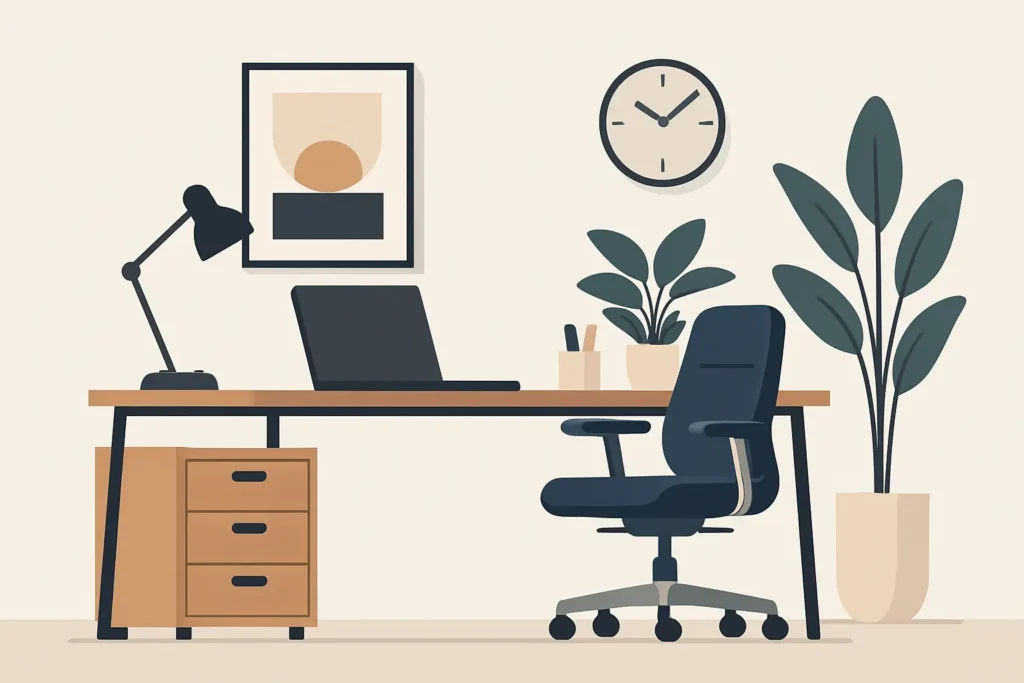
A beautiful office fit-out can still fail if people avoid the spaces you invested in. The quiet tell is where laptops end up: on café tables that wobble, on soft lounge seats that kill posture, or back at the same old desks because the “statement” pieces turned out to be impractical.
That’s why innovative designer furniture for offices isn’t about chasing the latest silhouette. It’s about specifying pieces that earn their footprint: they support focus, collaboration, and brand presence while surviving daily use and constant reconfiguration. For interior designers, architects, and procurement teams, the goal is simple – create a cohesive environment that looks intentional and performs under real working conditions.
What “innovative” really means in office furniture
“Innovative” can sound like a buzzword until you define it in procurement terms. In commercial offices, innovation shows up when furniture solves a stubborn problem without adding risk to delivery, maintenance, or budget.
True innovation is often quiet: better ergonomics inside a clean profile, smarter modularity that reduces future capex, or materials that hold up under heavy traffic while still photographing beautifully. The most effective pieces balance three forces that often compete – design clarity, functional performance, and project discipline.
The trade-off to watch is novelty versus longevity. An unusual mechanism or experimental finish might look great on day one, but if replacement parts are hard to source or the material shows wear quickly, your long-term costs climb. The strongest “designer” selections are the ones that stay relevant and maintainable.
Innovative designer furniture for offices starts with how people work
A cohesive office specification begins with behavior, not a mood board. If your client’s teams are hybrid, move between tasks, or host frequent visitors, the furniture plan needs to support a mix of postures and time horizons.
Focus work: comfort that doesn’t look clinical
Task seating and benching systems still do the heavy lifting. Innovation here is ergonomic support that blends into a modern interior: clean backs, refined bases, and materials that feel elevated without compromising adjustability. For specifiers, the practical questions are consistent: does the chair fit a range of users, can it be maintained easily, and does it match the broader palette across meeting rooms and breakout spaces?
A common “it depends” decision is how much adjustability to specify. Highly adjustable chairs can improve comfort across diverse users, but they add cost and sometimes visual complexity. For executive zones or client-facing areas, a simpler profile with the right support can be the better choice.
Collaboration: modularity over fixed statements
The modern office shifts from meeting rooms to informal collaboration. Innovative lounge systems and modular sofas make that shift easy. Instead of committing to a single layout, you can build a kit of parts that supports quick reconfiguration: straight runs for town hall overflow, L-shapes for team huddles, or separated seats for one-on-ones.
The trade-off is that modular systems demand tighter planning. You need clear module logic, practical connectors, and finishes that won’t show seams or wear at high-contact points. If the space will be reconfigured often, prioritize durability and cleaning performance over delicate textures.
Touchdown and hybrid work: flexible, not flimsy
Touchdown areas are where furniture can either feel intentional or like an afterthought. Innovative designer pieces here are compact tables with stable bases, bar-height counters that support short stays, and lightweight seating that’s comfortable for 30-90 minutes.
Flexibility doesn’t mean fragile. If chairs are moved constantly, look for commercial-grade frames and finishes that resist chips and scuffs. If the table is used for both laptop work and coffee chats, stability and top durability matter more than an ultra-thin profile.
Design cohesion: the fastest way to make a project look expensive
The quickest way to lose a design-forward look is to source each category separately without a unifying logic. Offices feel premium when the furniture language is consistent across zones – even when the pieces are different.
Cohesion comes from repeating a few deliberate elements: the same timber tone across tables, consistent metal finishes across chair bases and table legs, and a controlled upholstery palette that performs under traffic. When specifiers treat the office like a single collection rather than a set of one-off purchases, the result photographs well, supports brand identity, and reduces decision fatigue.
This is also where procurement gets easier. If you can specify matching lounge seating, meeting chairs, barstools, and occasional tables within the same design family, you reduce the risk of “almost matching” pieces arriving on site.
Material innovation that matters to facilities teams
Design teams often lead the selection, but facilities teams live with it. The most appreciated innovations are the ones that look great and stay easy to maintain.
Performance upholstery and stain-resistant textiles can dramatically extend the life of soft seating. Solid surfaces and high-pressure laminates can provide the clean, modern look clients want without the constant worry of rings, scratches, or swelling. Powder-coated metals and durable veneers can give you the right finish with better resilience in high-use areas.
The trade-off is feel and acoustics. Some high-performance materials can sound “hard” in open offices or feel less warm. If the space already has a lot of glass and solid flooring, you may need fabric, acoustic elements, or softer finishes to balance the environment.
The overlooked innovation: acoustics, privacy, and micro-zones
Open-plan offices don’t fail because people dislike collaboration. They fail because people can’t concentrate. Innovative furniture plays a major role in creating micro-zones without heavy construction.
High-back lounge chairs, acoustic booths, and partially screened seating can introduce visual privacy and reduce noise spread. Even simple moves like upholstered wall panels paired with lounge groupings can create calmer pockets.
Here, “designer” should still mean project-ready. Specify pieces with stable footprints, durable fabrics, and dimensions that work with circulation and accessibility. A beautiful pod that blocks walkways or creates bottlenecks will be resented quickly.
Power, cable management, and the details clients notice
One of the fastest ways a new office looks dated is visible power strips and messy cable runs. Furniture innovation increasingly shows up in integrated power and cable management.
Meeting tables with concealed access, shared benching with structured cable routes, and lounge tables that support discreet charging can elevate the user experience immediately. These details also reinforce a brand message of competence and care.
The trade-off is coordination. Integrated power requires early alignment with M&E, floor boxes, and final layouts. If the client expects frequent rearrangements, consider flexible power solutions that still look clean without being overbuilt.
A procurement-friendly way to specify design-forward offices
When you’re responsible for timelines and budgets, the best design selections are the ones you can actually deliver and maintain. A practical approach is to build the spec around a small set of “anchor” pieces, then extend that language across categories.
Start by locking the task seating and workstations, because they drive comfort and planning. Then define the meeting room language – table shapes, base finishes, and chair style. After that, use lounge and breakout furniture to express brand personality through upholstery, textures, and distinctive forms.
If budget pressure is real, be honest about where to spend and where to simplify. Investing in ergonomic seating and durable high-touch surfaces often pays off more than buying a highly sculptural occasional chair that gets used twice a day. Conversely, if the office is client-facing, a small number of signature pieces in reception and key collaboration zones can lift the entire perception of quality.
Common mistakes that make “designer” feel like a regret
Some of the most expensive project problems come from avoidable missteps.
Mixing too many styles is the big one. If every zone has a different chair language and finish story, the office feels like a showroom of unrelated items. Another issue is underestimating lead times for customized finishes or large quantities, especially when the project involves phased handovers.
Finally, don’t ignore ergonomics in breakout areas. If teams end up doing real work in lounge zones, overly soft seating and low tables will create discomfort and poor posture. The fix is not to eliminate lounge areas – it’s to specify the right mix of lounge, upright, and perch options so people can choose what fits their task.
Choosing a partner who understands office projects
Designer furniture is only half the outcome. The other half is coordination: finish consistency, quantity planning, delivery sequencing, and the ability to supply across categories without turning the project into a vendor-management exercise.
A project-oriented commercial supplier can help you keep the specification cohesive while staying disciplined on cost and timelines. That’s the logic behind VCUS as a Singapore-based importer, manufacturer, and wholesaler with a style-organized collection designed for full-space specification across chairs, tables, lounge seating, and system furniture, supported by showroom selection and project delivery experience (https://www.vcus.com.sg).
The best partnerships feel simple. You get clear options, reliable lead times, practical customization where it matters, and a finish story that stays consistent from reception to the last meeting room.
Innovative designer furniture for offices is a long game
The most successful office projects don’t look “new” for just a month. They keep working after the team grows, after departments reshuffle, and after the first round of daily wear tests every surface. If you specify furniture that’s cohesive, maintainable, and flexible enough for change, you won’t need to constantly explain the design – the space will prove it every day through how people use it.
