
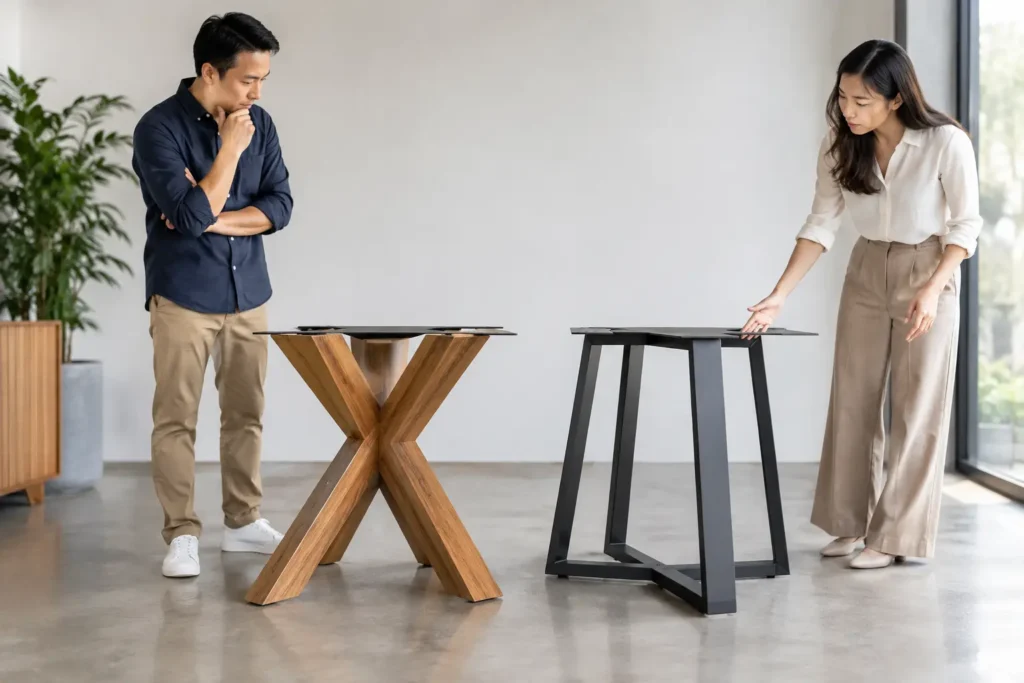
A tabletop may set the first impression, but its base determines much of the table’s day-to-day performance. When specifying timber versus metal table bases, commercial buyers are balancing more than appearance: stability, cleaning routines, floor conditions, layout flexibility, lead times, and the visual language of the full interior all matter.
For an office pantry, a busy café, a hotel restaurant, or an education lounge, the better choice is rarely universal. The right base is the one that supports the intended experience while standing up to the demands of the space.
Timber Versus Metal Table Bases: The Design Difference
Timber bases bring warmth, texture, and a more residential sense of comfort to commercial settings. They work particularly well where guests or staff should feel encouraged to settle in: hospitality lounges, private dining rooms, executive offices, boutique retail, and premium F&B concepts. Natural grain also gives each piece character, helping a large room avoid looking overly uniform.
A timber base can soften hard architectural finishes such as concrete, glass, stone, and tile. In spaces with acoustic panels, upholstered seating, and layered lighting, it supports a calmer, more considered atmosphere. It is an especially effective choice when the table needs to feel like furniture rather than simply a functional surface.
Metal bases create a different kind of confidence. Their clean lines suit contemporary offices, compact cafés, food courts, meeting areas, and high-turnover dining spaces. Powder-coated black, white, gray, or custom colors can either disappear into the scheme or provide a deliberate graphic contrast against a timber, laminate, compact laminate, or stone-look tabletop.
For projects requiring a cohesive contemporary look across multiple zones, metal often offers more visual consistency. A matching family of dining tables, bar tables, meeting tables, and occasional tables can maintain the same leg profile and finish while accommodating different heights and tabletop sizes.
Start With How the Table Will Be Used
A base should be specified around the table’s job, not only its appearance. Consider whether the table will be moved frequently, whether users will sit around all sides, and whether the venue expects peak-hour traffic or long, relaxed stays.
In a restaurant, diners need clear legroom and stable support even when a bag is hung on the chair or weight shifts across the tabletop. A central metal pedestal is often practical for two- and four-seat tables because it eliminates corner legs and makes seating more flexible. However, a broad timber dining table used for group meals or private events may benefit from substantial timber legs or a timber-and-metal frame that matches the scale of the top.
For office collaboration spaces, metal bases are usually the more adaptable choice. They can support long shared worktables, cable-management requirements, and slimmer tabletop profiles without making the room feel heavy. Timber may be preferable for executive meeting rooms or client-facing areas where a more established, welcoming finish supports the brand experience.
Education and healthcare environments require another layer of consideration. Tables may need frequent cleaning, easy replacement planning, and resistance to daily knocks from bags, wheelchairs, and equipment. In these settings, base geometry, accessible seating clearance, and a finish that is easy to maintain can be more valuable than a highly decorative detail.
Strength, Stability, and Tabletop Size
Material alone does not determine whether a table is stable. The base footprint, column thickness, mounting plate, joinery, leveling glides, and tabletop dimensions all affect performance. A well-engineered timber base can be exceptionally dependable, while a poorly sized metal pedestal can still wobble under a large top.
Metal has an advantage when supporting large spans with a relatively slim profile. Steel frames and legs can carry long communal tables, conference tables, and bar-height surfaces without requiring oversized components. This makes metal a practical option where floor area is limited or where designers want a lighter visual effect.
Timber is naturally more substantial in appearance, which can be an asset for heavy, generous tabletops. A solid-looking timber base visually anchors a large table and can make a hospitality setting feel more grounded. Yet it needs proper construction and proportion. A slim timber leg may look refined, but it is not the right answer for every oversized stone, solid-surface, or thick timber top.
For either material, confirm the planned tabletop size and weight before final selection. Also account for real operating conditions: uneven floors, outdoor-adjacent areas, frequent table movement, and the possibility that staff will push tables together for events. Adjustable glides are a small feature with a major effect on a polished guest experience.
Maintenance in High-Use Environments
Metal bases are generally straightforward to clean. Powder-coated finishes can handle routine wiping and are available in colors that conceal minor marks better than others. Black and darker finishes are popular for this reason, although they can show dust in bright daylight. Lighter finishes can feel fresh and architectural but may need more attentive cleaning in busy dining environments.
The finish quality matters. A project-grade metal base should have consistent coating coverage, clean welds, protected contact points, and durable hardware. In humid environments or areas exposed to spills, buyers should consider corrosion resistance and specify the finish accordingly. Indoor furniture placed near open fronts, pools, or coastal conditions may face more moisture than a typical air-conditioned office.
Timber requires more deliberate care, particularly in food service settings. Sealed and properly finished timber can perform well, but standing water, harsh chemicals, and repeated impact can affect its appearance over time. Some operators see this as part of the material’s lived-in character. Others need a finish that remains highly consistent across hundreds of daily covers.
If a project uses timber bases, establish realistic cleaning guidance with the operations team. Avoid allowing a beautiful material choice to become a maintenance burden after handover. A durable commercial finish, sensible placement away from persistent wet zones, and prompt attention to scratches or chips will extend its service life.
Budget and Replacement Planning
Purchase price is only one part of the calculation. Metal bases can be cost-effective at scale, especially when the same component is repeated across many tables. Their standardized construction also makes future replacement simpler when a venue expands, refreshes, or needs to replace damaged pieces.
Timber bases may command a higher cost depending on the species, construction, finish, and level of customization. They are often worth the investment in spaces where material warmth is central to the concept and where a more distinctive furniture profile helps support premium positioning.
For multi-site rollouts, consistency should be considered early. Metal frames can make it easier to repeat a design across locations while adapting tabletop finishes to suit each site. Timber can also be standardized, but natural variation should be accepted as part of the intended look rather than treated as a defect.
A mixed specification is often the most commercially sensible solution. Use timber bases at feature tables, executive areas, private dining rooms, or lounge settings, then use metal bases for high-volume dining, workstations, training rooms, and flexible multipurpose zones. This approach creates visual hierarchy without applying premium materials where they are least needed.
When Hybrid Tables Make Sense
The timber-versus-metal decision does not always need to be absolute. Many successful commercial tables combine a timber top with a metal frame, or use timber elements around a concealed metal structure. This pairing can provide the warmth clients and guests respond to with the strength and slimmer proportions that project teams need.
Hybrid solutions are useful for long tables, communal benches, and designs that need to coordinate with timber chairs or cabinetry without becoming visually heavy. They can also make it easier to introduce a consistent powder-coat color throughout a space, tying table bases to barstool frames, shelving, partitions, and lighting details.
The key is to make the combination look intentional. Match timber tones carefully, repeat metal finishes elsewhere in the interior, and avoid using too many competing grains or colors within the same sightline.
Specify for the Whole Room, Not One Table
A table base is part of a larger furniture system. The chosen material should work with the chairs, flooring, joinery, lighting, and the practical flow of staff and guests. Before confirming a specification, review physical samples where possible and test the table at its intended height with the selected seating.
VCUS supports commercial buyers with contemporary table, seating, and lounge furniture selections that can be coordinated across office, hospitality, healthcare, education, and F&B environments. For project teams, this helps reduce the risk of assembling a space from disconnected pieces while maintaining practical control over budget and delivery requirements.
Choose timber when warmth, character, and a more grounded experience are central to the brief. Choose metal when flexibility, visual lightness, and repeatable performance lead the conversation. Then test the decision against the real behavior of the space – because the best table base is the one that still looks right after the room has been fully lived in.
