
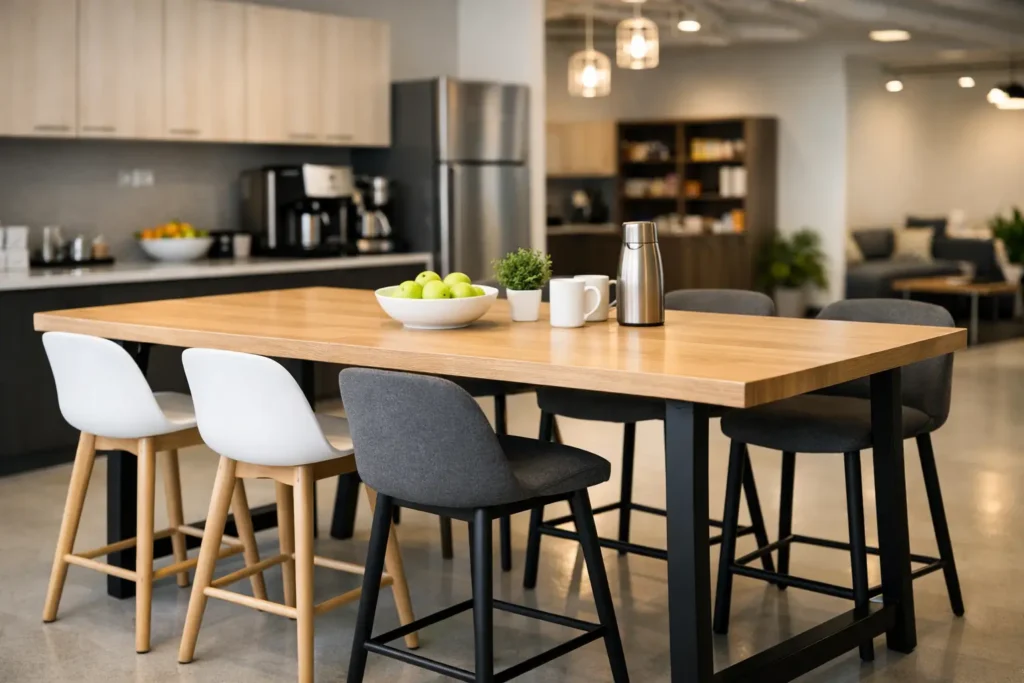
A pantry that sits empty most of the day usually has one problem – it was furnished like an afterthought. The right office pantry table and seating set changes how people use the space. It can support quick coffee breaks, casual one-on-ones, team lunches, touchdown work, and the kind of informal interaction that makes an office feel better organized and more human.
For designers, procurement teams, and business owners, this is not a small specification. Pantry furniture has to perform under constant daily use, fit the interior language of the workplace, and stay within budget. It also needs to work with circulation, cleaning routines, staff behavior, and the size of the team. A good-looking set is easy to find. A good-looking set that still works six months into occupancy is where better planning matters.
Why the office pantry table and seating set matters
In many modern workplaces, the pantry is doing more than one job. It is a breakout area, a social zone, a waiting point between meetings, and sometimes an overflow workspace. That means the furniture must balance comfort with discipline. If the seating is too relaxed, people camp there for long periods and turnover drops. If it is too rigid, the space feels cold and underused.
This is why pantry furniture should be specified with the same care as meeting room or lounge furniture. The finishes need to hold up against spills, cleaning chemicals, and heavy traffic. The proportions need to support both short stays and repeated daily use. And visually, the set should connect with the larger workplace rather than look like it was purchased separately at the last minute.
Start with how the pantry is actually used
Before choosing shapes, colors, or materials, it helps to define the pantry’s role in the project. A small corporate office may only need a compact setting for coffee and short breaks. A larger workplace may need a mix of communal tables, two-seater arrangements, and bar-height options for staggered use throughout the day.
Usage patterns should guide specification. If staff mainly use the pantry for meals, table depth and wipeable surfaces matter more. If the space doubles as an informal collaboration zone, you may want seating that is comfortable enough for 20 to 30 minutes without becoming lounge furniture. If the pantry is part of a client-facing office, the design standard has to support brand image as well as practicality.
There is no single correct formula. A legal office, tech company, clinic headquarters, and education provider will all use pantry space differently. The best result comes from understanding occupancy, duration of use, and expected wear before committing to a layout.
Table shape, size, and layout planning
Table selection often drives the success of the entire pantry. Round tables encourage quick interaction and work well in smaller footprints because they keep circulation softer. Square and rectangular tables are easier to align in grids and generally maximize seating efficiency. Larger communal tables create a stronger design statement and can support flexible use, but they need enough clearance around them to avoid making the pantry feel cramped.
Scale is where many projects go wrong. Oversized tables make the room harder to move through and leave chairs half-pulled out all day. Tables that are too small create clutter because staff spread bags, cups, food containers, and laptops across every available surface. In practice, commercial buyers should think beyond seat count and consider realistic daily behavior.
For compact pantries, a smaller number of well-proportioned tables usually works better than trying to squeeze in maximum capacity. In larger spaces, mixing table sizes can improve flow and make the pantry more usable across different times of day.
Dining height or bar height?
Dining-height tables are usually the safer commercial choice because they suit the broadest user group. They are more accessible, easier for extended sitting, and generally more versatile across meals and informal work.
Bar-height settings can add energy and a more contemporary profile, especially in pantry areas designed for short stays. They are useful when you want visual variety or to create zones within a larger breakout area. The trade-off is comfort over time and accessibility. In many projects, the strongest solution is not choosing one over the other, but using both selectively.
Choosing seating that holds up
Seating is where design intent meets daily abuse. Pantry chairs are dragged, stacked, leaned on, wiped down, and used by everyone. That means comfort matters, but durability and maintenance matter just as much.
Plastic, polypropylene, metal, timber-look, and upholstered options all have a place depending on the project standard. Hard-surface chairs are typically easier to clean and better for high-turnover environments. Upholstered seats can elevate the look and improve comfort, but they require more careful material selection and are not always ideal near self-service beverage stations or food prep zones.
Stackability is worth considering if the pantry is occasionally reconfigured for events or internal gatherings. Armchairs offer more comfort and presence, but they take up more room and reduce seating density. Armless chairs usually give you more flexibility in compact plans.
Benches, stools, or individual chairs?
Benches can work well against a wall and help create a more built-in, space-efficient arrangement. They also reduce visual clutter. The drawback is lower flexibility and less personal space, which some users dislike during meal times.
Stools suit bar-height counters and can sharpen the look of a contemporary pantry. They are best where dwell time is short. Individual chairs remain the most adaptable option for most office environments because they are easier to rearrange and generally better for a broader range of users.
Materials and finishes for commercial use
An office pantry table and seating set should never be selected on appearance alone. Commercial environments demand finishes that can absorb daily wear without looking tired too quickly. Tabletops should resist staining, moisture, heat exposure from cups or containers, and repeated cleaning. Chair finishes should tolerate scuffing, movement, and frequent contact.
Laminate and compact surfaces are often practical choices for pantry tables because they offer a clean contemporary look with easier upkeep. Powder-coated metal bases tend to perform well in high-use areas. Timber finishes can bring warmth, but buyers should assess whether they need real wood, veneer, or a commercial-grade alternative that delivers the same visual effect with less maintenance exposure.
Color also deserves more thought than many projects give it. Very light finishes can brighten a pantry, but they may show stains faster. Very dark surfaces can create contrast and sophistication, but they reveal dust, fingerprints, and scratches more readily. The best finish is usually the one that supports the design concept while still being realistic about the level of upkeep on site.
Keep the pantry consistent with the workplace
Pantry furniture should feel connected to the rest of the office. That does not mean every room needs the same chair or finish, but there should be a clear relationship between the pantry and the wider design scheme. When the pantry feels visually detached, it can weaken the overall fit-out.
For specifiers managing full projects, this is where working from a coordinated commercial collection makes a difference. Matching or complementary pieces across pantry, meeting, lounge, and workstation zones create a more resolved environment. It also simplifies sourcing and helps avoid the common problem of mixing products that look acceptable in isolation but inconsistent together.
A design-conscious supplier can help balance style, function, and commercial pricing across categories. That is especially useful when buyers want a pantry that feels elevated without pushing the fit-out budget in the wrong direction.
Budget, lead time, and project reality
A well-specified pantry set does not have to be expensive, but it does have to be commercially sensible. The cheapest table and chair combination often costs more later through premature wear, replacement, or dissatisfaction after handover. On the other hand, over-specifying a back-of-house pantry with premium finishes may not deliver real value.
This is where experienced project support becomes important. Buyers need to assess quantity, lead time, customization needs, and installation requirements early, especially for larger office rollouts or overseas projects. A trusted commercial furniture supplier such as VCUS can support that process by helping teams shortlist practical options that maintain a contemporary look while staying aligned with budget and schedule.
The strongest decisions usually come from balancing four factors at once: visual fit, expected use, maintenance needs, and procurement efficiency. If one of those is ignored, the pantry may still look complete on day one but underperform soon after.
What good specification looks like
A successful pantry is easy to use, easy to maintain, and consistent with the wider workplace. The furniture does not fight the layout. The seating feels intentional. The finishes are practical. And the space supports the kind of daily behavior the office actually wants to encourage.
That is the real value of choosing the right office pantry table and seating set. It is not just about filling a room with tables and chairs. It is about creating a break area that works hard, looks considered, and continues to represent the business well after the fit-out is complete.
If you are planning a new office or refreshing an existing one, treat the pantry like a real project zone, not leftover space. The difference shows up quickly in how the workplace feels and how people use it every day.
