
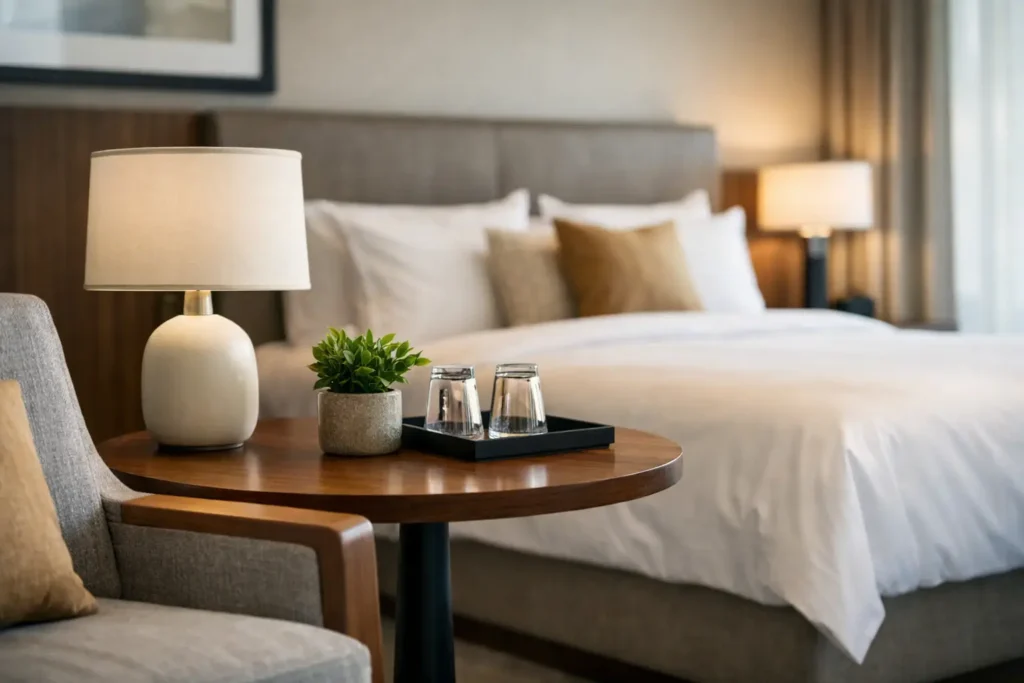
A beautifully finished lobby chair that wobbles after six months is not a design choice. Neither is a guest room desk that cannot support laptops, luggage, room-service trays, and frequent cleaning. Hotel furniture has to do more than photograph well on opening day. It must carry the visual identity of the property while performing reliably through constant guest turnover, housekeeping routines, and demanding public use.
For hotel owners, designers, and procurement teams, the best specifications begin with a practical question: what will this piece experience every day? That answer should guide materials, construction, dimensions, finishes, and supplier selection from the earliest stage of the fit-out.
Hotel Furniture Starts With the Guest Journey
Guests form an opinion of a hotel before they receive a key. The arrival sequence, from the entrance and reception seating to the lounge, restaurant, and lift lobby, establishes expectations for the room and the service to follow. Furniture is central to that experience because it is both visual and physical. Guests see it, touch it, sit on it, work from it, and judge its comfort without consciously separating those moments from their overall impression of the property.
A cohesive scheme does not mean every space should use the same chair or finish. It means the furniture should feel intentionally related. A boutique business hotel may pair tailored lounge sofas with refined timber tables and upholstered dining chairs, while a resort may use lighter silhouettes, textured materials, and weather-resistant outdoor pieces. The style can differ, but the quality level, color direction, and design language should remain consistent.
This is where broad category planning pays off. Specifying guest room seating, bedside tables, lobby sofas, restaurant tables, barstools, and outdoor furniture as isolated purchases often creates a disjointed result. Working from a curated collection makes it easier to coordinate materials and forms across the full property while retaining enough variation for each area to serve its own purpose.
Specify for Use, Not Just Appearance
Hospitality environments place more strain on furniture than most residential settings. A lobby armchair may be occupied from morning through late evening. Dining chairs are moved repeatedly across hard flooring. Guest room furniture must tolerate suitcase impacts, cleaning chemicals, spills, and changing occupants. The specification should reflect these conditions.
Guest rooms need compact, durable comfort
Guest room furniture must make efficient use of limited floor area. Bedside tables should provide accessible storage without obstructing circulation. Desks need sufficient depth for work and personal items, especially in business-focused properties. Lounge chairs and occasional tables can add comfort, but only when the room layout still allows guests to move freely with luggage.
Durability should be considered at component level. Look at edge finishing on case goods, stable bases on tables, abrasion resistance on upholstery, and hardware quality on drawers and doors. A lower-cost item that requires frequent replacement can become more expensive than a stronger initial specification once maintenance, labor, and room downtime are considered.
Public spaces require commercial-grade construction
Lobby, lounge, and event-area furniture must balance generous comfort with easy upkeep. Deep, soft seating may look inviting, but it may not suit a high-turnover lounge if cushions lose shape quickly or upholstery is difficult to clean. In many projects, supportive foam, durable fabrics, and well-engineered frames provide a better long-term result than overly delicate statement pieces.
Tables deserve the same scrutiny. Coffee tables and communal worktables should be stable, appropriately weighted, and finished to resist water marks, scratches, and routine cleaning. In dining environments, table bases must allow comfortable legroom while remaining strong enough for repeated movement and service activity.
Outdoor areas have their own rules
Pool decks, terraces, rooftop bars, and garden dining areas need furniture designed for exposure. Heat, humidity, rain, ultraviolet light, and chlorinated or salty conditions can quickly damage materials selected for indoor use. Outdoor chairs, tables, and loungers should be specified with weather-appropriate frames, fabrics, and finishes, as well as practical storage and cleaning requirements in mind.
Stackability can be valuable for event spaces or flexible poolside layouts, but it should not come at the expense of guest comfort or structural strength. The right balance depends on how frequently the space changes configuration.
Build a Cohesive Specification Across Every Zone
A hotel fit-out involves multiple stakeholders and a long list of furniture categories. Without a clear approach, small changes in finish, seat height, or fabric tone can create costly inconsistencies by the time installation begins. A coordinated specification schedule keeps the design vision intact and makes procurement more manageable.
Start by defining the property’s core design cues: the preferred timber tones, metal finishes, upholstery palette, and overall furniture character. Then translate those cues across room types and public areas. A dark metal detail used in the lobby, for example, can reappear on guest room desk legs, restaurant table bases, or barstools without making every space look identical.
Function should remain the filter. A sculptural lounge chair may suit a reception corner but be impractical in a breakfast area where guests need upright seating. Likewise, a dining chair selected for all-day comfort may be too large for a compact room. Cohesion comes from shared intent, not repeated products.
For larger projects, it is useful to review the furniture schedule by zone and by operational demand. This helps identify where a standard product can be used efficiently and where customization is justified. Custom upholstery, dimensions, or finishes can strengthen a concept, but they should be introduced where they create genuine value rather than unnecessary production complexity.
Control Cost Without Cutting the Wrong Corners
Hotel budgets are under constant pressure, especially when construction timelines shift or scope expands. The answer is not simply to choose the lowest quoted product. Procurement teams need to assess value through expected lifespan, maintenance demands, replacement availability, freight considerations, and the supplier’s ability to deliver consistently.
Some elements deserve greater investment because they receive the most use or define the guest experience. Lobby seating, dining chairs, guest room beds and headboards, and key public-area tables often fall into this category. Decorative occasional pieces may allow more flexibility, provided they still meet commercial standards.
A project-friendly supplier can help balance these decisions by offering coordinated options at different price points. Rather than compromising the entire scheme, teams can reserve premium materials for focal zones and use durable, complementary alternatives in secondary areas. The result can still feel considered and distinctive while staying within budget.
Lead times matter as much as unit prices. Imported products, custom finishes, and large quantities all require early confirmation. Establishing quantities, approval samples, and delivery sequencing before site completion reduces the risk of furniture arriving too early, too late, or without proper access planning. For overseas projects, packaging, consolidation, and logistics support become equally critical.
Choose a Supplier That Understands Projects
Hotel furniture is rarely a one-product transaction. It is a coordinated supply exercise involving designers, contractors, operations teams, and procurement managers. The strongest supplier relationships provide more than a catalog. They help teams compare suitable options, confirm dimensions, manage finishes, coordinate quantities, and keep the project moving when site conditions change.
A showroom remains valuable during the selection process because scale, comfort, upholstery texture, and finish quality are difficult to assess from images alone. Seeing pieces together also helps designers judge whether the collection delivers the intended atmosphere. VCUS supports hospitality projects with a broad range of contemporary commercial furniture, customization options, and project-oriented delivery support for local and overseas requirements.
Before confirming an order, verify the details that affect operations after handover: cleaning requirements, spare-part availability where relevant, warranty terms, installation responsibilities, and replacement lead times. These conversations may feel routine, but they can prevent avoidable disruption once the hotel is occupied.
The best hotel interiors make guests feel cared for without asking them to notice every design decision. Choose furniture that earns that confidence through comfort, consistency, and dependable performance, then give your project team a supply partner equipped to deliver it.
