
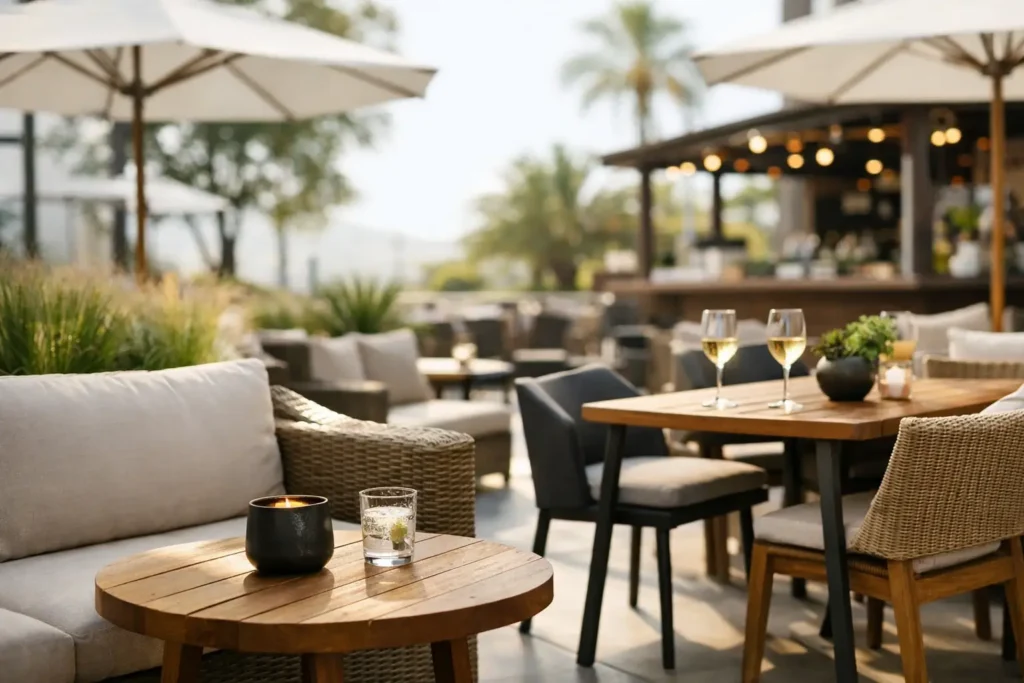
A terrace that looks impressive at 4 p.m. but feels cramped, unstable, or overheated by dinner service will not deliver the guest experience a hospitality venue needs. This guide to hospitality outdoor seating helps project teams specify furniture that supports comfort, turnover, brand character, and long-term operating value, not just an attractive opening-day photograph.
For hotels, restaurants, country clubs, cafés, and rooftop bars, outdoor seating is a revenue-generating extension of the property. It also faces conditions that indoor furniture never has to manage: sun exposure, rain, humidity, spills, wind, uneven flooring, frequent rearrangement, and higher maintenance demands. The right specification begins with how the space will operate.
Start With the Outdoor Experience You Want to Deliver
Before selecting a chair, define the purpose of the area. A hotel pool deck requires relaxed seating, quick-drying materials, and enough space for guests and staff to move safely. A restaurant sidewalk terrace may need compact tables that maximize covers without making diners feel crowded. A club lounge may need deep seating groups that encourage guests to stay longer and order more.
These requirements affect every decision, from seat height and table size to the number of stackable pieces required for cleaning or event turnover. A single outdoor collection can create consistency across a large property, but not every zone needs the same furniture. Dining, bar, lounge, waiting, and poolside areas should feel visually connected while serving their own practical function.
For design-led hospitality projects, establish a clear furniture language early. Consider the architectural palette, the interior concept, surrounding landscape, lighting temperature, and the venue’s service style. Contemporary aluminum frames may suit a modern rooftop venue, while woven textures and warm timber-look finishes can bring softness to a resort or garden restaurant. Cohesion matters because guests notice when an outdoor area feels like an afterthought.
Plan the Layout Before You Choose the Furniture
Outdoor capacity is not simply a matter of fitting in as many tables as possible. The layout must give guests personal space while allowing servers, cleaning crews, and accessibility users to move through the area without obstruction. Poor circulation creates service delays, increases the risk of collisions, and makes a well-designed venue feel uncomfortable.
Begin with fixed elements: entry points, kitchen access, planter boxes, columns, drainage points, pool edges, railings, fire exits, and shade structures. Then map the primary service routes. Tables should not force staff to weave through chair backs or carry trays across a busy guest path. In high-turnover dining environments, this operational discipline is often more valuable than adding one extra table.
Table dimensions should match the intended menu and service format. Small round or square tables are efficient for coffee, cocktails, and casual two-person dining. Larger rectangular tables are better for shared plates, business lunches, and group reservations. If the venue frequently changes between daily service, private events, and banquets, folding or nesting tables can offer useful flexibility, provided their construction is suitable for commercial use.
Allow room for chairs to be pulled out, not just pushed under the tabletop. Lounge seating needs even more clearance because guests settle into it differently than dining furniture. Modular sofas can help create distinct outdoor zones, but they should not block views, airflow, or emergency access.
Consider Wind, Shade, and Surface Conditions
The physical site should guide the specification. A breezy rooftop requires weighted bases, stable chair geometry, and umbrellas designed for commercial conditions. Lightweight furniture may be easy for staff to move, but it can become a safety issue in exposed locations. In some cases, a heavier aluminum or steel construction is the more sensible choice.
Shade affects comfort, dwell time, and material performance. Umbrellas, canopies, pergolas, trees, and building overhangs can all reduce heat buildup, but they should be planned alongside the furniture layout rather than added later. A table positioned in direct afternoon sun may remain empty even if the rest of the terrace is busy.
Flooring also deserves close attention. Decking gaps, stone joints, textured tile, grass, and uneven pavers can make narrow-legged chairs and tables wobble. Adjustable glides are useful, but they are not a substitute for assessing the surface properly. Specify stable bases and test the furniture on representative flooring before placing a full project order.
Choose Materials for Real Commercial Conditions
Outdoor furniture materials should be evaluated for their appearance, structural durability, maintenance requirements, and replacement practicality. There is no single best material. The right choice depends on climate, location, operating hours, storage availability, and the level of care the venue can realistically provide.
Powder-coated aluminum is a popular choice for hospitality projects because it is relatively lightweight, corrosion-resistant, and available in many contemporary finishes. It suits dining chairs, lounge frames, barstools, and tables, particularly where staff need to reposition furniture regularly. Quality matters: poor coating preparation can lead to chips and corrosion over time, especially near pools or coastal environments.
Synthetic wicker and rope can add a relaxed, residential character while offering better weather resistance than natural fibers. These materials work well for lounge and resort settings, but the weave must be commercial grade and easy to clean. Open weaves can collect dust, leaves, and food debris, so the visual effect should be balanced against the housekeeping routine.
Teak and other outdoor-rated timber options bring warmth that metal furniture cannot easily replicate. They need a clear maintenance plan, however. Left untreated, timber will naturally weather and change color. That may suit the design intent, but it should be an informed choice rather than a surprise after several months of use. Timber-look aluminum can offer a lower-maintenance alternative where a consistent finish is essential.
For tabletops, prioritize stain resistance, heat tolerance, edge durability, and ease of cleaning. Compact laminate, sintered stone, treated timber, and commercial-grade metal each have different strengths. A beautiful surface that marks easily under drinkware, plates, or cleaning chemicals can quickly create an avoidable replacement cost.
Comfort Drives Revenue, Not Just Aesthetics
Guests do not evaluate outdoor seating as furniture alone. They judge the total experience: whether the chair feels stable, whether the armrests interfere with the table, whether the cushion stays dry, and whether they can comfortably remain for another round of drinks or dessert.
Dining chair comfort should support an upright posture without feeling rigid. Seat depth, back angle, armrest height, and the relationship to the tabletop all matter. For a fast-casual concept, a lighter chair with modest comfort may be appropriate. For a premium restaurant or hotel terrace, upholstered outdoor cushions and more generous proportions may support a longer, higher-value stay.
Cushions require particularly careful specification. Use outdoor-rated foam, breathable construction, UV-resistant fabric, and removable covers where possible. Dark colors can hide marks but may become hot in strong sun. Light colors look refined yet can demand more frequent cleaning. A practical palette often combines neutral main upholstery with replaceable accent cushions that can be refreshed as the concept evolves.
Build Maintenance Into the Procurement Decision
The best outdoor furniture program is one the operations team can maintain consistently. Before approving a collection, ask how it will be cleaned, where it will be stored during storms or off-hours, and whether spare parts can be supplied. Replacement glides, cushions, tabletops, and matching chairs are valuable when a venue needs to maintain a polished appearance over several years.
Avoid specifying pieces solely because they are inexpensive at purchase. A low initial price can become costly if chairs fail under commercial use, finishes deteriorate quickly, or replacements cannot match the original order. Project buyers should assess lifecycle value: expected service life, cleaning time, repair options, warranty support, and availability for future phases.
For multi-site brands and large hospitality properties, standardizing key seating families can simplify purchasing and create a recognizable guest experience. It also makes expansion, refresh projects, and replacement orders more manageable. The objective is not to make every location identical, but to build a reliable design system that can adapt to different footprints.
Source With Project Consistency in Mind
Hospitality outdoor seating is rarely purchased in isolation. It needs to coordinate with indoor dining chairs, lounge furniture, barstools, tables, and sometimes custom pieces. Working with a commercial furniture supplier that understands full-space specification helps reduce mismatched finishes, inconsistent lead times, and last-minute substitutions.
At VCUS, project teams can source contemporary furniture across hospitality zones with attention to style continuity, commercial performance, customization, and budget discipline. A showroom review is especially useful for evaluating comfort, frame stability, finishes, and material texture before finalizing a larger order.
A well-specified terrace should still look considered after a busy season of service, cleaning, weather, and guest use. Choose seating that gives guests a reason to stay, gives staff room to perform, and gives the property a durable setting for the experiences it wants to be known for.
