
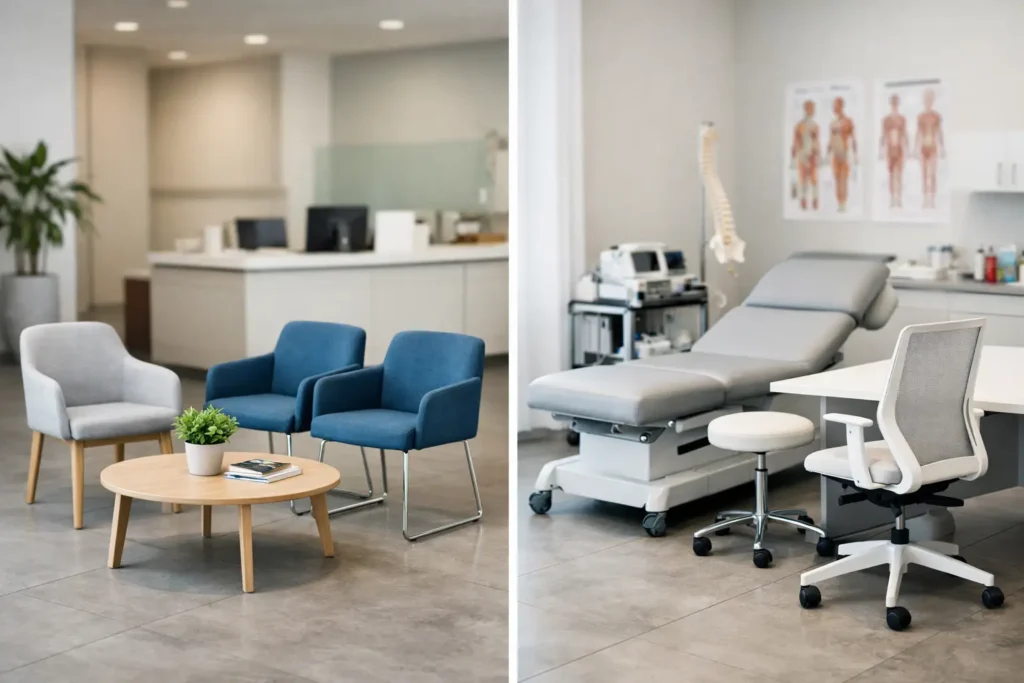
A clinic fit-out starts showing its strengths the moment a patient walks in. If the reception chair feels unstable, the consultation desk looks improvised, or the treatment trolley already shows wear, confidence drops fast. That is why the question of which furniture suits healthcare clinics is not just about filling rooms – it is about shaping trust, workflow, hygiene standards, and long-term operating value.
For clinic owners, interior designers, and procurement teams, the right answer is rarely a single product style. It is a coordinated furniture specification that supports patient comfort, staff efficiency, cleaning protocols, and the brand image of the practice. A pediatric clinic, dental center, specialist suite, and general practice may all need different details, but they share the same requirement: furniture must work hard, look professional, and hold up under daily commercial use.
Which furniture suits healthcare clinics in real use?
The most suitable furniture for healthcare clinics is commercial-grade furniture designed for frequent use, easy maintenance, and a calm, professional appearance. That usually means reception counters with durable finishes, waiting chairs with wipe-clean upholstery, consultation desks with practical storage, task seating for clinicians, and treatment-area furniture built for mobility and hygiene.
Design matters, but healthcare settings cannot specify furniture on looks alone. Soft residential pieces may photograph well, yet fail quickly under constant cleaning and high patient turnover. On the other hand, purely utilitarian furniture can make a clinic feel cold or dated. The strongest clinic environments balance both sides – contemporary design and operational discipline.
This is where project planning matters. Rather than buying item by item, specifiers should consider how seating, tables, desks, storage, and support furniture work together across the full patient journey.
Reception and waiting area furniture set the tone
The waiting area is often the most visible part of a clinic, and it carries more responsibility than many buyers expect. It needs to manage short stays, anxious visitors, family groups, elderly patients, and peak-hour traffic without feeling crowded or chaotic.
Reception seating should be stable, easy to clean, and comfortable enough for waiting periods without encouraging slouching or awkward posture. Upholstery choice is critical. Vinyl and healthcare-appropriate coated fabrics are often preferred because they can be cleaned quickly and resist staining better than domestic textiles. If the clinic wants a softer look, textured commercial fabrics may still work, but only if cleaning requirements are realistic.
Chairs with arms are often the safer choice in healthcare environments, particularly for older patients or anyone with limited mobility. Armless seating can help increase capacity, but it is not always the most inclusive option. In many clinics, a mix works best.
Coffee tables and side tables need equal attention. Sharp corners, delicate veneers, and lightweight pieces tend to create problems. Compact, rounded tables with durable tops are usually more suitable, especially in high-traffic spaces where furniture gets moved often.
The reception counter should not be treated as a standard office desk. It needs a professional front-facing presence, protected work surfaces, cable management, and enough storage to support check-in tasks without visible clutter. In smaller clinics, a compact counter can still feel premium if the finishes are clean and the proportions are right.
Consultation room furniture should support flow
Consultation rooms are where functionality becomes non-negotiable. The desk, chairs, storage, and clinician seating all have to support focused discussion while allowing the practitioner to move easily between patient interaction and clinical work.
A consultation desk should be compact enough to preserve circulation space but substantial enough to look credible and organized. Thin, low-cost desks often feel temporary, which does not help a clinic present itself as established and reliable. Durable laminate or similarly practical commercial finishes tend to perform well because they resist scratches and are easier to maintain than more delicate surfaces.
Patient chairs in consultation rooms should feel supportive without becoming bulky. This is one area where oversized hospitality seating usually falls short. Clinics benefit more from chairs with upright posture, strong frames, and easy-clean surfaces.
For clinicians, ergonomic task seating is essential. Staff spend long hours moving between screens, notes, and patient-facing discussion. Poor seating affects productivity and comfort quickly. Adjustable office seating designed for commercial environments is usually the right call, especially in multi-practitioner clinics where chairs are shared.
Storage also deserves more attention than it often gets. If supplies, documents, or devices are spilling onto visible surfaces, the room starts to feel less controlled. Low cabinets, mobile pedestals, and integrated storage help maintain a clean visual field while keeping essentials close at hand.
Which furniture suits healthcare clinics in treatment spaces?
Treatment and procedure areas demand a different level of practicality. In these spaces, mobility, cleanability, and material performance typically matter more than decorative effect.
Mobile trolleys, utility carts, stools, and support tables should be selected for frequent movement and repeated cleaning. Casters need to roll smoothly and lock securely. Frames should be sturdy enough for constant use, and surfaces should not trap dirt in unnecessary joints or detailing.
Seating for treatment zones is often simpler in form, but it still needs to align with the clinic’s wider design language. A common mistake is specifying polished reception furniture and then treating back-of-house or treatment areas as an afterthought. Patients notice inconsistency. Cohesive furniture selection across front and operational spaces creates a more assured brand experience.
If a clinic includes longer-stay treatment settings, such as infusion, recovery, or specialist care, comfort becomes more nuanced. Patients may need supportive lounge-style seating, but not every lounge chair is suitable. Seat height, arm support, wipeability, and transfer ease all matter. A stylish chair that is difficult for patients to get in and out of is not a successful specification.
Staff areas need durable comfort, not leftovers
Staff rooms, admin corners, and back-office spaces are often furnished last, which usually means they are furnished poorly. That approach can hurt morale and daily efficiency.
Healthcare teams need practical desks, task chairs, lockers or storage units, and breakout seating that can withstand constant use. These spaces do not need luxury finishes, but they do need the same commercial discipline as public areas. Durable office seating, compact meeting tables, and easy-care pantry furniture can improve day-to-day usability with minimal budget impact.
This is also where a project-wide supplier relationship becomes valuable. Coordinating public-area furniture, consultation room pieces, and staff furniture through one trusted commercial source makes it easier to keep finishes aligned and budgets under control.
Material choices make or break clinic furniture
If buyers ask which furniture suits healthcare clinics, the deeper question is often which materials hold up best. Material selection affects maintenance costs, appearance, hygiene, and replacement cycles.
Non-porous and wipe-clean surfaces are usually preferred in patient-facing settings. Commercial laminates, performance upholstery, powder-coated metal, and durable molded components often perform better than natural materials that stain easily or require intensive upkeep. Wood-look finishes can still be effective where warmth is needed, but they should be specified in durable, contract-grade formats rather than fragile residential ones.
There is also a branding decision here. Some clinics want a highly clinical appearance because it signals precision. Others want a softer, hospitality-influenced environment to reduce patient anxiety. Both can work. The right direction depends on patient profile, service type, and market positioning. What matters is choosing materials that support the concept without creating maintenance problems later.
Budget matters, but cheap furniture costs more
Clinics operate under real budget constraints, and furniture is only one part of the fit-out. Still, cutting too hard on furniture usually shows up later in repairs, replacements, and a poorer patient impression.
The smarter approach is value engineering, not bargain hunting. Spend where performance matters most – waiting chairs, clinician seating, reception counters, and high-use surfaces. In lower-impact zones, more economical options may be perfectly suitable if they still meet commercial standards.
Professional buyers also need to think beyond purchase price. Lead times, customization options, finish consistency, replacement availability, and supplier reliability all affect project risk. A lower unit cost means little if the furniture arrives late, cannot be matched later, or fails under warranty pressure.
For multi-room or multi-site healthcare projects, consistency becomes even more important. A supplier with broad category coverage can help specifiers build a cohesive scheme across seating, desks, tables, lounge furniture, and support pieces while staying within budget. That is often the difference between a clinic that feels carefully planned and one that feels assembled from separate decisions.
The best clinic furniture is coordinated, durable, and easy to live with
Healthcare clinics need furniture that supports people under real-world pressure – patients who may be anxious, staff who move all day, and operators who cannot afford constant maintenance issues. The best selections are rarely the flashiest. They are the ones that stay comfortable, clean well, reinforce the clinic’s image, and continue performing long after handover.
For project teams specifying a new clinic or refurbishing an existing one, the goal is not simply to ask which furniture suits healthcare clinics in theory. It is to choose furniture that suits this clinic, this workflow, and this budget, without compromising on the professional standard patients expect. Get that balance right, and the space starts working for everyone the moment the doors open.
