
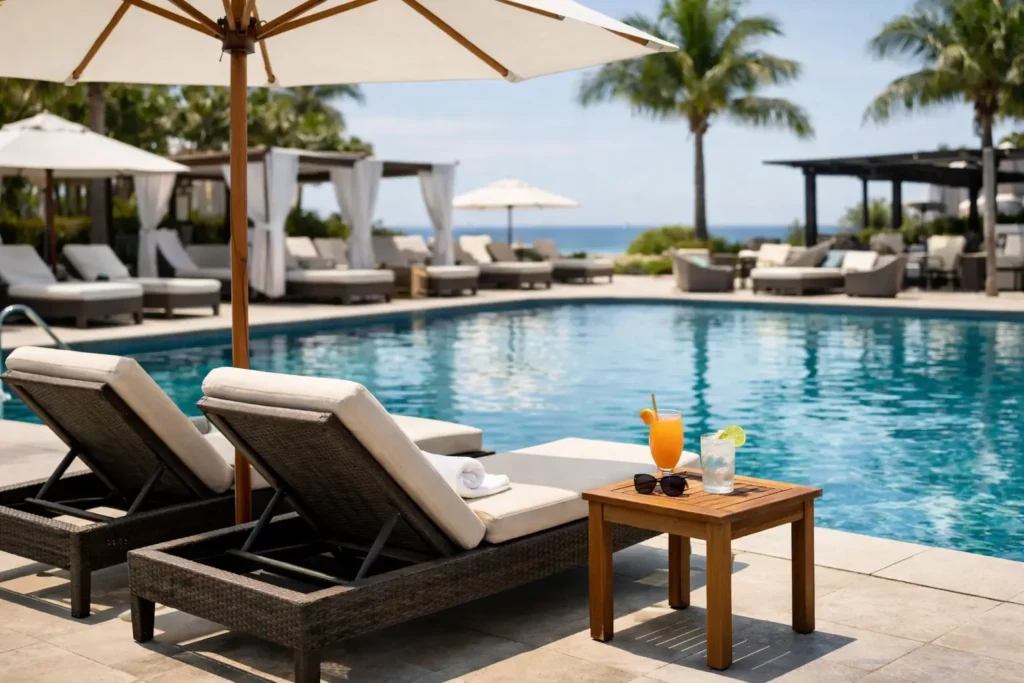
A pool deck can look impressive on opening day and still fail a hotel operation within a season. Cushions fade, frames corrode, loungers wobble, and the layout that looked clean in renderings starts to frustrate guests and staff. Choosing the best hotel poolside furniture is not about buying attractive outdoor pieces in isolation. It is about specifying furniture that supports guest experience, daily operations, brand positioning, and long-term replacement costs.
For hotel owners, designers, and procurement teams, that changes the conversation. The right specification needs to perform in heat, rain, humidity, chlorinated environments, and heavy commercial use while still presenting a polished, consistent look across the property. Good poolside furniture should feel inviting at first glance, but it should also be easy to maintain, durable enough for constant turnover, and practical for housekeeping and operations.
What makes the best hotel poolside furniture
The best hotel poolside furniture balances five demands at once: durability, comfort, visual cohesion, maintenance efficiency, and budget discipline. If one of those is ignored, the project usually pays for it later.
Durability comes first because poolside conditions are harsher than many buyers expect. UV exposure breaks down finishes and fabrics. Moisture affects frames, cushions, and hardware. Sunscreen, spilled drinks, and frequent cleaning all add wear. Residential-grade products may look suitable in a catalog, but under commercial use they often show failure quickly.
Comfort matters just as much because pool furniture is not just decorative. Guests may spend hours on a lounger, move between shaded and open areas, or use side tables for food, drinks, and devices. If the seating angle is awkward, the cushion retains heat, or the furniture feels unstable, guests notice immediately.
Then there is visual consistency. A luxury resort, a boutique hotel, and a family-focused property should not all specify the same pool deck solution. The furniture needs to match the wider hospitality concept, whether that means crisp contemporary lines, warm resort textures, or a more relaxed social feel around the bar and cabanas.
Best hotel poolside furniture categories to prioritize
Most successful hotel pool decks are built around a small set of core furniture categories, specified carefully rather than overfilled with too many styles.
Sun loungers
Sun loungers are usually the anchor product. They carry the highest usage, the most visual prominence, and the most complaints if chosen poorly. For commercial projects, stackability is often a practical advantage because staff need to clear areas for cleaning or events. Adjustable backrests are expected, but the mechanism should feel solid and easy to operate.
Material choice matters here. Powder-coated aluminum frames are popular because they are relatively lightweight, corrosion-resistant, and suitable for contemporary hospitality settings. Synthetic wicker can work well for resort-style properties, but quality varies sharply. Low-grade wicker tends to split, sag, or discolor under UV exposure. Plastic resin loungers may suit high-turnover or family-oriented properties where value and ease of maintenance are priorities, though they may not deliver the same premium feel as more design-led options.
Outdoor sofas and lounge seating
If the pool area includes social zones, outdoor sofas and lounge chairs help shift the deck from a sunbathing area into a broader hospitality destination. This is especially useful for hotels that want guests to order drinks, stay longer, and treat the pool area as part of the F&B experience.
The trade-off is footprint and maintenance. Upholstered outdoor lounge pieces create a more upscale atmosphere, but they require smarter material selection and stronger housekeeping discipline. Quick-dry foam, removable covers, and commercial-grade outdoor fabrics make a major difference in lifespan and upkeep.
Poolside dining sets and bar seating
Hotels with pool bars, all-day dining, or rooftop leisure zones often need more than loungers. Dining tables, side chairs, and barstools should be specified with the same rigor as the rest of the deck. A common mistake is treating these as secondary items and filling the space with products that visually clash with the loungers or fail under outdoor exposure.
For these areas, stability is critical. Lightweight furniture that shifts too easily can frustrate guests and staff, especially in windy or high-traffic environments. At the same time, pieces should remain manageable enough for reconfiguration during service or events.
Side tables, cabana furniture, and accessories
Side tables are small but operationally essential. Guests need somewhere to place drinks, phones, towels, and personal items. Too few tables create friction. Oversized tables waste circulation space. The best specification usually includes compact, durable tables that can be moved easily without looking temporary.
Cabana daybeds and shaded seating can also elevate the guest offering, especially for higher-end hospitality projects. These pieces should be selected with a clear business purpose. If they support VIP experiences, private bookings, or premium room categories, the added cost is easier to justify.
Material choices that actually hold up
There is no single best material for every project. The right answer depends on climate, hotel positioning, maintenance capability, and budget.
Aluminum remains one of the strongest all-around options for commercial poolside settings. It is corrosion-resistant, works across many design styles, and generally performs well in humid environments. Powder coating adds protection and allows a wide range of finishes, although lower-quality coatings can chip over time.
Teak has natural appeal and suits upscale resort environments, but it comes with maintenance expectations. Left untreated, it weathers into a silver-gray tone, which some operators like and others do not. If the design intent calls for a richer wood appearance, the hotel needs to commit to regular care.
Synthetic wicker can be effective when a softer resort aesthetic is required, but it should be specified carefully for commercial use. Not all wicker products are equal, and poor construction becomes obvious quickly in exposed conditions.
Outdoor fabric performance is another decisive factor. Cushions should resist fading, dry quickly, and hold shape under heavy use. A beautiful lounge setup loses value fast if the cushions stay damp, stain easily, or look tired after one season.
Layout decisions matter as much as the furniture
Even the best hotel poolside furniture will underperform in a weak layout. Pool decks need to balance visual openness with usable capacity. Too many loungers can make the space feel crowded and cheap. Too much empty space can make the area feel under-programmed and commercially weak.
Circulation is often underestimated. Staff need room to clean, serve food and drinks, replace towels, and move around occupied furniture. Guests need privacy without feeling isolated. Designers should also think about how the poolside transitions into adjacent zones such as the bar, spa, garden, or guest room wing.
Shade planning is part of furniture planning, not a separate afterthought. Some properties need a mix of open sun positions and shaded loungers. Others need umbrellas, pergolas, or cabana structures integrated early so the furniture layout makes sense operationally and visually.
How to choose for different hotel types
A boutique hotel may prioritize distinctive forms, warmer textures, and a more curated visual identity. In that setting, fewer pieces with stronger design impact can outperform a larger quantity of generic furniture.
A resort property usually needs broader variety. Loungers, sofas, dining settings, and premium cabana options often need to work together across a larger footprint. Consistency becomes critical because guests move across multiple leisure zones and notice visual disconnects.
For business hotels, the pool area often supports a smaller but still meaningful guest amenity. Here, buyers tend to prioritize efficient layouts, low maintenance, and a clean contemporary look over highly stylized furniture programs.
Family-focused hotels usually need tougher surfaces, easy-clean materials, and flexible seating arrangements. In these environments, durability and replacement planning often matter more than a premium material story.
Budget control without compromising the project
Cost matters, but cheapest rarely means best value. Poolside furniture that fails early creates replacement costs, operational disruption, and brand damage. Smart procurement focuses on lifecycle value, not just initial unit price.
This is where working with a trusted commercial furniture supplier matters. Commercial buyers need consistent specifications, matching collections, realistic lead times, and the ability to coordinate across categories rather than sourcing loungers, sofas, tables, and bar seating from disconnected vendors. For project teams managing hospitality timelines, that coordination reduces risk.
VCUS supports this kind of project-led approach by helping buyers specify stylish and functional commercial furniture that aligns with hospitality concepts, operational realities, and budget targets. For hotels trying to create a polished guest environment without overspending, that balance is often what determines whether a pool deck stays attractive and reliable well after launch.
Questions procurement teams should ask before approval
Before signing off on any poolside package, buyers should test a few practical points. How will the furniture perform after daily sun exposure and wet use? Can housekeeping clean it quickly? Are replacement cushions or matching pieces available later? Does the collection support the hotel’s wider design language? And just as important, can the supplier support project timelines, customization needs, and long-term continuity?
Those questions tend to reveal whether a product is truly commercial-grade or simply marketed that way.
The best hotel poolside furniture is the furniture that still looks composed, feels comfortable, and works hard after the guest photos have been taken. When design, durability, and procurement discipline are aligned from the start, the pool area becomes more than an amenity – it becomes a dependable part of the hotel experience and revenue story.
