
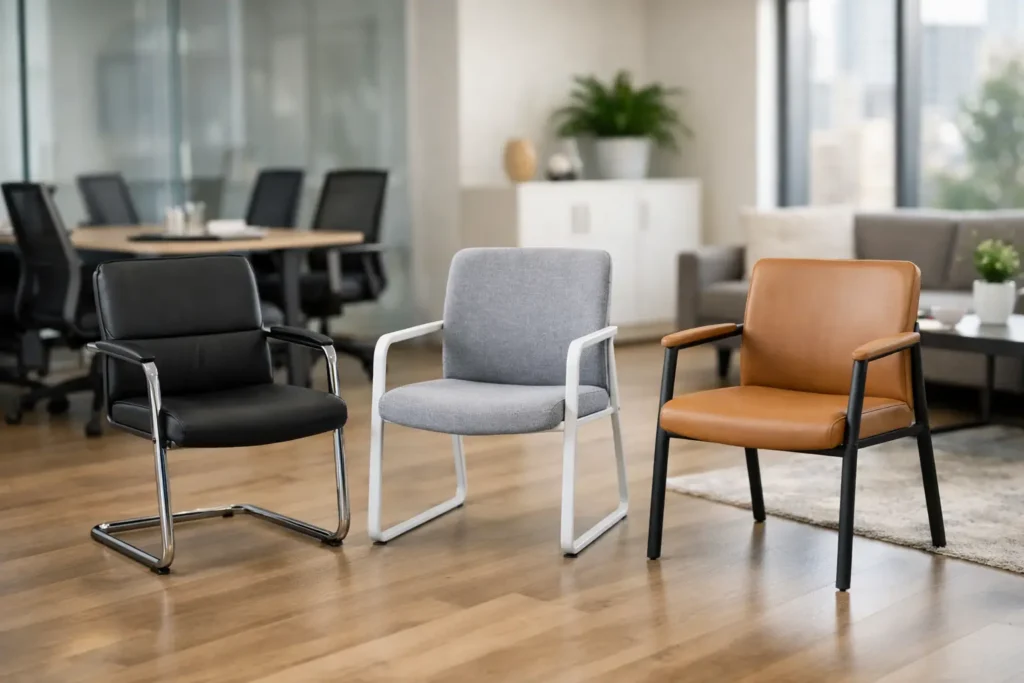
The best office visitor chairs do more than fill open floor space. They shape first impressions in reception areas, support productive conversations in meeting rooms, and help a workplace feel considered from the moment a guest walks in. For designers, procurement teams, and business owners, the right choice is rarely about one chair in isolation. It is about how that chair performs within the wider fit-out – visually, functionally, and commercially.
In commercial projects, visitor seating has to work hard. It needs to look polished, hold up to frequent use, and fit the design language of the rest of the space. At the same time, budget discipline still matters. That balance between appearance, comfort, durability, and value is what separates a smart specification from a costly compromise.
What makes the best office visitor chairs
A good visitor chair should feel easy to use and easy to place. Guests should not need to adjust complicated mechanisms or wonder where to sit. The chair should offer stable support, a comfortable seat angle, and enough back support for short to medium stays. In most office settings, that means comfort without the bulk of a full task chair.
Design matters just as much. Visitor chairs are often seen alongside workstations, executive desks, lounge pieces, and meeting tables. If the style feels disconnected, the whole environment can look pieced together. The best office visitor chairs support a cohesive scheme, whether the project calls for clean corporate lines, softer hospitality-inspired seating, or a more residential contemporary look.
Durability is where many buying decisions are won or lost. Commercial environments put furniture through a different level of wear than residential spaces. Frames, finishes, upholstery, and glides all need to withstand repeat use. A chair that looks good on delivery but ages poorly creates replacement costs and visual inconsistency across the project.
Choosing by space, not just by product
The most effective way to specify visitor seating is to start with the use case. A reception area has different demands than a private office or a boardroom overflow zone.
Reception and waiting areas
In reception, visitor chairs help establish the tone of the brand. This is where design-forward silhouettes often make sense, especially for corporate headquarters, showrooms, hospitality-led offices, and client-facing businesses. Upholstered chairs can add warmth and a more welcoming feel, while molded or minimalist options may suit spaces that aim for a sharper, more architectural impression.
Comfort still matters, but the duration of use is usually shorter. That gives specifiers more freedom to prioritize visual impact, as long as the seat remains supportive and the materials are suitable for high traffic.
Meeting rooms and discussion spaces
Meeting room visitor seating needs a more balanced approach. People may sit for 30 minutes or several hours, so posture support becomes more important. Chairs with supportive backs, comfortable padding, and well-judged seat depth tend to perform better here. If rooms are used flexibly, lighter chairs that are easy to move can also help operations.
This is also where consistency matters. Visitor chairs in meeting rooms should complement both the table scale and the broader office seating family. When the room is used for clients, interviews, pitches, or internal reviews, that visual coherence helps reinforce professionalism.
Private offices and executive settings
Visitor chairs in private offices often signal hierarchy and attention to detail. Here, the best option is usually one that feels refined without overpowering the desk or creating visual clutter. Cantilever frames, slim upholstered seats, and premium-looking finishes can work well, provided the proportions are right.
In executive environments, quality cues are especially visible. Stitching, base finish, upholstery texture, and arm design all play a part. A chair does not need to be expensive to look credible, but it does need to feel intentional.
The materials and features that matter most
Commercial buyers usually compare chairs by appearance first, then by price. In practice, long-term performance often comes down to the less obvious details.
Frame construction is one of them. Metal frames are popular for their clean look and strength, while timber accents can soften a space and bring warmth. Plastic shell chairs may work well in casual offices, training spaces, or breakout areas, especially when easy cleaning is a priority. Upholstered models generally offer better comfort and a more premium feel, though fabric choice should reflect the project’s maintenance requirements.
Armrests can be helpful in executive offices and formal meeting settings, but they also increase width. In tighter rooms, armless designs may be easier to place around tables or along walls. Stackability may matter for multi-use rooms, but in front-of-house spaces, aesthetics and comfort often take priority.
Floor protection is another practical point that should not be overlooked. Glides suited to the flooring type help reduce noise and prevent premature wear. In large projects, details like this affect both operations and maintenance over time.
Best office visitor chairs by design direction
There is no single style that qualifies as the best office visitor chair for every project. The right answer depends on the environment you are building.
For contemporary corporate interiors, slim-profile upholstered chairs with metal legs are often the safest choice. They read as professional, current, and easy to integrate with most workstation and meeting furniture. These are especially useful when the goal is to maintain a clean, confident office identity without overspending on highly customized seating.
For hospitality-influenced workplaces, lounge-style visitor chairs can create a richer environment and a more relaxed client experience. These work well in reception zones, waiting corners, and informal meeting settings. The trade-off is that they are not always ideal for longer, upright desk-side conversations.
For practical, high-turnover environments, molded chairs or simple upholstered task-side models can offer better value and easier upkeep. They may not deliver the same premium visual weight, but they often perform well where durability, speed of cleaning, and space efficiency matter most.
For premium executive spaces, tailored upholstery, cantilever structures, and more sculptural forms can elevate the setting. The risk here is overspecifying. If the rest of the office fit-out is restrained, a statement visitor chair can look out of place rather than impressive.
Budget, scale, and the hidden cost of mismatch
Many projects do not fail because the chair itself is poor. They fail because the selection does not align with the broader specification. A low-cost chair that clashes with the design concept can make an otherwise polished office feel inconsistent. On the other hand, a premium chair used in the wrong quantity or the wrong zone can put unnecessary pressure on the budget.
That is why project buyers tend to get the best results by thinking in ranges and families rather than isolated pieces. When visitor chairs can be coordinated with meeting chairs, lounge seating, barstools, or sofas, the whole space becomes easier to specify and more cohesive once installed.
This is also where a trusted commercial supplier adds real value. Instead of sourcing each category from different places and hoping the finishes work together, buyers can build around a style-organized collection with clearer quality control and more predictable lead times. For multi-zone commercial environments, that approach usually saves both time and costly revisions.
How professional buyers shortlist the right chair
Experienced specifiers typically narrow options using four filters: visual fit, comfort, commercial durability, and price alignment. If a chair misses any one of these, it rarely survives the final round.
Visual fit comes first because visitor seating is highly visible. Comfort follows closely, especially for meeting and office-side use. Durability is the safeguard against future replacement headaches. Price alignment ensures the product makes sense within the total project budget, not just as a standalone line item.
Where possible, physical evaluation still matters. Sitting in the chair, checking proportions next to tables, reviewing upholstery, and assessing finish quality can prevent mistakes that are easy to miss on a screen. For larger projects, this hands-on stage is often what turns a shortlist into a confident specification.
A smarter standard for office visitor seating
The best office visitor chairs are the ones that support the full commercial brief. They welcome guests comfortably, strengthen the design concept, hold up under daily use, and stay within budget expectations that make sense for the project. That may sound straightforward, but in real-world procurement, getting all four right takes careful selection.
For businesses, designers, and contractors working on offices that need to look credible and perform reliably, visitor seating should never be treated as an afterthought. It is part of the user experience, part of the brand impression, and part of the operational value of the space. VCUS works with professional buyers who need stylish and functional furniture that is project-ready, dependable, and cost-conscious – because the right chair is not just about where visitors sit, but how the entire space comes together.
