
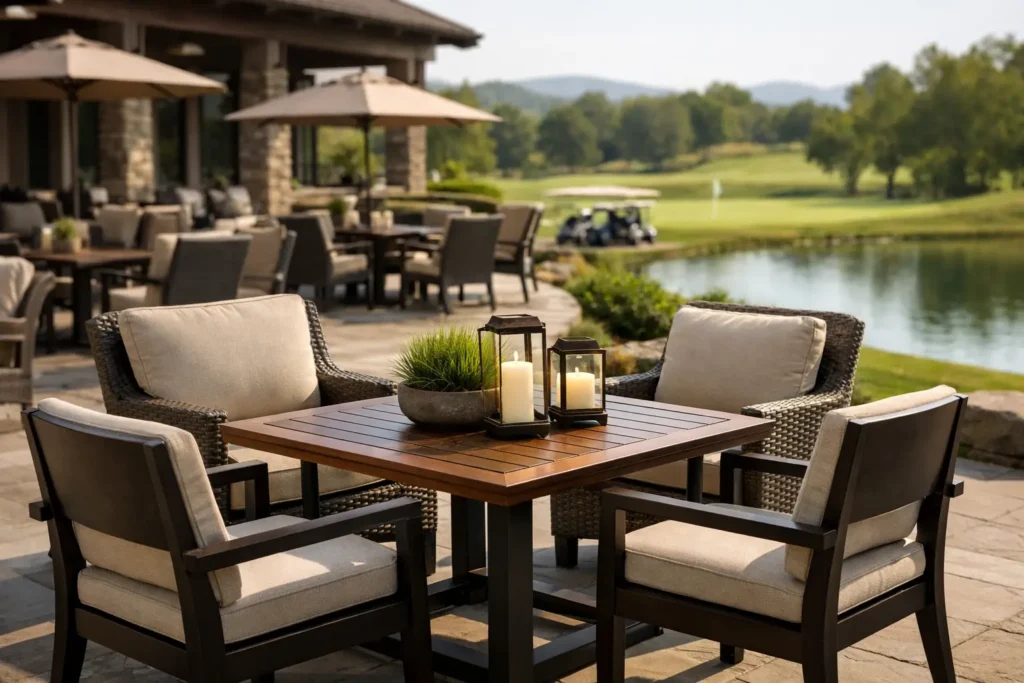
A country club is judged in the small moments: how a lounge chair feels after 18 holes, whether a dining table still looks composed during a busy Sunday service, and whether the poolside setting remains inviting after months of sun and rain. Commercial furniture for country clubs has to support all of those moments while carrying a consistent design language from arrival to departure.
For project teams, the challenge is not simply sourcing attractive chairs and tables. A club contains many distinct environments with different traffic patterns, maintenance demands, and member expectations. The right furniture plan brings those spaces together without forcing every area to look or perform the same way.
Why Country Club Furniture Requires a Different Brief
Country clubs sit between hospitality, leisure, F&B, and residential-style comfort. Members expect a sense of ease and familiarity, but the furniture must withstand the operational pressure of a commercial venue. Dining chairs are moved repeatedly. Terrace seating is exposed to humidity and UV. Lobby sofas host guests, members, and event attendees throughout the day. Function rooms may shift from corporate meetings to wedding banquets within hours.
This is why a residential purchasing approach often creates problems later. A beautiful occasional chair may not have the frame strength, upholstery performance, or replacement availability needed for a high-use club environment. Conversely, furniture selected only for hard-wearing specifications can leave a premium club feeling generic or overly institutional.
The strongest schemes balance comfort, durability, and a clear point of view. They give members a reason to linger, while giving operations teams practical furniture that is easy to maintain, rearrange, and replenish over time.
Commercial Furniture for Country Clubs by Zone
A complete country club fit-out should be planned zone by zone, with a shared visual thread across the entire property. Rather than selecting pieces in isolation, consider how finishes, proportions, and materials travel from one member touchpoint to the next.
Arrival, Reception, and Member Lounges
The entrance sets the standard for the club. Reception seating should feel polished and welcoming, with lounge chairs and sofas that offer genuine comfort without taking up excessive floor area. Coffee tables, side tables, and occasional stools provide flexibility for families, small groups, and waiting guests.
In these areas, upholstery needs careful consideration. Textured fabrics, performance textiles, high-quality vinyl, and leather-look finishes can all work well, depending on the intended atmosphere and cleaning routine. Light colors make a lounge feel open and refined, but they may require more disciplined upkeep. Richer neutrals and patterned textiles can better disguise daily wear while still looking considered.
Restaurants, Cafes, and Bars
F&B areas need a furniture mix that supports both the dining concept and service flow. Side chairs, armchairs, banquette seating, barstools, communal tables, and compact two-person tables can create variety without compromising the overall look.
Seat comfort matters, especially where members may enjoy long lunches or extended evening gatherings. Yet deeper, softer chairs are not always the right answer. In a high-turnover cafe, a more upright chair may improve circulation and make table service easier. In a formal dining room, upholstered chairs and well-proportioned tables can support a more leisurely experience.
Table bases deserve the same scrutiny as tabletops. They must remain stable on finished floors, allow chairs to tuck in properly, and give guests adequate legroom. For outdoor dining, materials should be chosen for local weather conditions, not just appearance in a showroom.
Golf, Sports, and Changing Areas
Furniture near golf facilities, fitness rooms, tennis courts, and changing areas is exposed to a different kind of use. Members may arrive with equipment, wet clothing, or activewear. Seating should be sturdy, easy to wipe down, and positioned to keep circulation clear.
Benches, lockers, waiting chairs, and compact tables should be selected for their practical contribution to the member journey. A well-designed bench can provide a place to change shoes, organize belongings, or wait for a group, while also reinforcing the club’s material palette. Where moisture is expected, specify finishes that resist corrosion, swelling, and staining.
Poolside, Terraces, and Garden Spaces
Outdoor furniture has a major influence on how a club uses its leisure areas. Sun loungers, outdoor sofas, dining sets, umbrellas, and occasional tables need to feel relaxed and refined while standing up to UV exposure, rain, chlorinated water, and frequent cleaning.
Not every outdoor material performs equally in tropical conditions. Powder-coated aluminum is often a practical choice for its light weight and corrosion resistance. Synthetic wicker can offer a softer, resort-style character, but quality varies substantially. Solid timber creates warmth but calls for a clear maintenance commitment. The best material depends on the club’s setting, storage arrangements, and operations team’s capacity for ongoing care.
Build a Cohesive Look Without Making Every Space Identical
A country club can have multiple personalities: energetic by the sports facilities, composed in the dining room, relaxed at the pool, and more formal in private event spaces. Cohesion does not mean repeating the same chair everywhere. It means creating relationships between spaces.
Start with a small set of common design cues. This may include a consistent timber tone, a recurring metal finish, complementary upholstery colors, or a recognizable mix of curved and linear forms. From there, each zone can have its own furniture character. A lounge may use generous upholstered seating, while the terrace adopts lighter-framed outdoor chairs in a related color family.
This approach also helps during future upgrades. When the original furniture plan has a clear design logic, replacements and phased additions can be selected with greater confidence. The club avoids the patchwork effect that occurs when every renovation is treated as an unrelated purchasing exercise.
Specify for Operations, Not Just Presentation
A furniture schedule should answer practical questions before orders are placed. Can the chairs be stacked or moved easily for events? Are replacement glides, tabletops, or cushions available? Will the upholstery tolerate the cleaning products used on site? Can the tables be reconfigured for functions? Are outdoor cushions removable and practical to store?
For larger projects, it is also wise to test representative pieces before final approval. Sit in the chairs. Check table heights against the chosen seating. Assess how finishes look under the club’s actual lighting. Review upholstery samples beside flooring, wall finishes, and joinery rather than in isolation.
This process reduces expensive surprises. A chair that looks compact on a specification sheet may feel too wide once arranged around a real table. A dark tabletop may look elegant but show fingerprints immediately in a bright cafe. These details affect daily operations long after the opening photographs are taken.
Plan Procurement Around the Full Project Timeline
Furniture procurement should begin early, particularly where customization, imported items, or phased installation are involved. A coordinated supplier can help project teams align product selection with budget, lead times, access constraints, and installation sequencing.
The lowest unit price is not always the best commercial decision. Consider service life, maintenance needs, consistency of supply, and the cost of replacing unsuitable items after opening. A reliable project partner should be able to support a broad furniture scope, from lounge seating and dining tables to barstools, outdoor collections, and functional pieces for back-of-house or staff areas.
VCUS supports commercial fit-outs with contemporary, design-led furniture selections that make it easier for country club project teams to create matching environments across multiple zones. With project-oriented sourcing, customization options, and delivery support, the focus remains on quality, value, and a specification that works beyond handover.
Choose Furniture That Protects the Member Experience
The most successful club interiors do not call attention to procurement decisions. They simply feel right: comfortable when members want to stay, practical when staff need to reset a space, and distinctive enough to reflect the club’s standards.
Before finalizing a schedule, walk through the property as a member would. Consider where they pause, dine, socialize, change, recover, and celebrate. Furniture that supports each of those experiences with lasting comfort and considered design will continue to earn its place long after the project is complete. Get in Touch Today to discuss a country club furniture specification built for your space, budget, and operating needs.
