
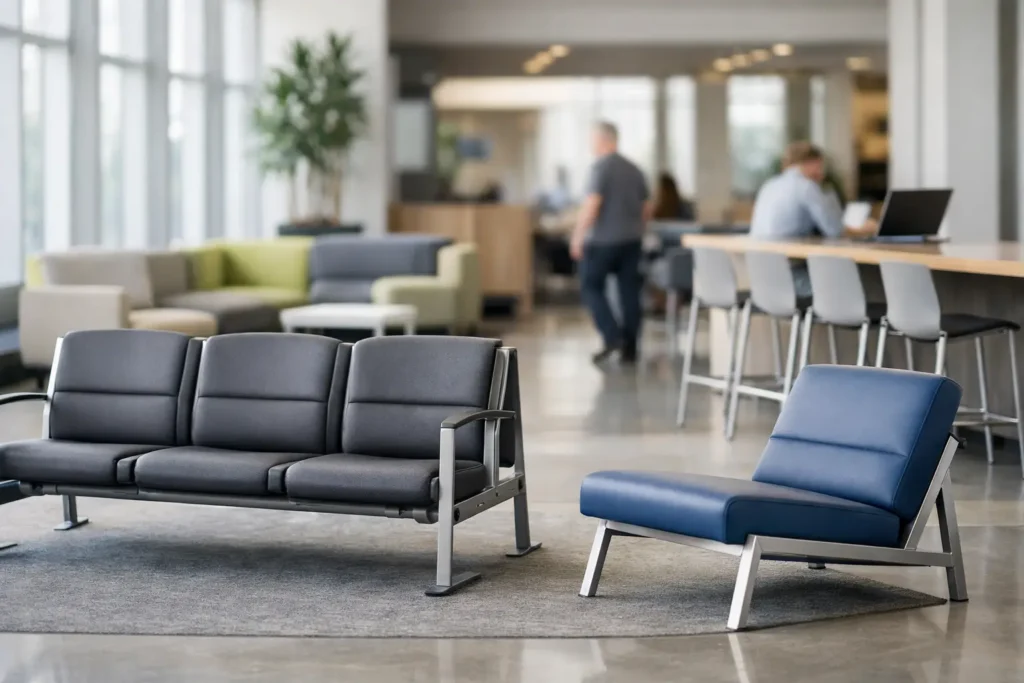
A dining chair that looks excellent at handover can become a costly liability after six months of daily service. In a busy café, clinic waiting room, hotel lobby, training center, or corporate breakout area, durable seating for high traffic is not simply about selecting the hardest surface available. It is about specifying seating that retains its comfort, appearance, structural stability, and cleanability under the real demands of the space.
For project teams, this decision affects more than replacement costs. Seating failures disrupt operations, weaken the interior concept, create safety concerns, and leave facility teams with a mismatched collection of emergency replacements. The right specification protects the design intent while giving operators practical furniture they can rely on shift after shift.
Start With the Actual Traffic Pattern
“High traffic” means different things in different commercial environments. A hotel restaurant may see concentrated use at breakfast and dinner, with chairs moved repeatedly for cleaning and table resets. A healthcare reception area experiences long sitting periods, frequent cleaning, and use by people with different mobility needs. A workplace café may have lighter individual loads but constant chair movement, laptop use, food spills, and peak-hour crowding.
Before reviewing finishes or silhouettes, establish how each seating zone will be used. Consider the number of occupants per day, expected years of service, whether chairs will be stacked or moved frequently, and how quickly staff must clean between users. Also account for exposure to sunlight, humidity, food and beverage spills, sanitizers, and outdoor transition areas.
This assessment prevents a common procurement mistake: applying one seating standard across every room. A refined upholstered lounge chair may suit an executive reception zone with supervised use, while a molded polypropylene chair or commercial-grade upholstered banquette may be the better choice for a high-turnover dining area. Consistency in the overall scheme does not require identical construction in every setting.
Durable Seating for High Traffic Depends on Construction
Visual weight is not a reliable measure of commercial strength. A chair can appear substantial yet fail at the points where load and movement concentrate: frame joints, welds, seat-to-frame connections, glides, armrests, and upholstery seams. Request clear information on how a product is made, not only how it looks in a catalog image.
For metal seating, welded frames and quality finishing matter. Weld consistency, stable leg geometry, and an appropriate powder-coated or plated finish help chairs withstand repeated movement and cleaning. In humid environments or covered outdoor areas, the material and finish should be selected with corrosion resistance in mind.
For timber seating, commercial suitability depends on the timber species, moisture control, joinery, and protective finish. Solid wood can bring warmth and longevity, but it should be specified with realistic expectations. It may require periodic refinishing, and it can show impact marks more readily than some molded materials. A well-built wood chair is an excellent fit for hospitality and executive spaces where maintenance is planned, not ignored.
Molded plastic and polypropylene seating can be highly effective in classrooms, staff dining rooms, casual F&B settings, and multi-purpose spaces. These products are light, easy to clean, and available in contemporary colors. Their trade-off is that low-grade versions may flex excessively, fade, or crack under heavy use. Commercial-grade material quality, reinforcement, and UV resistance are especially relevant when furniture will be used near windows or outdoors.
Upholstered seating needs closer scrutiny because comfort and visual richness introduce more variables. Look beyond the fabric pattern. Seat foam density, webbing or spring support, fabric abrasion performance, stain resistance, seam construction, and replaceable components all influence the useful life of the chair. In a high-traffic lounge or restaurant, contract upholstery with a practical cleaning protocol is usually a better investment than a delicate residential-style textile.
Match Material Choices to Cleaning Reality
Maintenance teams do not have unlimited time to follow complicated furniture-care instructions. The most successful commercial specifications acknowledge the cleaning products, labor availability, and operating pressure at the site.
Vinyl and performance upholstery can work well in healthcare, education, and food-service settings because they allow quick wipe-downs and offer a broad range of finishes. However, not all vinyl performs the same way. Some finishes become sticky, brittle, or discolored when exposed to unsuitable disinfectants. Confirm compatibility with the cleaning chemicals already used by the client, particularly where frequent sanitation is part of daily operations.
Textile upholstery adds acoustic softness and a more residential feel to offices, hospitality lounges, and client-facing zones. It is often the right aesthetic decision, but should be balanced with stain protection, cleanability, and the availability of matching replacement fabric. Darker colors and textured weaves can conceal minor wear, while very pale fabrics may demand more intensive upkeep. This is not an argument against lighter palettes; it is a reason to reserve them for areas with the right level of care.
Hard surfaces such as polypropylene, powder-coated metal, and sealed timber generally simplify routine cleaning. They also make it easier to maintain visual consistency in spaces where seating is frequently relocated. For dining environments, ensure edges, undersides, and joints can be cleaned without trapping crumbs and moisture.
Do Not Sacrifice Ergonomics for Service Life
A chair that survives heavy use but discourages people from sitting is not a successful commercial product. Ergonomics should reflect the intended dwell time. Short-stay café chairs can be compact and upright. Training chairs need stable support for writing, listening, and occasional device use. Lounge seating must feel inviting without becoming too soft to exit comfortably. In healthcare and senior-use settings, supportive arms and an appropriate seat height can make a meaningful difference.
Test seating in person whenever possible. Sit in it as a guest would, move it as a staff member would, and inspect it as a facilities manager would. Check whether chairs are easy to pull in and out, whether armrests strike table edges, whether legs remain stable on the intended flooring, and whether the upholstery looks taut at normal viewing distance.
A showroom review is also the right time to assess scale. A chair may appear slim and efficient on a floor plan but occupy more visual and physical space once diners, bags, mobility aids, or cleaning equipment are introduced. Reliable specification considers circulation as carefully as seat count.
Plan for Replacement Before You Need It
Commercial interiors rarely remain untouched for their full lifecycle. Individual chairs are damaged, a tenant expands, an operator changes layouts, or a project moves into a second phase. Selecting an item that cannot be reordered can turn a minor replacement into a costly re-specification exercise.
Ask suppliers about continuity of supply, minimum order quantities, lead times, and whether finishes are likely to remain available. For larger projects, keeping a small quantity of spare chairs, glides, or upholstery material can be sensible. This is particularly valuable when the seating has a custom color, special upholstery, or nonstandard frame finish.
Standardization also has a financial benefit. Using a coordinated family of dining chairs, bar stools, lounge pieces, and office seating can simplify procurement, maintenance, and future additions. The space still needs variation, but it should be intentional rather than the result of piecemeal replacement.
Evaluate Value Over the Project Lifecycle
The lowest purchase price is rarely the lowest cost of ownership. A cheaper chair that requires early replacement, creates maintenance calls, or cannot be matched later may cost more than a better-specified alternative. At the same time, the most expensive option is not automatically the best fit. A premium finish in a hard-working staff area may add cost without delivering a proportionate benefit.
Evaluate the seating package against its expected use, warranty terms, maintenance requirements, supply reliability, and ability to support the wider design concept. For designers and procurement teams, the strongest result comes from aligning the right product tier with each zone rather than over-specifying everything or compromising everywhere.
VCUS supports commercial fit-outs with coordinated seating collections, customization options, and project-focused sourcing for offices, hospitality venues, healthcare facilities, education spaces, and F&B environments. That breadth helps specifiers build a cohesive interior while selecting constructions and finishes appropriate to each area’s workload.
The most dependable seating decisions are made early, when design, operations, and procurement can agree on what daily use truly looks like. Specify for that reality, test the details that take the strain, and the finished space will continue to look considered long after opening day.
