
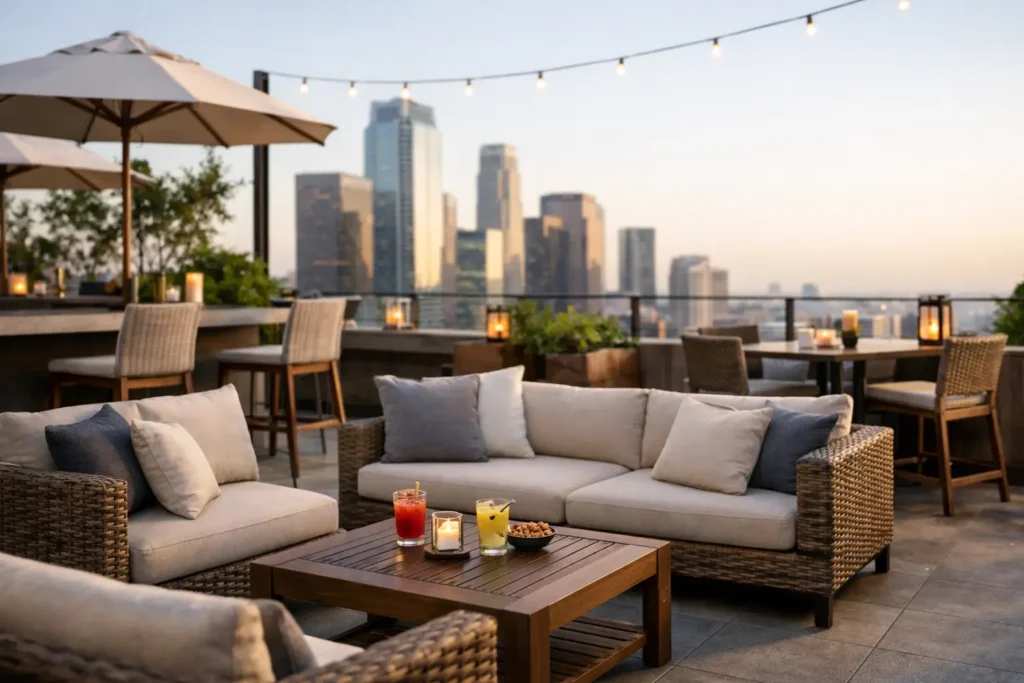
A rooftop bar can look exceptional at sunset and still fail by 10 p.m. if the seating feels unstable, the tables wobble, or the lounge pieces age badly after one rainy season. That is why choosing commercial outdoor furniture for rooftop bars is less about filling a floor plan and more about specifying pieces that support revenue, circulation, comfort, and long-term performance.
For hospitality operators, designers, and procurement teams, rooftop environments are demanding in very specific ways. Wind exposure is higher, UV damage is harsher, and layouts often need to work across multiple dayparts – casual afternoon service, sunset cocktails, private events, and late-night traffic. Furniture has to do more than look current. It needs to hold its aesthetic under pressure while staying practical for staff and durable enough for commercial use.
What rooftop bars require from furniture
Ground-level outdoor seating already has its challenges. Rooftop venues add another layer of complexity because every item is exposed, highly visible, and tied directly to guest perception. A chair that feels light and elegant in a showroom may slide too easily on a windy deck. A plush sofa may photograph well but become a maintenance problem if it traps moisture or stains too quickly.
The best commercial outdoor furniture for rooftop bars starts with a clear understanding of operating conditions. Guest turnover, service style, storage limitations, and cleaning routines all matter. So do access constraints. If furniture has to be moved through elevators, narrow service corridors, or stair cores, size and assembly method become part of the specification process, not an afterthought.
There is also a brand question. Rooftop bars are rarely neutral spaces. Some lean toward refined hotel luxury, others toward social lounge energy, and others toward compact urban sophistication. Furniture should reinforce that identity across bar stools, dining chairs, lounge seating, occasional tables, and modular pieces. Cohesion matters, especially when buyers are furnishing a full venue rather than sourcing isolated items.
How to specify commercial outdoor furniture for rooftop bars
The right approach is to think in zones, not just products. A rooftop bar usually performs several functions at once, and each one benefits from a different furniture behavior.
Bar seating and high-top zones
Bar stools and high dining sets create energy and maximize views, but they need careful proportioning. Seat height, footrest comfort, and back support all affect dwell time. In a rooftop setting, stools also need enough stability and material strength to handle heavy nightly use without feeling bulky.
Metal frames can be a smart choice for durability and a cleaner contemporary look, but finish quality matters. Powder-coated aluminum often works well because it resists corrosion and keeps weight manageable. If the concept calls for warmer visual texture, woven details or timber-look finishes can soften the scheme without introducing the maintenance issues of untreated natural wood.
Dining and flexible service areas
Dining tables and side chairs usually carry the operational load. They need to be easy for staff to reset, durable enough for constant use, and proportioned to support efficient circulation. In compact rooftops, pedestal bases often outperform four-leg table designs because they reduce trip points and improve seating flexibility.
This is where trade-offs come in. Heavier tables feel more premium and stable, but overly heavy pieces can slow daily setup and make event reconfiguration difficult. Lighter pieces improve flexibility, yet they must still feel secure in open-air conditions. The right balance depends on whether the venue prioritizes fixed layouts, frequent bookings, or mixed-use programming.
Lounge seating for premium guest experience
Lounge zones are where a rooftop bar often earns its visual identity. Sofas, club chairs, low tables, and modular seating create the atmosphere that drives longer stays and social sharing. But commercial lounge furniture outdoors has to be specified more carefully than many buyers expect.
Seat depth should feel relaxed without making dining or drink service awkward. Cushion construction should support comfort while allowing quick drying and easier maintenance. Upholstery choices need to account for sun exposure, spilled beverages, and cleaning frequency. Many venues want the softness of residential styling, but the commercial reality is different. Tailored outdoor fabrics, removable covers where practical, and frames designed for moisture resistance are the smarter long-term option.
Materials matter more on rooftops
A strong visual concept can be undermined quickly by poor material decisions. Rooftop conditions accelerate wear, so buyers should evaluate construction as closely as appearance.
Aluminum remains one of the most dependable choices for commercial outdoor settings because it offers corrosion resistance, manageable weight, and clean contemporary lines. Synthetic wicker can still work well in the right hospitality concept, especially when used selectively, but quality varies widely. Inferior weaving fades and frays fast, which is costly in a premium venue.
Outdoor-rated laminates, compact surfaces, and sintered tabletops can be practical for tables because they resist stains and simplify maintenance. Teak and other natural woods can look excellent, but they require a realistic maintenance plan. If the operator wants a weathered patina, that is one thing. If they expect the original finish to remain unchanged with minimal upkeep, expectations need to be reset early.
Fabric selection is equally important. UV resistance, colorfastness, and mold resistance are non-negotiable. Dark, dramatic tones may suit the design language, but in very hot climates they can make seating less comfortable during daytime service. Lighter tones feel cooler, though they may show spills more quickly. Again, it depends on the venue’s operating hours, cleaning standards, and target guest experience.
Design consistency across the full rooftop
One of the most common mistakes in rooftop bar projects is treating each furniture category as a separate purchase. The result is often a space that looks pieced together – one style of dining chair, another style of stool, unrelated lounge pieces, and tables that do not belong to the same visual family.
Professional buyers usually get better results when they source from a supplier that can support coordinated collections across multiple categories. That makes it easier to build a rooftop environment that feels intentional from entry to edge seating. It also simplifies procurement, finish matching, and replacement planning later.
For design-led hospitality venues, consistency does not mean sameness. A cohesive rooftop can still layer silhouettes, textures, and seating types. The key is having a shared material palette and a clear design logic. That is where a project-oriented supplier adds real value, especially when timelines are tight and multiple decision-makers are involved.
Operational details that protect the investment
Furniture decisions should support front-of-house performance, not complicate it. Stackability, cleanability, replaceable glides, and maintenance access all have commercial value even if they are not the first things guests notice.
Staff workflow is a practical filter. If chairs are difficult to move during cleaning, if tables scratch easily, or if cushions must be removed and stored every evening, the operating cost rises. A rooftop bar may absorb that if it is a high-ticket luxury concept with large staffing support. For many venues, though, practical efficiency matters just as much as visual impact.
Buyers should also consider replacement continuity. Rooftop bars take wear unevenly. A few pieces may need replacing before the rest of the scheme. Working with an established commercial furniture supplier reduces the risk of having no matching options available later. That matters for brand consistency and for controlling refresh costs over time.
Why project support matters
Rooftop bar furniture is rarely a simple retail purchase. It is usually part of a broader hospitality fit-out with deadlines, approvals, and budget controls. Designers need reliable specifications. Contractors need clarity on dimensions and lead times. Owners need confidence that the finished venue will look strong without overspending.
That is why commercial buyers tend to favor suppliers who understand project supply rather than one-off transactions. The ability to review coordinated pieces, discuss customization, align on quantity, and manage delivery for commercial timelines can make the difference between a smooth installation and a compromised opening.
For buyers who want contemporary, project-friendly options that balance style, performance, and value, working with a trusted commercial partner such as VCUS can simplify the specification process across the full rooftop environment.
The best rooftop bars feel effortless to the guest, but that result comes from disciplined furniture choices behind the scenes. Choose pieces that work as hard as the venue does, and the space will keep delivering long after the opening night buzz fades.
