
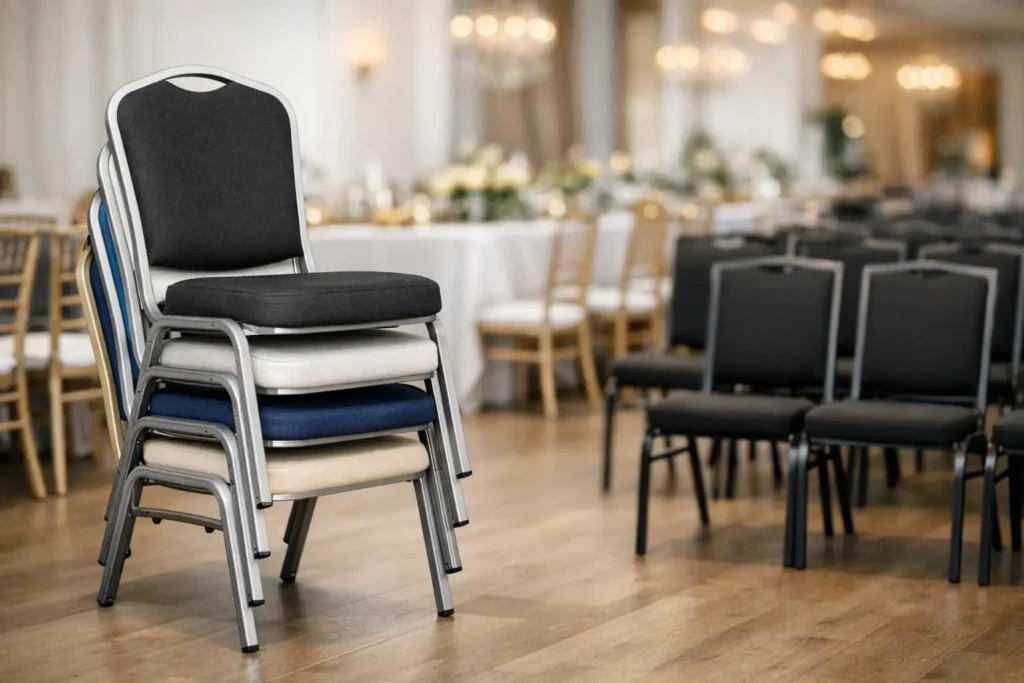
A chair that looks right in a showroom can become a liability after its third ballroom reset, outdoor activation, or training-room turnover. For professional buyers, the best stackable chairs for events are not simply those that pile neatly in a storeroom. They must support the visual standard of the venue, move efficiently between layouts, withstand frequent handling, and remain comfortable enough for guests to stay focused.
For hotels, conference centers, F&B concepts, schools, corporate offices, and multipurpose facilities, stackable seating is an operating decision as much as a design decision. The right specification reduces storage pressure, setup labor, replacement costs, and the risk of an inconsistent guest experience.
What Makes the Best Stackable Chairs for Events?
The most suitable chair depends on the event format, audience, venue finish, and rate of use. A lecture hall that hosts daily sessions needs a different solution from a restaurant private room that converts from dining to presentations twice a week. Still, strong commercial event chairs share several qualities: dependable construction, controlled stacking, practical comfort, easy cleaning, and a design language that works with the broader interior.
Start with the frame. Powder-coated steel, aluminum, and reinforced polypropylene are common commercial choices, but they perform differently. Steel frames often provide a more substantial feel and dependable stability for indoor event use. Aluminum helps reduce lifting weight and suits venues that frequently reconfigure spaces. Quality polypropylene can be highly practical, especially where wipe-clean surfaces, weather tolerance, or high-volume procurement are priorities.
Do not evaluate frame material in isolation. Ask how the joints are formed, whether floor glides are replaceable, and how the chair behaves when moved across carpet, tile, concrete, or timber flooring. A chair may be rated for commercial use, yet loose stacking guides or poorly fitted glides can create noise, floor damage, and accelerated wear in active venues.
Stack Height Is Only Part of the Storage Equation
A high stack count is useful, but it is not automatically the best answer. Tall stacks save floor area, while also increasing the chance of handling damage or instability when staff move them. Consider the full storage workflow: how many chairs fit on a trolley, whether the trolley clears doorways and elevators, and whether the stored chairs can be safely accessed by the team on site.
For a venue with limited back-of-house space, a chair that stacks 10 to 12 high and rolls on a purpose-built trolley may be more efficient than a lighter model that stacks higher but requires awkward manual handling. For large conference and banquet operations, trolley compatibility, stable stack alignment, and quick unloading can matter more than a small difference in individual chair price.
Comfort Should Match the Session Length
For short receptions, networking functions, and pop-up presentations, a well-shaped hard-shell chair can be appropriate and easy to maintain. For seminars, training programs, worship spaces, and all-day conferences, consider contoured backs, flexible back support, or upholstered seat pads. Guests notice discomfort long before they notice the chair’s stackability.
Upholstery introduces a clear trade-off. It improves perceived quality and seating comfort, but it also requires more careful fabric selection, cleaning procedures, and storage conditions. In hospitality settings, commercial-grade textiles or vinyl may be better suited to high-turnover use than residential-style fabrics. Where food and beverages are served, stain resistance should be part of the specification rather than an afterthought.
Choose a Chair Type for the Way Your Venue Operates
Rather than selecting from an event-chair category alone, define the operating role the chair must play. This produces a more disciplined shortlist and helps designers maintain a cohesive look across public areas, meeting rooms, dining spaces, and outdoor zones.
Banquet and Ballroom Chairs
Banquet chairs are built for repeat seating layouts, formal functions, weddings, and corporate dinners. They commonly feature padded seats, durable metal frames, and stack-friendly profiles. Their advantage is comfort and a more polished hospitality appearance. Their limitation is that they can look overly formal in contemporary cafés, creative offices, or casual event venues.
Look for fabric or vinyl that suits the room palette, as well as frame finishes that complement tables, stage elements, and partitions. A small selection of coordinated colors can give a ballroom greater flexibility without creating a mismatched furniture inventory.
Contemporary Plastic or Polypropylene Chairs
For modern cafés, training spaces, terraces, and flexible collaboration zones, contemporary molded chairs offer a clean, design-forward alternative. They are generally quick to clean, easy to reposition, and available in colors that can reinforce a brand or interior concept.
Not every molded chair is suitable for constant event use. Verify the weight capacity, stacking guidance, UV resistance for outdoor placement, and whether the surface will scratch visibly in high-contact environments. A lower-cost shell chair can become expensive if it needs frequent replacement or makes the room appear tired within a year.
Metal and Wood-Look Event Chairs
Metal event chairs and commercial chairs with wood-look finishes can bring warmth or industrial character to restaurants, showrooms, country clubs, and themed hospitality settings. These options work particularly well when the event room must feel intentional rather than purely functional.
The key consideration is finish durability. Painted metal, wood veneer, and wood-look coatings all need to tolerate chair-to-chair contact during stacking. Request a physical sample where possible and inspect contact points, edge finishes, and the underside of the seat. These are the areas staff and guests rarely see at first, but they reveal how well a chair will hold up over time.
Outdoor Stackable Chairs
Outdoor event seating needs more than rain resistance. It must account for heat, UV exposure, drainage, salt air in coastal locations, and the practical reality of chairs being dragged across paving. For poolside, rooftop, garden, and patio projects, specify materials designed for outdoor commercial use and avoid assuming that any plastic chair will perform well under direct sun.
If chairs will move between indoor and outdoor programs, select a finish that feels appropriate in both settings. This can reduce the total inventory required while keeping the venue visually consistent.
Specify for Durability, Not Just Delivery Day
Commercial buyers should ask suppliers direct questions before committing to a large order. Confirm the recommended stack quantity, warranty terms, weight rating, cleaning method, replacement availability for glides or components, and estimated lead time for matching future orders. These details affect lifecycle cost far more than a small upfront saving.
Also consider how the chair will be handled. Chairs used by trained banquet staff have a different wear profile from chairs handled by students, visitors, or members of the public. In education and community settings, simpler construction and easy-clean finishes are often the prudent choice. In executive event spaces, comfort, refinement, and alignment with the surrounding furniture may deserve greater investment.
A mock layout is valuable for larger projects. Place chairs at the intended table spacing, test aisle clearance, and ask staff to stack and move them using the actual trolley. This exposes issues that dimensions on a product sheet may not reveal, including arm clearance, noisy glides, or a stack that is too tall for a storage room.
Build a Cohesive Event Furniture Specification
Event chairs rarely stand alone. They must work with folding or dining tables, barstools, lounge seating, reception furniture, and occasional outdoor pieces. Specifying these categories together creates a more considered environment and prevents a venue from looking like it was furnished one purchase order at a time.
Color and material continuity matter here. A black powder-coated frame may connect stackable chairs with bar bases and meeting tables. A warm neutral shell can soften a corporate training room while still coordinating with lounge furniture. For hospitality venues, the event chair can carry a subtle design cue from the restaurant or lobby without competing with it.
Customization can be worthwhile when it supports a repeatable standard. Upholstery colors, frame finishes, and selected materials can help multi-site operators maintain a recognizable look across locations. However, highly customized items may require longer lead times and should be planned early, particularly for overseas or phased projects.
Work With a Supplier That Understands Project Use
The best event seating program balances design ambition with the realities of storage, staffing, cleaning, and replenishment. A trusted commercial furniture supplier should help buyers compare options against the actual demands of the space, not simply recommend the chair with the highest stack count.
VCUS supports project teams with contemporary commercial furniture selections that can be coordinated across offices, hospitality venues, education spaces, healthcare facilities, and F&B environments. Reviewing chairs in person, discussing finish options, and planning delivery requirements early gives designers and procurement teams more control over both the final look and the operating outcome.
Choose chairs that your staff can move confidently, your guests can use comfortably, and your venue can continue presenting with pride after hundreds of setups. That is where a well-specified stackable chair earns its place.
