
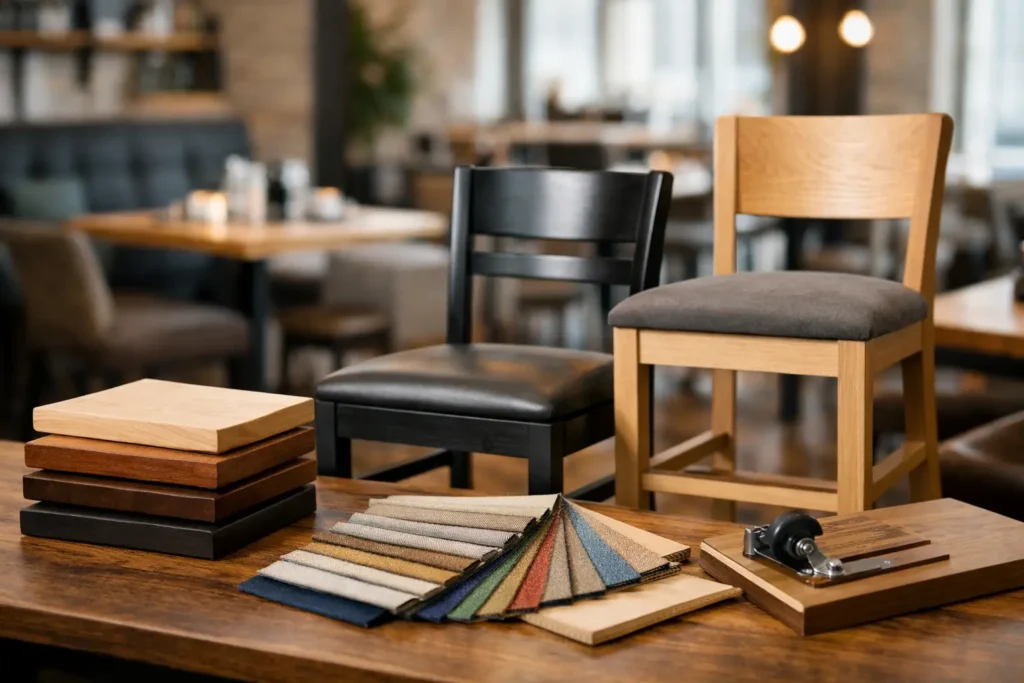
A chair that looks excellent in a showroom but wobbles after a busy weekend is not a design choice. It is an operating cost. Knowing how to buy restaurant furniture means specifying for the realities of service: repeated cleaning, constant movement, tight table turns, varying guest needs, and a brand experience that must remain consistent from opening day onward.
For restaurant owners, designers, and fit-out teams, furniture should be treated as part of the commercial infrastructure. It affects seating capacity, staff circulation, cleaning routines, acoustic comfort, and the impression guests carry away. The best purchasing decisions balance visual character with performance, lead time, and total project cost.
Start With the Service Model, Not the Catalog
Before selecting a chair, define how the venue will operate. A fast-casual concept with high turnover needs compact, easily cleaned seating that can handle frequent use. A fine-dining room may prioritize upholstered comfort, generous spacing, and a quieter atmosphere. A café, hotel breakfast area, rooftop bar, and family restaurant each put different demands on their furniture.
Map the dining zones first: entrance and waiting area, main dining floor, bar, private room, outdoor seating, and any lounge or event space. Each zone has a different purpose, so using one chair type throughout is not always the most effective choice. A coherent palette of complementary chairs, barstools, tables, and lounge pieces can create visual continuity while giving each area its own function.
Capacity is equally critical. Calculate seating using the actual footprint of tables, chairs, circulation aisles, service stations, and accessibility requirements. A layout that maximizes the number of seats but leaves staff unable to move efficiently can reduce service quality and revenue. Confirm the clearances needed when chairs are pulled out and when guests, servers, or cleaning equipment pass through.
How to Buy Restaurant Furniture That Fits the Brand
Furniture communicates the restaurant’s position before a menu reaches the table. A molded polypropylene chair may be right for an energetic all-day dining concept; it may undermine the experience in an intimate, premium venue. Materials, silhouettes, colors, and proportions should support the interior concept rather than compete with it.
Build a focused design direction around a few decisions: the dominant material, the color family, the level of formality, and the desired guest experience. For example, timber-look tables paired with upholstered dining chairs can make a casual restaurant feel warm and considered. Metal-frame chairs and laminate tops may suit a contemporary food hall where cleaning speed and durability take priority.
Avoid specifying every piece in isolation. A table base that clashes with chair legs, or barstools that feel unrelated to dining seating, can make a finished venue look pieced together. Working from a style-organized collection makes it easier to coordinate categories across the space without creating a uniform, repetitive room.
Customization can be valuable when it serves the project. Upholstery colors, tabletop finishes, dimensions, and frame colors can strengthen brand identity and help furniture fit challenging layouts. However, custom work can affect cost and production schedules. Use it for the visible, high-impact pieces or where standard sizes will not work, rather than customizing every item by default.
Specify for Commercial Wear and Cleaning
Restaurant furniture must perform under conditions that residential furniture rarely faces. Ask what the frame is made of, how joints are constructed, what weight capacity applies, and whether replacement glides or parts are available. Commercial-grade construction matters most in high-contact pieces such as dining chairs, barstools, communal tables, and banquette seating.
For seating, consider the relationship between comfort and maintenance. Fully upholstered chairs can improve dwell time and perceived quality, but they require fabrics that withstand spills, cleaning products, and repeated use. Vinyl or performance upholstery can be practical in busy dining settings, while textured fabrics may be better reserved for low-spill lounges or private rooms.
Tabletops deserve the same scrutiny. Consider resistance to heat, staining, scratches, moisture, and daily disinfecting. Natural timber can add character, but it may need periodic care and can show wear differently from compact laminate, sintered stone, or treated veneer. There is no universally best surface. The right choice depends on the menu, service style, lighting, budget, and the level of maintenance the operator can sustain.
For outdoor areas, do not assume an indoor product will last because it is placed under partial cover. Specify furniture designed for outdoor exposure, including UV resistance, drainage, corrosion-resistant frames, and materials suited to local humidity and rain. Stackability and manageable weight can also simplify closing procedures, storage, and event reconfiguration.
Test Comfort, Scale, and Stability in Person
Specifications are necessary, but they do not replace physical evaluation. Visit a showroom when possible and test candidate pieces as guests would use them. Sit in a chair for more than a few seconds. Check whether the seat height works with the tabletop, whether armrests prevent chairs from tucking in, and whether the back support suits the intended length of stay.
Pay close attention to scale. A chair may look refined on its own but become visually heavy when placed around a small two-top table. Conversely, a narrow chair can feel lost beside a substantial communal table. Bring floor plans, finish samples, and key dimensions to the selection process so the team can assess proportion with confidence.
Stability should be non-negotiable. Test tables on an even surface and ask how bases can be adjusted for minor floor variation. Four-legged tables can work well in certain layouts, while pedestal bases often give guests more legroom and allow flexible chair placement. The trade-off is that the base must be substantial enough for the tabletop size and expected use.
Build a Budget Around Total Ownership Cost
The purchase price is only one part of the decision. A lower-cost chair that needs early replacement, damages flooring, or demands labor-intensive cleaning may cost more over time than a better-specified alternative. Consider total ownership cost: procurement, delivery, installation, maintenance, replacement parts, storage, and expected service life.
Set budget tiers based on visibility and usage. It can make sense to invest more in statement seating at the entrance, bar, or feature dining zone while choosing durable, efficient models for secondary areas. This approach preserves the design impact without allowing a few premium selections to consume the entire furniture allowance.
Be cautious about buying exactly the required quantity. Ordering a small buffer of high-use chairs, barstools, or matching tabletops can protect the venue from an inconsistent replacement later. Product ranges change, finishes vary between production runs, and a damaged chair should not force a redesign of the dining floor.
Confirm Lead Times, Delivery, and Installation Early
Furniture procurement must align with the full fit-out schedule, not just the opening date. Production time, customization, shipping, site access, storage, and installation all need to be accounted for. A product that meets the design brief but cannot arrive before handover is not a viable specification.
Ask suppliers for a clear breakdown of what is included. Confirm quantities, finishes, dimensions, packaging, delivery conditions, assembly requirements, warranty coverage, and who is responsible for resolving transit damage. For larger projects, request samples or approved finish swatches before production begins. These checks reduce costly disagreements when the site is under pressure.
Also consider the practical delivery route. Can large tables fit through lifts, corridors, and doors? Is there a loading bay booking process? Will furniture need to be assembled on site? These details can affect labor costs and prevent a last-minute logistics problem from delaying opening preparations.
Choose a Supplier That Can Support the Whole Project
A restaurant fit-out rarely involves one furniture category. Dining chairs must work with tables, barstools with counter heights, lounge seating with waiting areas, and outdoor pieces with the overall concept. A supplier with a broad, coordinated commercial range can reduce the time spent managing separate vendors and help maintain consistency across the project.
Look for demonstrated commercial experience, transparent specifications, dependable communication, and the ability to advise on materials, quantities, customization, and delivery planning. The right partner should be prepared to discuss trade-offs candidly, not simply push the most expensive option. For regional or overseas projects, global delivery coordination and project support can be as valuable as the product itself.
VCUS supports commercial buyers with contemporary furniture collections designed to bring coordinated style, practical performance, and accessible project value into one sourcing process. Bring your plan, seating count, finish direction, and opening timeline to the showroom conversation. A considered furniture specification gives your restaurant room to serve well, wear well, and remain distinctive long after its first full house.
