
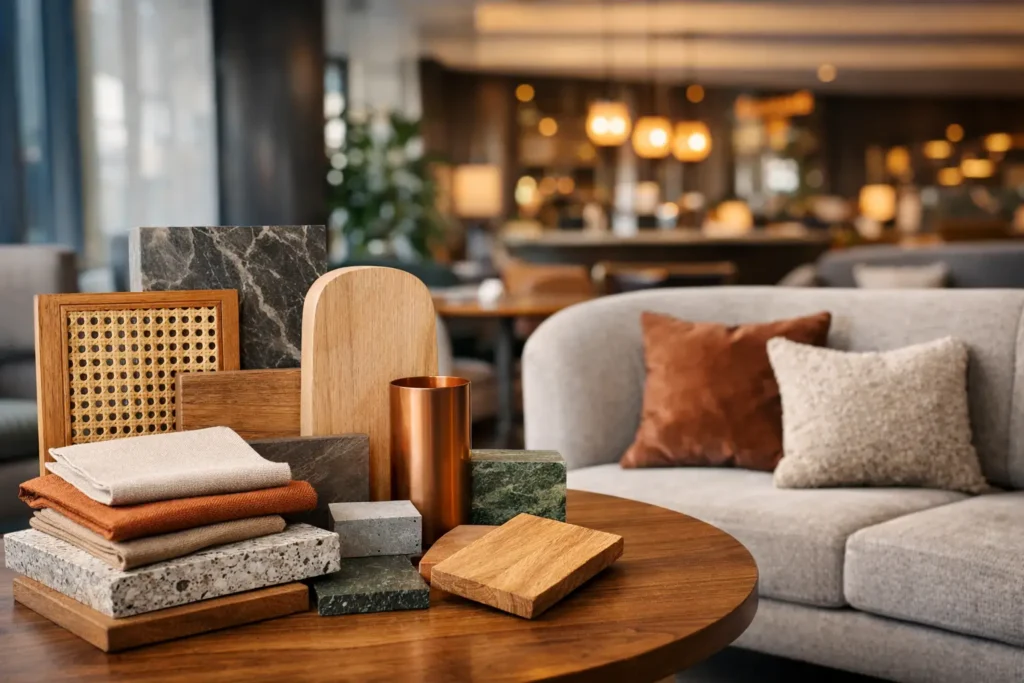
A hotel lobby chair may look exceptional on opening day, but hospitality furniture earns its place after thousands of guests, spilled drinks, rolling luggage, cleaning cycles, and late-night resets. That is why hospitality furniture material trends are moving beyond surface appearance. For hotels, restaurants, clubs, and F&B venues, the right material specification must support the guest experience while protecting operating budgets and project timelines.
The strongest schemes now balance warmth with hard-wearing performance. Designers are pairing tactile finishes with commercial-grade construction, while operators are asking more detailed questions about maintenance, replacement cycles, fire performance, and outdoor exposure. The result is a more considered approach to furnishing spaces that need to feel distinctive and remain practical long after handover.
Hospitality Furniture Material Trends Shaping Specifications
Natural-looking finishes with commercial performance
Guests continue to respond to interiors that feel grounded, warm, and less manufactured. Wood grain, woven texture, stone-like surfaces, and soft matte finishes are central to this direction. However, solid natural materials are not automatically the best answer for every hospitality setting.
Wood veneer, laminate, and engineered timber are increasingly specified where a consistent appearance, controlled cost, and easier maintenance matter. A quality veneer can bring genuine grain variation and visual depth to a restaurant table or hotel casegood, while high-pressure laminate can be a sensible choice for high-turnover dining areas. The decision depends on use. A quiet private dining room may justify a more delicate timber finish; a busy breakfast venue usually needs greater resistance to heat, moisture, cleaning chemicals, and impact.
For tabletops, compact laminate and sintered stone-look surfaces are gaining ground because they provide a refined appearance without the maintenance demands associated with porous natural stone. They are particularly useful where operators need a clean, consistent surface across many tables and frequent service periods.
Performance upholstery that still feels inviting
Hospitality seating is becoming more residential in silhouette, with deeper lounge chairs, curved banquettes, upholstered dining chairs, and relaxed modular sofas. The material story must keep pace. Softness matters, but so do stain resistance, abrasion performance, colorfastness, and cleanability.
Commercial vinyl and polyurethane upholstery have improved significantly in texture and finish. They can replicate leather or woven textiles while offering practical advantages for restaurant booths, healthcare-adjacent hospitality spaces, and high-use lounge seating. High-quality options are easier to wipe down and can better withstand food and beverage spills than conventional fabric.
That said, vinyl is not the universal solution. It can feel warm in humid environments, may be less breathable, and some lower-grade products can crack or discolor over time. For premium lounges, suites, and club spaces, performance fabric often offers a richer, more comfortable result. Specifiers should look beyond a fabric’s appearance and check its abrasion rating, stain treatment, cleaning requirements, backing, and suitability for the intended traffic level.
Boucle, textured chenille, and woven upholstery remain popular for feature seating because they add visual softness and depth. They work best where the seating is not exposed to constant food service or heavy luggage contact. A practical approach is to use these textures on statement lounge pieces while specifying more resilient upholstery for banquettes, dining chairs, and public-area sofas.
Metal frames with softer visual character
Metal remains a dependable material for hospitality chairs, barstools, table bases, and outdoor furniture. Its appeal comes from strength, repeatable production, and the ability to support slim contemporary forms. What is changing is the finish.
Rather than bright chrome alone, hospitality projects are favoring powder-coated black, warm bronze, muted green, sand, terracotta, and textured metallic finishes. These colors help metal furniture sit more naturally alongside timber, upholstery, and planting. Powder coating remains a smart choice for many commercial applications because it is generally durable and available in a broad range of colors.
For coastal properties, outdoor terraces, or venues with high humidity, material selection needs closer attention. Aluminum is lightweight and corrosion-resistant, making it suitable for many outdoor applications. Steel can provide a stronger visual presence and greater weight, but it needs the correct protective treatment. Stainless steel may be appropriate for demanding environments, although it can alter the budget and aesthetic. The best choice is determined by location, exposure, cleaning methods, and the expected service life of the furniture.
Rattan, rope, and woven details used with discipline
Natural and woven elements continue to bring an approachable resort character to hospitality interiors. Rattan, rope, cane, wicker-inspired finishes, and woven polypropylene can soften large dining rooms, rooftop bars, poolside settings, and boutique hotel lounges.
The key is distinguishing between decorative appeal and operational suitability. Natural rattan and cane can be beautiful indoors, but they may not be ideal in exposed outdoor conditions or in locations subject to intensive cleaning. Synthetic rope and weather-resistant woven materials are often better suited to pool decks, terraces, and outdoor dining, where UV resistance and quick drying are essential.
Used selectively, woven details can prevent a space from looking overly hard or corporate. They are especially effective when balanced with stable metal frames and easy-care tabletops. For project teams, consistency matters as much as material choice: similar weave colors, frame tones, and cushion fabrics create a cohesive identity across dining, lounge, and outdoor zones.
Sustainability Is Becoming a Procurement Question
Sustainable materials are no longer only a design narrative. Hospitality buyers increasingly need to understand what a product is made from, how long it will last, whether components can be replaced, and what happens when an item reaches the end of its useful life.
Recycled plastic, recycled aluminum, responsibly sourced timber, and fabrics containing recycled fibers are appearing across more commercial collections. These materials can support an environmental brief, but they still need to meet the demands of the venue. A recycled-content chair that fails prematurely is not a sustainable procurement decision.
Durability, repairability, and replaceable components should be part of the evaluation. Removable seat cushions, replaceable upholstery, spare glides, and standardized table bases can extend the life of a furniture program and reduce disruption when pieces need attention. This is particularly valuable for hotel groups, restaurant operators, and country clubs managing multiple locations or phased refurbishments.
Sustainability also benefits from fewer, better-coordinated purchases. Selecting a style-consistent range across chairs, barstools, lounge seating, tables, and outdoor furniture can simplify future additions and replacements. It reduces the risk of a venue becoming visually fragmented after several years of operational changes.
Choosing Materials by Zone, Not by Trend Alone
A successful hospitality specification rarely uses one material everywhere. The lobby needs durable statement pieces that establish the first impression. The restaurant needs seating and tables that tolerate fast turnover and frequent cleaning. Guest rooms call for comfort, quiet finishes, and a more residential feel. Outdoor areas require weather-ready materials that remain presentable through heat, rain, and UV exposure.
This is where material trends should be filtered through operational reality. A pale upholstered chair may suit a boutique hotel reception with attentive housekeeping, yet be difficult to maintain in a family restaurant. A marble table can create a premium mood, but a porcelain or compact laminate alternative may be better where table resets are constant. There is no single best material – only the best fit for the venue, budget, and maintenance capability.
For larger fit-outs, request samples early and assess them under the actual lighting conditions of the project. Touch the upholstery, inspect grain direction and color variation, test tabletop edges, and compare finishes against flooring, wall treatments, and joinery. Small samples can also reveal practical concerns, such as whether a textured fabric catches lint or whether a dark matte surface shows fingerprints.
Build a Material Palette That Can Last
The most enduring hospitality interiors do not chase every new finish. They create a disciplined palette: a durable foundation material, one or two warmer tactile elements, and feature finishes placed where guests will notice them most. This approach protects the project budget while allowing the venue to feel innovative and distinctive.
For professional buyers, working with a project-focused supplier can make that coordination easier. VCUS supports commercial teams with contemporary furniture across hospitality categories, helping designers and operators align chairs, tables, lounge furniture, barstools, and outdoor pieces around a coherent material direction.
Choose the materials that support the experience you want guests to remember, then test them against the realities your team will manage every day. That is where a beautiful hospitality scheme becomes a dependable commercial environment.
